2026 Top DC Chargers for Global Buyers
Choosing the right Dc Chargers in 2026 requires more than comparing advertised charging speeds. Global buyers need equipment that performs reliably across climates, vehicles, grid conditions, and installation environments. This guide examines practical options for commercial fleets, public charging networks, workplaces, and private properties. It considers output power, connector compatibility, thermal control, enclosure protection, software integration, and after-sales support.
Real-world performance matters. A charger rated at 240 kW may deliver less power when several vehicles share one cabinet. Hot afternoons, poor ventilation, and unstable supply can also affect charging time. Therefore, the selections in this overview focus on measured usability, safety documentation, maintenance access, and supplier reliability. Certification requirements vary by market, so buyers should verify local approval before placing an order. Warranty terms deserve equal attention.
Small details matter.
Cable length, screen visibility, payment compatibility, and emergency controls can influence daily operations. We also consider installation complexity and spare-part availability, because downtime quickly increases operating costs. Some manufacturers publish limited field data, which makes direct comparison difficult. That limitation should be acknowledged, not hidden. Product rankings may change as new models launch, standards evolve, and independent testing becomes available. Buyers should confirm specifications with manufacturers and qualified installers before making a final decision. This guide aims to provide a practical, evidence-informed starting point for evaluating the top Dc Chargers for global purchasing decisions in 2026.
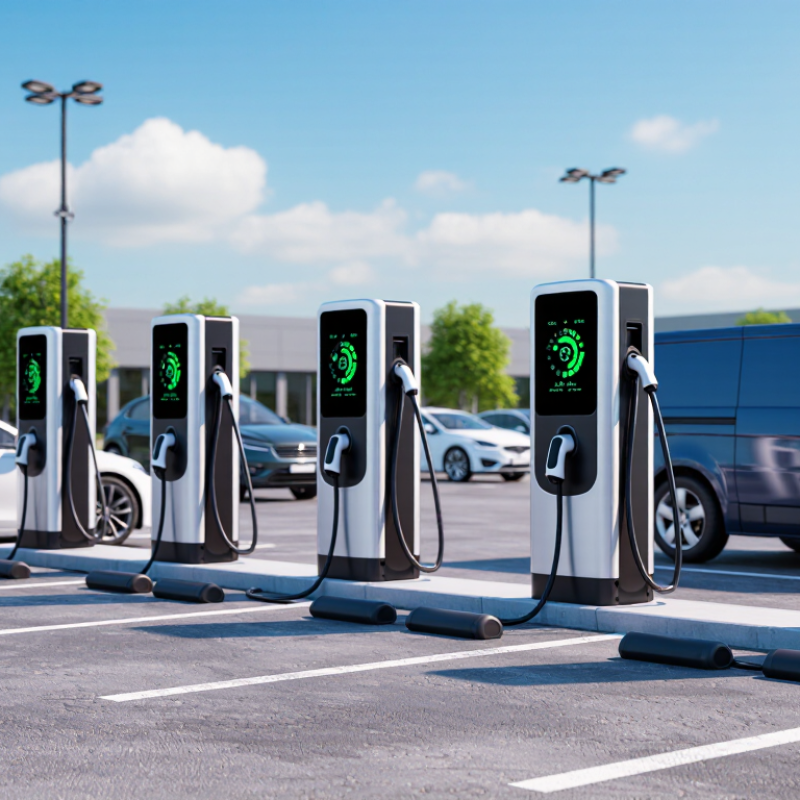
What Defines a DC Fast Charger in 2026
What Defines a DC Fast Charger in 2026
A DC fast charger sends direct current straight to a vehicle’s battery. Its power electronics sit outside the vehicle, reducing charging time compared with ordinary AC equipment. In 2026, buyers should assess more than peak kilowatts. Stable output matters during hot afternoons, winter mornings, and crowded charging periods. A charger rated at 180 kW may deliver less when the battery is cold or nearly full. That is normal, but specifications should explain these limits clearly.
Modern systems also depend on accurate communication between the charger, vehicle, and energy network. Reliable equipment manages voltage, current, temperature, and charging permissions continuously. Safety monitoring should detect insulation faults, connector overheating, and abnormal shutdowns. For global projects, connector compatibility, local grid conditions, language support, payment methods, and certification requirements need careful review. Field experience shows that poor cable handling and weak weather protection can damage availability faster than expected.
Tips: Compare continuous power, not only the advertised maximum. Check the charger’s operating temperature range and protection rating. Ask for independent test records, service response times, spare-part plans, and software update policies. Measure noise near homes or workplaces. Consider load management when several chargers share one electrical connection. A simple site inspection can reveal more than a polished brochure. No system is perfect. Even experienced buyers sometimes underestimate maintenance access, cable weight, or winter performance. That oversight deserves honest discussion before installation.
Key Specifications for Comparing Global DC Chargers
Global DC charger selection now depends on measurable performance, not headline power alone. The IEA’s Global EV Outlook 2025 reports more than 17 million electric cars sold worldwide in 2024. Public charging points also exceeded five million. That growth makes specification discipline essential for international buyers.
Start with rated output, voltage range, and current limits. A 150 kW unit may deliver less power when battery voltage, temperature, or grid capacity changes. Check peak power, continuous power, and power-sharing behavior between outlets. Efficiency matters too. A small efficiency gap can become a large operating cost across thousands of charging sessions. Measure conversion efficiency, standby consumption, and thermal derating at 40°C. Hot climates expose weak designs.
Connector compatibility must match regional vehicle fleets and applicable IEC 61851 requirements. Communication support, including ISO 15118 readiness, can improve authentication and future charging functions. Review ingress protection, surge protection, emergency stopping, cable cooling, and enclosure corrosion resistance. Reliability data should show uptime, repair time, and component replacement history. Ask for independent test records, not only laboratory claims. According to the U.S. National Renewable Energy Laboratory, charger reliability depends heavily on network connectivity, maintenance, and field conditions. That point is often overlooked. A charger can be powerful yet frustrating. Warranty terms, spare-parts availability, remote diagnostics, and cybersecurity controls deserve equal attention. No specification sheet tells the whole story.
2026 Top DC Chargers for Global Buyers - Key Specifications for Comparing Global DC Chargers
Comparison guide to common DC charger equipment classes, not a ranking of specific products. Specifications vary by configuration and market; confirm the exact datasheet, local certification, and installation requirements before purchase.
| Charger class | Typical rated output | Output voltage and current | Common connector options | Typical use case | Key buying checks |
| Compact / destination DC | Approximately 20–50 kW | Model-dependent; verify the charger’s voltage window and maximum current against the vehicles served. | Regional options commonly include CCS1, CCS2, CHAdeMO, or GB/T; availability depends on market and model. | Workplaces, dealerships, fleets, and locations where vehicles are parked for longer periods. | Check connector mix, simultaneous output, power sharing, installation supply, and whether the rated power is per port or shared. |
| Urban fast charging | Approximately 60–180 kW | Voltage and current limits differ by unit; confirm performance across the target vehicles’ battery-voltage range. | CCS1 or CCS2 are common in their respective markets; other regional standards may be required. | Public charging in towns, retail areas, parking facilities, and fleet depots. | Compare output per connector, load management, network connectivity, payment options, and local grid capacity. |
| High-power fast charging | Approximately 150–350 kW | High-power units may support a wide DC output range; delivered power depends on vehicle voltage, current limits, and battery conditions. | Usually a market-specific connector configuration; verify vehicle compatibility and cable/current ratings. | Highway sites, busy public hubs, and commercial charging locations with short dwell times. | Check power sharing across dispensers, cable cooling, site peak demand, service access, and expected operating temperature. |
| Very high-power / modular systems | Above 350 kW; system ratings and per-vehicle delivery vary substantially. | Configured to the system and vehicle; maximum rated power is not available to every vehicle at all times. | Connector, cable, and cooling configuration must match the intended vehicles and applicable regional requirements. | High-throughput charging hubs and selected commercial-vehicle applications. | Assess utility connection, transformer and switchgear needs, demand charges, cooling, redundancy, and expansion plan. |
Global specification checklist
| Specification | What to compare | Buyer verification |
| Rated and shared power | Maximum system output, output per connector, and how power is allocated when multiple vehicles charge at once. | Request output curves and simultaneous-charging examples for the exact configuration. |
| Voltage and current envelope | Minimum and maximum DC output voltage and current; power is limited by whichever constraint is reached first. | Match the charger envelope to vehicle specifications. A high kW rating alone does not guarantee that a vehicle can receive that power. |
| Connector and regional standards | Connector options differ by market, including CCS1, CCS2, CHAdeMO, and GB/T configurations. | Confirm the required connector, cable rating, local electrical code, and applicable certification for the installation country. |
| Communication and interoperability | Vehicle communication, charger network protocols, remote monitoring, and payment integration. | Ask which protocol versions and functions are supported, such as OCPP, and test interoperability with the intended network and vehicles. |
| Efficiency and operating conditions | Efficiency at stated load, ambient-temperature limits, enclosure rating, noise, and cable cooling method. | Compare figures using the same test conditions and confirm suitability for the site climate and exposure. |
| Grid connection and total cost | Input supply, transformer and switchgear requirements, installation, maintenance, energy losses, and demand charges. | Obtain a site-specific electrical study and evaluate lifecycle cost, not just charger purchase price. |
Leading DC Charger Types and Their Best Applications
2026 Top DC Chargers for Global Buyers
Leading DC Charger Types and Their Best Applications
For highway corridors, high-power DC chargers remain the practical choice. Units above 150 kW can support short passenger-car stops, especially near rest areas and busy intersections. The International Energy Agency reported over four million public charging points worldwide at the end of 2023. It also recorded about 1.3 million new public points that year. This growth shows strong demand, but local grid capacity still decides real-world performance.
Urban sites need a different design. Compact 30–90 kW chargers suit parking areas, retail districts, and mixed-use buildings. They reduce space pressure and may avoid expensive grid upgrades. For electric buses, delivery vans, and regional fleets, modular 120–240 kW systems offer better scheduling control. Several vehicles can share power during peak periods. That matters when vehicles return together at 6 p.m.
Depot charging is less glamorous. It may be more useful. Overnight operation allows lower power ratings, while load management can reduce demand charges. The U.S. National Renewable Energy Laboratory highlights managed charging as a key tool for coordinating vehicle demand with grid limits. Still, published ratings can mislead. Cable length, battery temperature, and site voltage often reduce actual charging speed. Buyers should test these conditions before selecting equipment.
A reliable specification should include connector compatibility, operating temperature, payment support, remote diagnostics, and service response times. Cybersecurity deserves equal attention. Some projects still treat it as an afterthought. That is a mistake. Regional standards, installation rules, and utility approval must shape the final charger choice.
Regional Standards, Compliance, and Installation Requirements
Choosing the 2026 top DC chargers for global buyers requires more than comparing power ratings. Regional standards decide whether equipment can be legally installed and safely operated. The IEA’s Global EV Outlook 2024 reported over four million public charging points worldwide at the end of 2023. Public charging growth exceeded 40% that year. This expansion increases the need for verified interoperability and documented compliance.
In Europe, buyers should check IEC 61851, IEC 62196, EMC requirements, CE documentation, and AFIR-related payment rules. North American projects commonly require NRTL certification, UL 2202, UL 2231, and NEC Article 625 compliance. China uses GB/T charging and communication requirements. Australia and New Zealand may require AS/NZS 3000, local connection rules, and utility approval. Connector choice matters. A technically excellent charger can still fail a regional inspection.
Installation planning needs equal attention. Engineers should confirm transformer capacity, short-circuit ratings, grounding, residual-current protection, cable temperature, and enclosure protection before delivery. A 350 kW unit may need a dedicated medium-voltage connection, not merely a larger socket. The IEA notes that grid integration and smart charging are becoming increasingly important as charging demand rises. Field experience also shows that payment systems, winter heating, dust control, and maintenance access are often underestimated. The specification may look complete. The site may disagree. Allowing contingency time for permits and commissioning is prudent, because local interpretation can differ between jurisdictions.