Pressure Reducing
Pressure Sustaining / Pressure Relief
Flow Control valves
Float Valves - Level Control
Electrically Actuated Valves
Pressure Modulation - Remote Control
Altitude Valves - Level Control
Burst Control Valves
Pump Control
CLA-VAL "HYTROL" Main Valve
Valve Controllers and Data Loggers
Air Valves
Solar installations are expanding quickly, but the right controller still depends on the system around it. IRENA’s Renewable Capacity Statistics 2025 reports 585 gigawatts of renewable capacity added worldwide in 2024, including about 452 gigawatts of solar. That growth raises practical questions about battery compatibility, charging limits, and backup power. The numbers describe a market, not a guarantee of performance in any home. For buyers, model names can blur an important distinction: “hybrid” may describe different combinations of PV, batteries, grid, or generator inputs. This guide compares leading 2026 options through specifications buyers can verify, rather than marketing labels alone.
NREL’s Best Practices for Operation and Maintenance of Photovoltaic and Energy Storage Systems stresses monitoring and planned maintenance across system components. A Hybrid Solar Charge Controller should therefore be judged alongside panel voltage, battery chemistry, charge current, and inverter or backup equipment. Yet product pages do not always explain these limits clearly. Details matter. Check the controller’s maximum PV input voltage against the array’s cold-weather open-circuit voltage. Confirm battery settings, continuous output, temperature protections, and whether monitoring is included. A larger wattage rating may look reassuring, but it cannot fix mismatched batteries or poor system design. Fit comes first. Published specifications cannot replace installer review or testing under real operating conditions. Use this shortlist as a practical starting point, then verify each model against your system and manufacturer documentation.
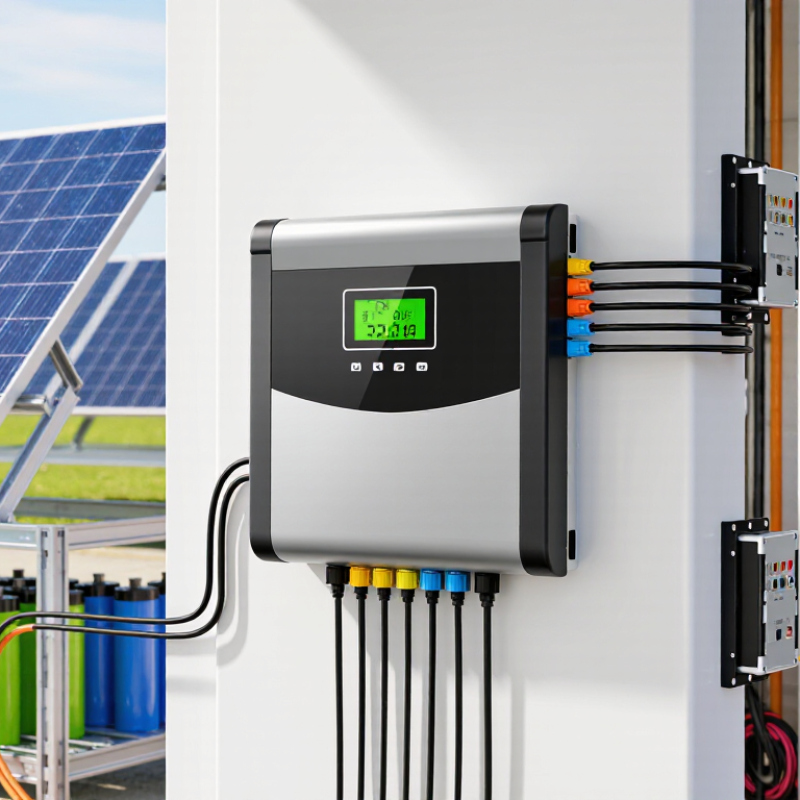
A hybrid solar charge controller manages the flow of electricity from solar panels to a battery and connected loads. It tracks battery voltage and charging current, then adjusts output to reduce overcharging and unnecessary energy loss. Think of a sunny afternoon: panel output rises, but the battery should only receive the current its chemistry and charge stage can safely accept.
Many controllers use maximum power point tracking, or MPPT, to find the panel’s best operating voltage as sunlight and temperature change. They may also provide low-voltage load disconnection and system monitoring. Small device. Big responsibility. In a hybrid system, though, the controller does not automatically manage every grid or backup-generator function; that depends on the inverter and system wiring.
The need for reliable control is growing alongside solar deployment. IRENA reported 346 GW of new solar capacity in 2023, out of 473 GW of global renewable additions (Renewable Capacity Statistics 2024). That figure describes installations, not controller performance, but it highlights how much equipment now depends on sound power management. Buyers should match controller voltage, current limits, and battery charging profile to their actual system design. A larger rating alone is not a guarantee of better operation. I still find this easy to overlook: heat, cable losses, and battery settings can matter as much as the headline specifications.
A hybrid solar charge controller coordinates energy from panels, batteries, and the utility grid. In many systems, it works alongside a hybrid inverter, which manages AC power and grid transfer. When sunlight is strong, solar energy can run household loads and charge the battery with any surplus. After clouds pass, the battery may supply stored power. If its charge falls below a configured level, the system can draw grid power, depending on its settings.
The handoff should feel steady. Still, timing and available features vary by system. Battery chemistry, charging limits, and reserve settings must match the battery maker’s specifications. Incorrect settings can shorten battery life or trigger avoidable grid use.
Settings matter.
Before buying, check how the controller communicates with the inverter and battery, and whether it displays solar input, battery state, and grid consumption clearly. A simple screen showing watts at midday can reveal whether panels are charging the battery or serving active loads. I have found that monitoring is easy to overlook; it becomes useful when cloudy weeks expose a mismatch between expected and actual energy use. A controller can balance power, but it cannot create sunlight or compensate for an undersized system.
Compare hybrid solar charge controllers by matching electrical limits to the actual array and battery, not by headline wattage alone. Check maximum PV open-circuit voltage, MPPT operating range, charging current, battery voltage, and supported battery profiles. Cold mornings can raise panel voltage, so leave margin below the controller’s absolute input limit. Small labels matter.
NREL’s 2024 Annual Technology Baseline models utility-scale battery storage at about 85% round-trip efficiency. This is a system-level benchmark, not a controller efficiency rating; still, it shows why conversion losses deserve attention. Ask for efficiency curves across realistic voltage and load conditions, rather than relying on one peak figure.
Heat changes everything. A unit mounted in a sunny enclosure may reduce output as temperatures rise, so inspect its derating data and required ventilation. Also verify grid or generator input limits, transfer behavior, and whether charging settings can be adjusted for the chosen battery.
One specification sheet rarely answers every installation question. Compare warranty terms and independent test evidence, then check that cable size and protective devices suit the planned current.
A controller can look generous on paper yet perform poorly when the array voltage, battery profile, and site temperature do not align.
A hybrid solar setup may combine panels, batteries, and an inverter, so its controller should fit the whole system. For a compact cabin, short cable runs matter. A PWM controller can suit an array whose voltage closely matches the battery bank. With higher-voltage panels or longer cable runs, an MPPT controller can convert surplus panel voltage into useful charging current. Check its maximum PV input voltage, charging current, and supported battery settings before purchase. Small loads differ.
Some hybrid inverters include an MPPT charge controller, reducing separate wiring and simplifying installation. This can work well where solar, battery storage, and backup power share one system. A standalone controller offers more flexibility when replacing or expanding components, but adds connections to check. Match the controller to the battery’s chemistry and capacity; incorrect charging settings can shorten battery life. A practical oversight is sizing only for today’s panels. Leave room for planned expansion, while staying within the controller’s limits. That balance is easy to get wrong.
Tips: Compare the panel’s cold-weather open-circuit voltage with the controller’s input limit. Keep cable lengths and fuse ratings in your notes. If specifications are unclear, verify them with the manufacturer or a qualified installer.
How to Choose a Controller That Fits Your System and Budget
Choosing a hybrid solar charge controller starts with your system, not the price tag. Check your battery voltage, expected charging current, and the solar array’s maximum open-circuit voltage. Leave a safety margin, especially where cold weather can raise panel voltage. Check the limits.
Confirm what “hybrid” means for the specific unit. Some controllers manage solar charging alongside inverter or grid inputs; others have a narrower role. Verify compatibility with your battery chemistry and its recommended charging profile. A mismatched profile can reduce battery life. That part is easy to overlook.
Compare useful features, not just advertised efficiency. Clear fault codes, temperature sensing, and readable monitoring can save time when output drops on a cloudy afternoon. In practical system planning, future panel expansion matters too: a controller sized exactly for today may force an early replacement. A cheaper model can cost more if it lacks suitable protection or support. Ask for the continuous current rating, PV voltage limits, warranty terms, and a wiring diagram before buying. Then compare those details with your installer’s design and your budget.
CLA-VAL UK Limited
Dainton House
Goods Station Road
Tunbridge Wells
Kent, TN1 2DR
© 2025 CLA-VAL UK | site map | Terms and Conditions of Sale and Warranty | Privacy policy