
Pressure Reducing
Pressure Sustaining / Pressure Relief
Flow Control valves
Float Valves - Level Control
Electrically Actuated Valves
Pressure Modulation - Remote Control
Altitude Valves - Level Control
Burst Control Valves
Pump Control
CLA-VAL "HYTROL" Main Valve
Valve Controllers and Data Loggers
Air Valves
Choosing the best Heavy Duty Hydraulic Press in 2026 is not simply about buying the largest machine. In workshops, factories, and repair bays, pressing force must match the job, material, and available space. A 100-ton press may handle bushings and bent brackets easily, yet waste energy on lighter work. A smaller unit can offer better control. The right choice depends on evidence, not impressive numbers. This guide examines practical performance, construction quality, safety features, service access, and long-term operating costs. It also considers how real users work around these machines daily. Small details matter.
Experienced operators often notice frame flex before a brochure reveals it. They listen for uneven pump noise and check whether the ram returns smoothly. A reliable press should hold pressure without creeping. Its bed pins should feel solid, not loose or awkward. We will compare hydraulic systems, pressure gauges, cylinder travel, working width, and adjustment options. Manufacturer reputation matters, but independent testing and clear warranty terms matter more. Specifications can look precise. They are not always complete.
Some models promise exceptional force at a surprisingly low price. That claim deserves careful inspection. We will question those promises and identify compromises involving speed, alignment, maintenance, or user comfort. No single press is perfect for every facility. Even a respected model may disappoint when its throat depth is too limited. By weighing measured capability against everyday usability, this review aims to support a defensible purchase decision. Readers should still verify local requirements and consult trained professionals before installation or operation. Mistakes here can damage equipment, materials, or people. A cautious choice is a stronger choice.
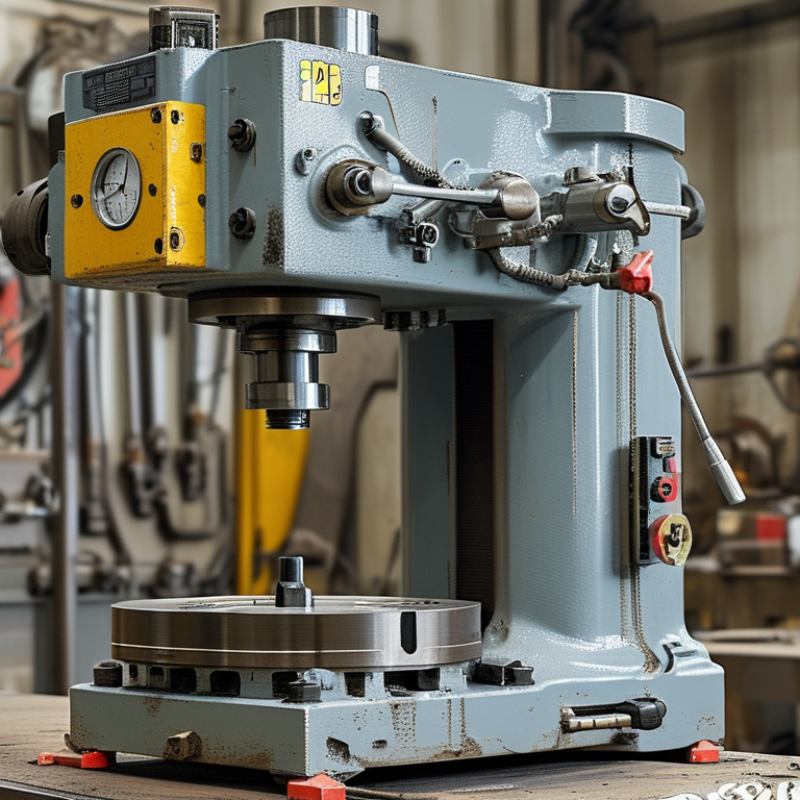
A heavy-duty hydraulic press uses fluid pressure to multiply force across a cylinder. Its frame, pump, tooling, and controls must withstand repeated high-load cycles. “Heavy-duty” has no universal tonnage threshold. In practice, engineers assess rated force, stroke length, daylight, duty cycle, and frame deflection together. A 500-ton rating alone can mislead.
According to Fortune Business Insights, the global hydraulic press machine market was valued at about USD 14.95 billion in 2023. The report projects it to reach approximately USD 21.46 billion by 2032. Automotive manufacturing remains a major demand center, especially for forming and structural components. Metalworking plants also use these presses for forging, bending, deep drawing, bearing installation, and straightening. Recycling facilities apply controlled compression to bulky metal and plastic materials.
USD 14.95 billion Global hydraulic press machine market value in 2023 USD 21.46 billion Projected market value by 2032
Real selection starts with the workpiece, not the largest advertised capacity. A press forming a steel plate may need high force, slow controlled movement, and precise pressure monitoring. A repair shop may value adjustable daylight, guarded tooling, and quick return speed instead. ISO 4413 emphasizes safe hydraulic-system design, including pressure control, hose protection, and stored-energy management. Small details matter.
A useful warning: maximum tonnage is not continuous working capacity. Heat, oil contamination, uneven loading, and poor alignment can reduce reliability. In field evaluations, operators sometimes overlook return speed and access around the die. That is an understandable mistake. The best 2026 press is the one whose force, control, maintenance needs, and safety features match the actual production cycle.
Choosing the best heavy-duty hydraulic press in 2026 starts with measurable specifications, not the largest tonnage label. A useful comparison includes rated force, working pressure, stroke length, daylight, table size, ram speed, and repeatability. A 500-ton press may appear powerful, yet poor frame stiffness can reduce accuracy under load. Check deflection figures and test results.
Grand View Research estimates the global hydraulic press market will continue expanding through 2030, supported by metal forming, composite processing, and manufacturing automation. That growth makes specification discipline more important. ISO 4413 emphasizes controlled hydraulic energy, leak prevention, and safe system design. Ask for pressure stability data, cycle-time records, and documented maintenance intervals. These details reveal performance better than marketing language. In practical workshops, a stable 250-ton machine can outperform a larger press with slow recovery and inconsistent pressure. Bigger is not automatically better.
Tips: Match force to the real material and die area. Confirm the maximum pressure, not only the tonnage. Measure stroke speed at working load. Check whether the frame supports off-center loading. A clear pressure gauge helps operators catch drift early. Also inspect noise, oil temperature, and emergency stopping behavior during a live trial. I would not rely on a single factory test sheet; operating conditions can change the result.
What Is the Best Heavy Duty Hydraulic Press in 2026?
Leading Heavy-Duty Hydraulic Press Types and Their Strengths
The best heavy-duty hydraulic press depends on the work, not the largest pressure rating. H-frame presses offer excellent rigidity for bending, forming, bearing removal, and fabrication. Their wide beds handle large parts with fewer repositioning problems. A 100-ton H-frame model may suit repair shops and general metalwork. Check the frame deflection, cylinder stroke, and working width before choosing.
Four-column presses provide better alignment across the platen. They are strong choices for molding, lamination, and repeated production work. Their guided structure helps distribute force evenly. C-frame presses offer faster access from three sides. They fit smaller work areas, although their open throat can flex under extreme loads. That weakness matters.
Horizontal presses support controlled bending and straightening. Some heavy-duty models include adjustable beds, pressure gauges, and powered approach strokes. These features reduce setup time and improve repeatability. A reliable press should have guarded pinch points and a clearly rated relief system. Operators still need training, stable foundations, and suitable tooling.
Real workshop conditions often expose overlooked details. A press can have impressive tonnage but poor height adjustment. Another may feel solid yet move too slowly for production. I would inspect weld quality, hose protection, control response, and replacement-part access. The “best” choice is sometimes less powerful, but easier to control and maintain. My own preference would change after measuring the actual parts, loads, and daily cycle.
The best heavy-duty hydraulic press depends on the application. H-frame presses provide flexible general-purpose forming and repair work, while four-post presses offer uniform pressure over large workpieces. C-frame presses provide excellent side access, and straight-side presses are better suited to high-force, repeatable production operations. The force values shown are representative heavy-duty configuration benchmarks; actual ratings vary by design, tooling, stroke, and safety requirements.
What Is the Best Heavy Duty Hydraulic Press in 2026?
The best hydraulic press depends on the task, not its maximum tonnage. A repair shop may need controlled force and a compact work area. A fabrication plant may require long stroke length, wide daylight, and continuous operation. Measure the largest workpiece before comparing machines. A 500-ton press is not useful if its table cannot support the load evenly.
Match pressure, speed, and control to the material. Forming thick steel often requires steady force and accurate pressure control. Bearing removal may need shorter travel but better alignment. Check the cylinder stroke, working height, table dimensions, and return speed. These details affect production more than impressive capacity figures. Choose overload protection, guarded moving parts, and clear emergency controls. Safety is part of performance.
I have seen teams focus on tonnage and overlook maintenance access. That mistake becomes expensive when seals, hoses, or filters need inspection. Review the duty cycle, hydraulic fluid requirements, noise level, and available service support. A reliable press should hold pressure without sudden drift. Test that point during acceptance, if possible. My own preference is cautious sizing, around 15 percent above the measured requirement. More capacity can help, but excessive force may damage tooling or the workpiece. Leave room for judgment. Powered controls also need trained operators and documented procedures.
| Industrial Task | Recommended Press Class | Typical Rated Force | Typical Maximum Pressure | Useful Stroke Range | Working Daylight | Recommended Bed Width | Preferred Pump and Control | Typical Working Speed | Key Selection Requirements |
|---|---|---|---|---|---|---|---|---|---|
| Routine bearing, bushing and pin removal | Workshop heavy-duty frame | 50–100 tons | 250–700 bar | 250–400 mm | 600–900 mm | 600–900 mm | Two-stage hydraulic pump with manual or powered adjustment | 5–15 mm/s under load | Choose adjustable support beams, a pressure gauge and a rigid four-post or H-frame structure. |
| Shaft straightening and structural repair | High-capacity H-frame press | 100–200 tons | 250–700 bar | 300–500 mm | 800–1,200 mm | 800–1,200 mm | Electric hydraulic power pack with proportional or fine-control valve | 3–12 mm/s under load | Prioritize frame stiffness, lateral stability, controlled ram movement and a wide adjustable bed. |
| Heavy-duty assembly and interference-fit work | Precision industrial H-frame press | 100–300 tons | 250–700 bar | 400–600 mm | 900–1,400 mm | 900–1,500 mm | Electric pump with pressure-compensated control and position monitoring | 1–10 mm/s under load | Use a guided ram, replaceable tooling, pressure regulation and a repeatable end-of-stroke setting. |
| Metal forming, bending and shallow drawing | Production four-column or guided H-frame press | 200–500 tons | 250–700 bar | 500–800 mm | 800–1,500 mm | 1,000–2,000 mm | Variable-displacement pump with PLC-based proportional control | 2–25 mm/s, depending on the forming stage | Match force, stroke and tooling envelope to the material thickness; include overload protection and guarded access. |
| Scrap metal compacting and bale preparation | High-force recycling press | 300–1,000 tons | 250–700 bar | 600–1,200 mm | 1,000–2,000 mm | 1,200–2,500 mm | Heavy-duty electric or diesel-hydraulic power unit with automatic cycle control | 10–100 mm/s during approach; slower under compression | Consider chamber volume, cycle time, abrasion resistance, automatic return and easy access for maintenance. |
| Composite and rubber compression molding | Precision heated platen press | 100–500 tons | 150–400 bar | 300–800 mm | 400–1,000 mm | 600–1,800 mm | Servo-hydraulic or variable-flow pump with PLC recipe control | 0.5–10 mm/s during closing and pressing | Specify platen parallelism, temperature uniformity, dwell-time control and accurate pressure holding. |
| Automotive and heavy-equipment repair | Mobile or fixed 100–200 ton shop press | 100–200 tons | 250–700 bar | 300–500 mm | 700–1,200 mm | 800–1,200 mm | Electric hydraulic pump with foot pedal or two-hand control | 5–20 mm/s under load | Select a movable cylinder, adjustable bed, interchangeable tooling and a clearly visible overload-rated gauge. |
| Continuous production and high cycle-rate forming | Servo-hydraulic production press | 200–1,000 tons | 250–700 bar | 400–1,000 mm | 600–1,500 mm | 1,000–2,500 mm | Servo pump with PLC, closed-loop position and pressure control | 50–300 mm/s approach; controlled forming speed under load | Evaluate cycle time, energy consumption, repeatability, die-change method, guarding and automated material handling. |
The best heavy-duty hydraulic press in 2026 is not simply the strongest machine. Its safety architecture, service access, and lifetime cost matter more. OSHA standards 1910.212 and 1910.147 require effective machine guarding and hazardous-energy control. A press should have enclosed pinch points, reliable pressure relief, visible gauges, and a tested emergency stop. Two-hand controls help, but they are not a complete safeguard.
Keep hands clear.
The U.S. Bureau of Labor Statistics recorded 5,283 fatal work injuries in 2023, showing why operational discipline still matters around powerful equipment. ISO 4413 also emphasizes clean hydraulic systems, controlled pressure, and safe maintenance procedures. In practical use, inspect hoses for swelling, wipe the ram after each shift, and check oil contamination regularly. A neglected filter can turn a small pressure problem into an expensive pump failure. I have seen maintenance schedules treated as suggestions, which is a costly mistake.
Purchase price should include installation, training, energy use, spare seals, fluid testing, and planned downtime. The U.S. Department of Energy’s Operations & Maintenance Best Practices guide reports that predictive maintenance may reduce maintenance costs by 25–30% and breakdowns by 35–45%. These figures are not universal. Production volume and operator behavior change the result. A cheaper press may still cost more over ten years if parts are difficult to source or service points require long shutdowns. Include a documented inspection history and realistic repair access before approving the purchase.
CLA-VAL UK Limited
Dainton House
Goods Station Road
Tunbridge Wells
Kent, TN1 2DR
© 2025 CLA-VAL UK | site map | Terms and Conditions of Sale and Warranty | Privacy policy