

-
Solutions
-

Waterworks

Pressure Reducing
Pressure Sustaining / Pressure Relief
Flow Control valves
Float Valves - Level Control
Electrically Actuated Valves
Pressure Modulation - Remote Control
Altitude Valves - Level Control
Burst Control Valves
Pump Control
CLA-VAL "HYTROL" Main Valve
Valve Controllers and Data Loggers
Air Valves
See all
Waterworks
-

Military Fuelling
-
- About us
- Blog
- Support
- Contact


Blog
What Is the Best Lightning Arrestor for Global Buyers?
Choosing the best Lightning Arrestor for global buyers is not a simple catalog decision. It is a protection decision shaped by voltage, equipment sensitivity, location, and installation quality. A device that performs well in a dry industrial plant may fail to suit a coastal site with salt air, frequent storms, and unstable grounding.
Lightning researcher Dr. Martin A. Uman wrote, “Lightning is a giant spark that can strike from a cloud to the ground, from a cloud to another cloud, or within a cloud.” His observation explains why protection requires more than a high discharge-current rating. Buyers should examine the arrestor’s maximum continuous operating voltage, nominal discharge current, impulse withstand capability, response time, enclosure rating, and tested compliance with relevant standards. IEC 61643-11 may guide low-voltage surge protection choices, while medium- and high-voltage systems require different technical evaluations.
Start with the system.
Then study the environment.
A reliable Lightning Arrestor should match the protected equipment, not merely the advertised energy rating. Check the earthing path, lead length, backup protection, thermal disconnector, and replacement indicator. These small details often decide whether surge energy is diverted safely or reaches a control cabinet.
Global sourcing adds another layer. Certification marks, test reports, warranty terms, and technical support should be verified with the manufacturer or an experienced engineer. Product names can mislead. “Heavy duty” is not a universal specification.
There is no perfect arrestor for every market. That idea deserves caution. The strongest choice is usually the one supported by correct calculations, documented testing, suitable installation, and honest after-sales service.
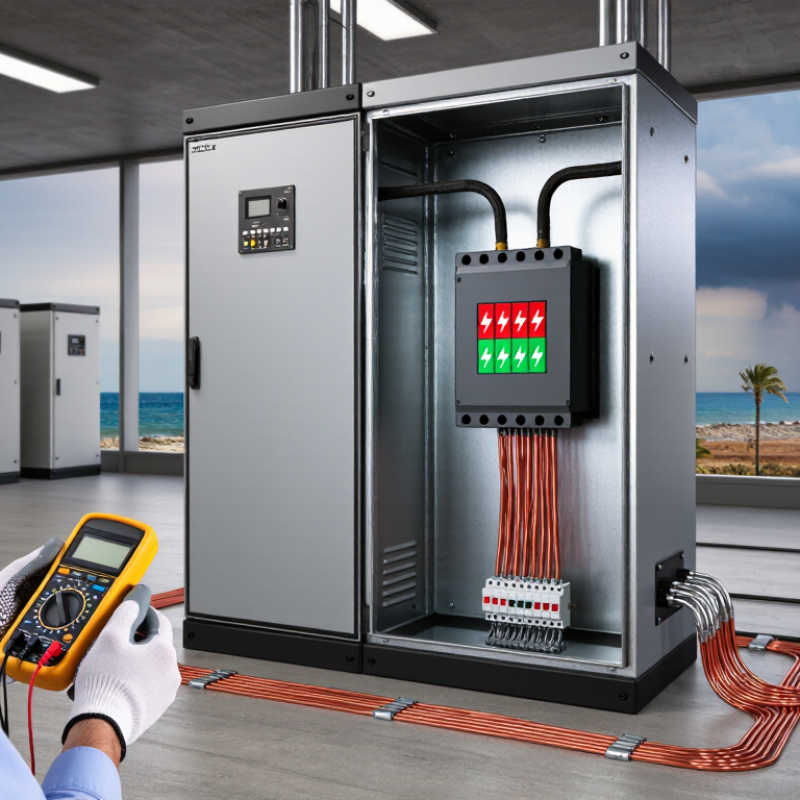
Lightning Arrestor Basics: ZnO Varistors, MCOV, and 8/20 µs Surge Ratings
What Is the Best Lightning Arrestor for Global Buyers?
For global buyers, the best lightning arrestor starts with the system voltage, not the lowest price. Modern arrestors commonly use zinc oxide (ZnO) varistors. These ceramic blocks conduct surge current quickly and limit excessive voltage without needing series gaps. In practical installations, a suitable device should match the network’s maximum continuous operating voltage, known as MCOV or Uc. If MCOV is too low, temporary overvoltage may cause unnecessary heating or failure. If it is too high, protection levels may become less effective.
The 8/20 µs surge rating describes a standardized current waveform used in testing. It helps compare discharge capability, but it does not tell the entire story. Buyers should also check nominal discharge current, maximum discharge current, residual voltage, thermal stability, and short-circuit behavior. Cable length matters too. A long connection can add inductive voltage during a fast surge. That detail is easy to overlook. Installation instructions and independent test reports provide stronger evidence than a sales table alone. Standards may also differ between regions, so confirm local requirements before ordering.
Tips: Verify the line-to-ground voltage first. Compare MCOV with real operating conditions. Check the 8/20 µs rating and residual voltage together. Inspect grounding paths, terminal spacing, and enclosure protection. A higher current rating is not automatically better. I have seen selection decisions focus on one impressive number, while poor wiring weakened the protection. Recheck the whole installation.
What Is the Best Lightning Arrestor for Global Buyers? - Lightning Arrestor Basics: ZnO Varistors, MCOV, and 8/20 µs Surge Ratings
| Application Category | Typical System Voltage | Recommended MCOV (Uc) | ZnO Varistor Role | Nominal Discharge Current (In), 8/20 µs | Maximum Discharge Current (Imax), 8/20 µs | Typical Protection Level (Up) | Typical Installation Point |
|---|---|---|---|---|---|---|---|
| Residential single-phase power | 120/240 V or 230/400 V AC | 150 V for 120 V systems; 275 V for 230 V line-to-neutral systems | Clamps transient overvoltage by conducting surge current to protective earth or neutral. | 5–20 kA | 10–40 kA | Typically ≤ 1.5–2.0 kV, depending on configuration and wiring length | Main distribution board or consumer unit |
| Commercial and industrial low-voltage distribution | 230/400 V or 277/480 V AC | 275 V for 230 V line-to-neutral; 320–385 V for 277 V line-to-neutral | Provides high-energy transient protection while remaining non-conductive at normal operating voltage. | 10–20 kA | 20–40 kA | Typically ≤ 1.5–2.5 kV | Main switchboard, distribution panel, or sub-distribution board |
| Equipment-level protection | 120 V, 230 V, or 277 V AC | 150–385 V AC, selected to match the actual line-to-neutral voltage | Reduces residual surge voltage near sensitive electronic loads. | 3–10 kA | 5–20 kA | Typically ≤ 1.0–1.5 kV | Control cabinet, equipment inlet, or final distribution point |
| Photovoltaic DC systems | 600 V, 1,000 V, or 1,500 V DC | Selected above the maximum continuous PV operating voltage; common values include 600, 1,000, and 1,500 V DC | Clamps lightning-induced and switching surges on PV strings without continuous conduction at the array voltage. | 5–20 kA | 10–40 kA | Commonly ≤ 2.5–5.0 kV, depending on DC rating | PV combiner box, inverter DC input, or array junction box |
| Outdoor lines and exposed infrastructure | Low-voltage AC or DC circuits with high surge exposure | Must exceed the maximum continuous circuit voltage and account for temporary overvoltage | Absorbs repeated surge energy and limits voltage at remote equipment. | 10–20 kA | 20–40 kA or higher where the risk assessment requires it | Determined by equipment withstand voltage and lead length | Service entrance, outdoor cabinet, remote terminal, or pole-mounted enclosure |
| Direct-lightning-current protection | AC or DC systems requiring Type 1 or combined Type 1+2 protection | Selected according to the system voltage, earthing arrangement, and temporary overvoltage requirements | Works as part of a coordinated surge protection system; a ZnO element alone does not replace correct bonding and earthing. | Typically 12.5–25 kA per pole for 10/350 µs test class; 8/20 µs ratings are also specified for coordination | Often 25–50 kA for the 8/20 µs waveform | Application-specific; generally coordinated with downstream protective devices | Service entrance or boundary between lightning protection zones |
- MCOV, also called Uc, is the maximum continuous RMS voltage that the arrester is designed to withstand continuously without thermal instability. It must be higher than the actual continuous system voltage.
- The 8/20 µs waveform represents a standardized surge current impulse with an approximately 8 µs rise time and 20 µs decay time. In is the nominal discharge current used for testing and comparison, while Imax is the maximum discharge current the device can withstand under the specified test conditions.
- A lower Up generally offers better equipment protection, but the selected arrester must still have adequate MCOV, temporary-overvoltage capability, short-circuit protection, and energy withstand.
- The values shown are typical selection ranges rather than universal product specifications. Final selection should consider system earthing, maximum operating voltage, temporary overvoltage, expected lightning exposure, coordination with upstream and downstream SPDs, and the applicable local standard.