What Is the Best Type of Door Cabinet Hinges?
Choosing the best type of Door Cabinet Hinges is rarely as simple as selecting the most expensive option. Cabinet weight, door thickness, opening angle, and installation style all influence the right choice. A hinge that performs perfectly on a lightweight bathroom cabinet may fail on a solid oak kitchen door.
This guide examines common hinge types, including concealed, butt, overlay, inset, soft-close, and pivot designs. Each option has practical strengths and limitations. Concealed hinges create a clean appearance, while butt hinges can offer a traditional look and straightforward maintenance. Soft-close models reduce slamming and protect cabinet frames, but their mechanisms may require accurate adjustment.
Real installation experience shows that small details matter. A 35-millimeter cup hole must be positioned carefully. Uneven gaps often reveal poor alignment, not a defective hinge. Door weight also matters more than many buyers expect. A heavy pantry door needs stronger hardware and reliable screws.
There is no universal winner.
The best Door Cabinet Hinges should match the cabinet’s construction, daily use, and desired appearance. This article compares performance, durability, adjustability, cost, and installation difficulty. It also considers details often overlooked, such as corrosion resistance near sinks and replacement availability years later.
Some recommendations may change.
Manufacturers publish load ratings, but real-world conditions can differ. Frequent use, loose mounting plates, and low-quality particleboard may reduce hinge life. Careful measurement and professional installation remain important. By weighing these factors honestly, homeowners, designers, and installers can make a more dependable decision.
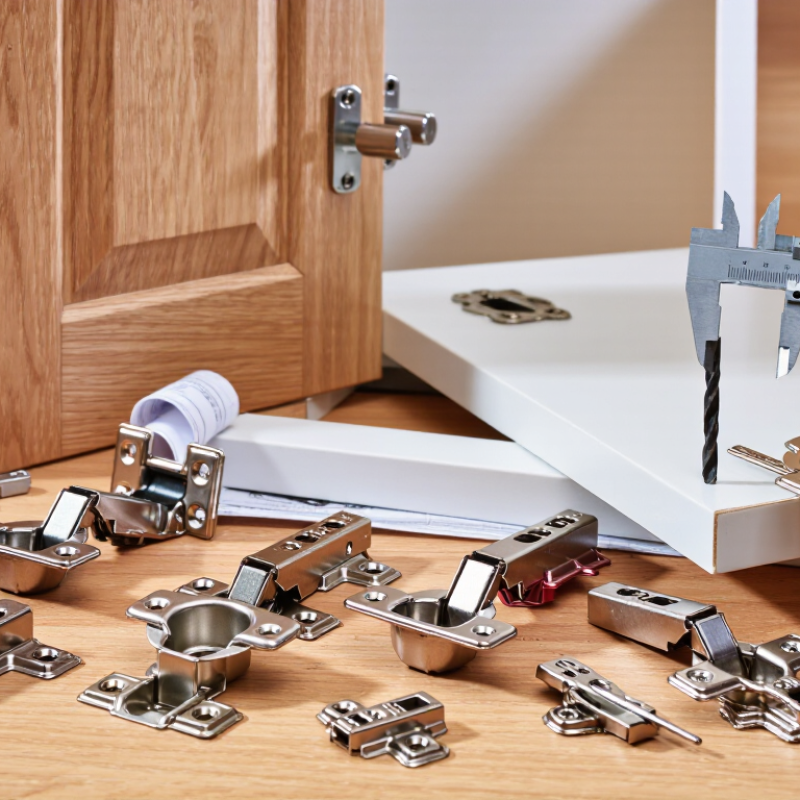
Types of Door Cabinet Hinges and Their Basic Designs
What Is the Best Type of Door Cabinet Hinges?
The best hinge depends on door position, overlay, weight, and opening angle. Industry reports from Grand View Research describe cabinet hardware as a growing replacement market, driven by kitchen renovations and modular furniture. That trend makes hinge selection more important than it appears.
The basic design is the concealed hinge. It sits inside the cabinet and leaves the door face clean. Full-overlay hinges cover the frame almost completely. Half-overlay hinges share one frame section between two doors.
Inset hinges place the door inside the cabinet opening, requiring tighter measurements. A 110-degree opening suits most kitchens, while 165-degree designs improve access to wide drawers and corner storage.
There is more to it.
Soft-closing models use a hydraulic damper to slow the final movement. This reduces slamming, but performance depends on door mass and adjustment quality. Clip-on designs simplify removal during installation, while fixed-plate designs can provide a firmer connection. According to the European Federation of Furniture Manufacturers’ technical guidance, repeated opening cycles and accurate alignment remain key durability factors. That point is often overlooked.
For reliable selection, measure the overlay and cup position before ordering. Check the door thickness, screw placement, and cabinet material. A strong hinge can still fail when particleboard strips around the screws. Stainless steel may resist corrosion better in humid rooms, yet it does not solve poor installation. The honest answer is uncomfortable: no single hinge type is best for every cabinet.
How Door Construction Determines the Right Cabinet Hinge
What Is the Best Type of Door Cabinet Hinges?
How Door Construction Determines the Right Cabinet Hinge
The best cabinet hinge depends on how the door meets the cabinet box. A full-overlay door covers nearly all the front frame, so it usually needs a full-overlay hinge. A half-overlay hinge suits paired doors sharing one partition. An inset door sits inside the opening and requires an inset hinge with accurate adjustment.
Door construction also affects hinge strength and movement. Thick solid-wood doors can be heavy, especially with glass panels or metal handles. They may need more hinges than a lightweight engineered-wood door. Frameless cabinets often use concealed hinges with mounting plates fixed directly to the cabinet side. Face-frame cabinets need plates designed for the front frame. The wrong plate can shift the door outward.
Small details matter. Door thickness, cup-hole depth, overlay size, and opening angle should be measured before ordering. I have seen a door look correctly aligned at first, then sag after repeated use. That experience taught me not to judge a hinge by appearance alone. A soft-close feature improves comfort, but it cannot correct a weak installation.
Tips: Measure the door and cabinet separately. Check hinge capacity against the finished door weight. Use a drilling guide for consistent cup placement. Leave clearance near corners and adjacent doors. Recheck the screws after several weeks. Wood can move slightly with humidity, and even careful measurements may need adjustment.
Comparing Hinge Materials, Mounting Styles, and Opening Angles
What Is the Best Type of Door Cabinet Hinges?
Choosing door cabinet hinges is less about appearance than matching material to daily stress. Steel suits dry rooms and moderate use, while stainless steel handles humidity better. Brass adds a warm finish, but softer alloys may mark or loosen under heavy doors. Zinc-based hinges are practical for lighter panels, though their surface finish deserves close inspection. Check the screw seats and hinge cup before judging the metal. Small details matter.
Mounting style controls alignment, repair time, and the visible gap around the door. Full-overlay hinges hide most of the cabinet edge and suit clean, continuous fronts. Inset hinges place the door inside the frame, demanding accurate drilling and careful adjustment. Half-overlay designs share one partition between neighboring doors. Frameless cabinets commonly use concealed cup hinges, while face-frame cabinets may need compatible plates or adapters. Clip-on mechanisms speed removal, but screw-fixed hinges can feel more reassuring during repeated servicing.
Opening angle is easy to overlook. A 95- or 110-degree hinge works for most cupboards and protects nearby walls. A 165-degree model improves access to corner shelves and cleaning areas. Yet wider movement can strike adjacent doors or handles. Measure the room, not only the cabinet. A stop hinge helps where the door must avoid a wall or appliance. No hinge is perfect. Recheck door weight, panel thickness, and screw length before ordering. That final check is often skipped.
Key Factors for Choosing the Best Door Cabinet Hinge
What Is the Best Type of Door Cabinet Hinges?
Key Factors for Choosing the Best Door Cabinet Hinge
The best cabinet hinge depends on the door design, cabinet frame, and daily use. A concealed hinge suits modern cabinets because it stays hidden when the door closes. For framed cabinets, choose an overlay, half-overlay, or inset hinge that matches the door position. Measure carefully. A few millimeters can affect the entire row of doors.
Opening angle also matters. A 95-degree hinge works for many standard cabinets, while a wider angle improves access in corner units. Soft-close hinges reduce slamming and protect the cabinet surface. However, the closing action should match the door weight. A weak hinge may bounce, while an overly strong mechanism can make the door feel stiff.
Material and adjustment are practical concerns. Stainless steel or treated steel handles moisture better in kitchens and laundry areas. Look for three-way adjustment, including height, depth, and side movement. This helps correct uneven gaps during installation. In my own fitting work, I once focused too much on the opening angle and ignored the mounting plate. The doors looked fine at first, but alignment shifted after repeated use. That mistake was avoidable.
Check screw strength and hinge load limits before buying. Cheap hardware can loosen in soft board. A reliable hinge should move smoothly, hold its position, and remain quiet after regular testing. It is worth opening each door several times before final tightening. Small details matter.