








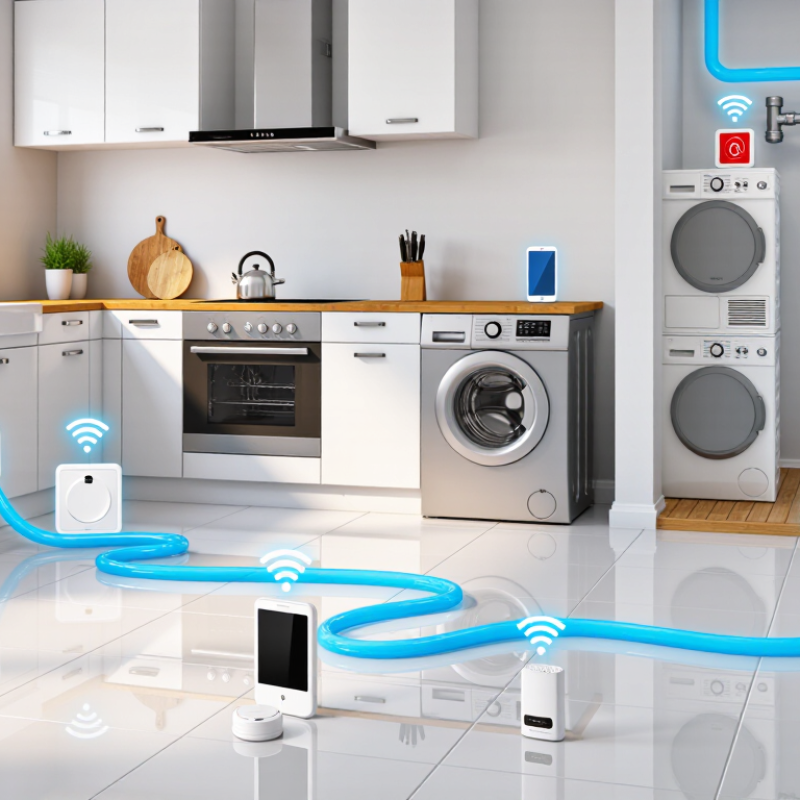
Water leak detectors in 2026 generally fall into three types: point sensors, cable sensors, and whole-home flow monitors. Point sensors sit near likely trouble spots, such as beneath a sink or beside a washing machine. They alert when water touches their contacts.
Cable sensors detect water along a longer route, making them useful around water heaters or basement edges. The U.S. Environmental Protection Agency estimates household leaks waste nearly 1 trillion gallons of water annually. That figure covers many kinds of leaks, but it shows why early detection matters. Placement matters.
Whole-home monitors track water flow through a property’s main supply line. Some can close an automatic shutoff valve when usage looks unusual. They may detect hidden leaks that floor sensors miss, but installation and settings matter. A small overnight flow could be a leak—or normal appliance use. No single type covers every risk, and even a well-placed sensor can miss water that travels elsewhere. Choosing a detector means matching its coverage to the home’s layout and plumbing.
Tips: Place point sensors where water would collect first, not just where they are easy to reach. Test alarms regularly, and check battery life. For broader protection, pair room-level sensors with a flow monitor; the extra setup is not perfect, but it can cover more failure points.