Pressure Reducing
Pressure Sustaining / Pressure Relief
Flow Control valves
Float Valves - Level Control
Electrically Actuated Valves
Pressure Modulation - Remote Control
Altitude Valves - Level Control
Burst Control Valves
Pump Control
CLA-VAL "HYTROL" Main Valve
Valve Controllers and Data Loggers
Air Valves
Choosing among China’s best Liquid Ring Compressor manufacturers requires more than comparing price or catalog capacity. A compressor may look suitable on paper, yet struggle with a hot, humid gas stream or frequent liquid carryover. Buyers should examine materials, sealing-liquid requirements, operating range, service access, and documented performance data. Small details matter. A drain placed too low can complicate maintenance. A poorly matched seal liquid can affect efficiency and reliability.
Machinery reliability author Heinz P. Bloch is known for emphasizing sound equipment selection and maintenance practices. A practical selection principle for this guide is: “Choose the compressor for the actual process conditions, not the idealized datasheet.” This is an editorially written principle, not a verified quotation from Bloch. That distinction matters. Manufacturer claims should be checked against test conditions, references, and clear technical documentation.
This article will compare Chinese suppliers through practical criteria: engineering support, customization, manufacturing consistency, spare-parts availability, and after-sales response. It will also consider where a Liquid Ring Compressor performs well, including wet-gas and vapor-handling duties, and where buyers should ask harder questions. No single factory is best for every plant. A supplier with strong export experience may still be a poor fit if its service team cannot support your installation. Request operating references. Review the drawings. Ask how performance changes when suction pressure or liquid temperature shifts. Those checks take time, and some comparisons remain imperfect. That is worth admitting.
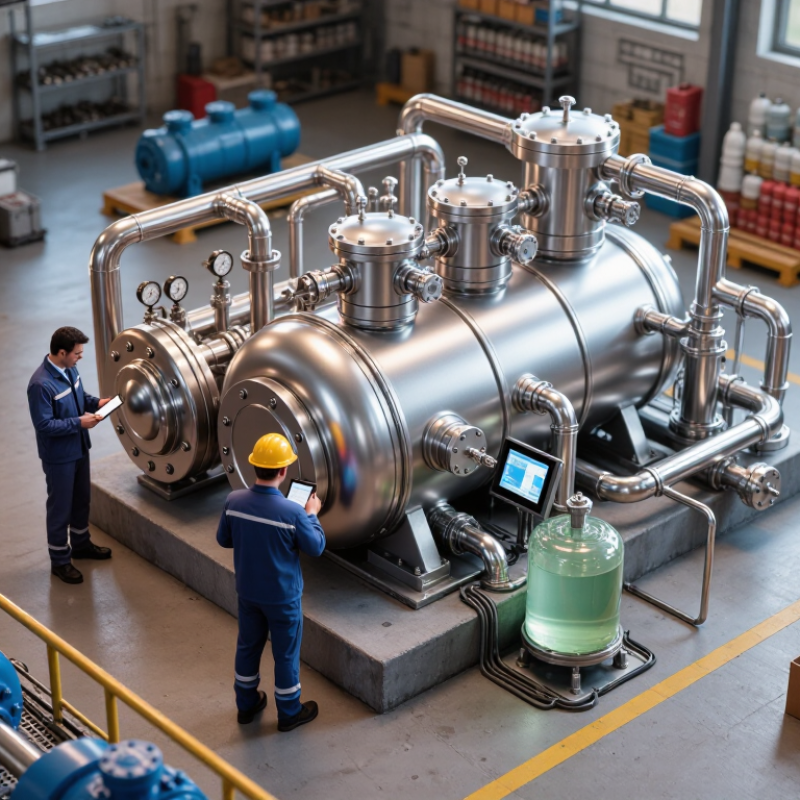
Liquid ring compressors use a rotating impeller and seal liquid to move gas through changing-volume chambers. As the gas is compressed, the liquid absorbs much of the heat, keeping compression close to isothermal. Not perfectly so. In practice, the outlet temperature depends on seal-liquid temperature and flow, gas properties, and suction conditions. This gentle temperature rise can suit wet or condensable gas streams, but liquid compatibility and downstream separation still need attention.
When comparing manufacturers in China, request performance data for your actual gas composition, suction pressure, and seal-liquid temperature. A headline capacity may not reflect your operating point. Ask how the stated outlet temperature was measured and what cooling flow it assumes. Reliable technical guidance should explain operating limits, not only best-case figures. The ideal isothermal model is useful, but real installations can be less tidy than a brochure suggests.
Tips: Measure seal-liquid temperatures at both inlet and outlet, and keep a simple operating log. Check strainers and cooling flow if discharge temperature rises. Small details matter. A brief temperature change can signal fouling, reduced cooling, or a process condition worth investigating.
“Best” depends on the duty point, not a catalogue’s largest flow. Specify capacity in m³/h and state whether it is actual inlet flow or normalized flow. The distinction matters when gas temperature, pressure, or composition changes. Record suction and discharge pressure in bara; bara is absolute, while barg is gauge pressure. A reading of 1 bara is close to atmospheric pressure. Small differences matter.
Power needs the same care. Ask whether the quoted kW is shaft power or motor input, and compare figures at the stated flow, pressure, and seal-liquid temperature.
The U.S. Department of Energy’s Improving Compressed Air System Performance sourcebook reports that compressed-air systems can use about 10% of industrial electricity, with some facilities reaching 30%. This is a system-level estimate, not a liquid-ring compressor benchmark, but it shows why a small kW mismatch can matter over long operating hours.
Check the basis. For a fair supplier comparison, request a performance curve and the test conditions behind it. Include gas composition and moisture, too; these details are easy to overlook. Even a neat duty sheet can miss real site variation.
China Best Liquid Ring Compressor Manufacturers?
How API 681 Guides Liquid Ring Compressor Design and Testing
For buyers comparing liquid ring compressor manufacturers in China, API 681 offers a useful technical reference. It covers liquid ring vacuum pumps and compressors for demanding industrial services. The standard helps define design expectations, documentation, inspection, and testing. It does not replace project-specific engineering or guarantee suitability for every gas.
A reliable review starts with the actual operating conditions. Share gas composition, flow range, suction and discharge pressures, and the properties of the operating liquid. These details affect capacity, temperature rise, materials, and seal selection. API 681 also provides a framework for performance testing and mechanical checks. Ask for test procedures and recorded results, not only a statement of compliance. A test point may not reflect the full operating range. That detail is easy to overlook.
Tips: Confirm the applicable API 681 edition and any additional purchase specifications. Review performance curves against expected site conditions, including liquid temperature. Check how the supplier documents deviations and test results. Clear records matter. A careful technical review can reveal gaps before installation.
API 681 covers liquid ring vacuum pumps and compressors for petroleum, chemical, and gas industry services. This qualitative scope map highlights common specification areas; it is not a compliance score, test result, or set of acceptance limits.
A 50 Hz performance curve is useful only when its test conditions are clear. Compare capacity at the same suction pressure, discharge pressure, and working-liquid temperature. A curve measured with cool water may show higher capacity than one measured with warmer water. Small differences matter.
Check the axes and units before comparing lines. Confirm whether capacity is stated as actual volume or standard volume, and note the gas composition and inlet temperature. Also compare shaft power at the required operating point, not only the motor’s rated power. A 50 Hz label alone proves little. Ask for the original curve and the conditions behind it.
Look for a stable operating range, not just one impressive data point. Liquid ring compressors can lose capacity as suction pressure falls or seal-liquid temperature rises. Request information about liquid flow, allowable pressure limits, and test tolerance. Some curves are simplified, and not every supplier presents data in the same format. That is inconvenient, but worth acknowledging. If key test conditions are missing, treat the comparison as provisional and ask for a curve matched to your process.
China Best Liquid Ring Compressor Manufacturers?
Where Liquid Ring Compressors Serve: Chemical, Gas, and Process Industries
Liquid ring compressors are used where gas streams may contain moisture, vapors, or small amounts of carryover. In chemical plants, they can support vacuum and gas recovery duties around reactors, evaporators, and storage systems. The rotating impeller moves gas through a liquid seal, helping manage wet streams that may challenge some dry-running designs. Conditions vary. Gas composition, temperature, and seal-liquid choice all affect performance.
In gas and process industries, these compressors may handle vapor transfer, low-pressure gas boosting, and recovery from process equipment. Their relatively steady compression can help when inlet conditions fluctuate, but they are not a universal solution. A corrosive gas may require carefully selected wetted materials. Seal liquid can also absorb contaminants, so operators need a plan for monitoring and treatment. Small details matter.
Tips: Match the compressor to the actual gas composition and operating range, not just the nameplate capacity. Ask for performance data at expected suction pressure and temperature. Check seal-liquid flow, cooling needs, and discharge handling before installation. A field review is useful. Even experienced teams can overlook startup conditions, and that is worth revisiting.
| Industry or Process | Typical Service | Why a Liquid Ring Compressor May Be Used | Key Selection Considerations |
|---|---|---|---|
| Chemical manufacturing | Compressing process gases and handling vapors that may contain moisture or condensable components. | The liquid ring can support relatively cool compression and can handle some wet or contaminated gas streams, depending on the process and liquid compatibility. | Confirm gas composition, seal-liquid compatibility, corrosion resistance, discharge conditions, and the need for liquid separation or recovery. |
| Gas processing | Moving or compressing gas streams in applications where gas may be saturated or carry liquid droplets. | The operating principle can accommodate wet gas service better than many dry compression arrangements, when properly selected and operated. | Assess gas flow, suction pressure, discharge pressure, liquid carryover, seal-liquid circulation, and any required downstream separation. |
| Petrochemical and refinery processes | Process-gas compression and vapor handling in selected plant services. | Liquid ring machines can be considered where stable operation with moist or potentially condensable gases is important. | Review hazardous-area requirements, materials of construction, process safety requirements, gas properties, and the consequences of seal-liquid contamination. |
| Vacuum systems in process plants | Creating vacuum for process vessels, filtration, drying, or other operations requiring reduced pressure. | Liquid ring equipment is commonly used for industrial vacuum duties and can tolerate some vapor or moisture in the inlet stream. | Specify the required suction pressure and capacity, operating temperature, vapor load, seal-liquid temperature, and whether a closed-loop liquid system is needed. |
| Biogas and gas recovery | Handling gas streams that can be humid and may contain impurities, subject to suitable materials and system design. | The liquid ring principle may be appropriate for some wet-gas duties and can provide continuous gas movement without dry running clearances. | Check gas composition, including corrosive or hazardous constituents, condensate management, liquid treatment, and applicable safety standards. |
| Wastewater and environmental systems | Vacuum or gas-handling duties associated with treatment and environmental process equipment. | Liquid ring compressors and vacuum pumps can be considered where moisture or vapor is present in the gas stream. | Evaluate odor and corrosion control, seal-liquid disposal or recycling, solids ingress, cleaning access, and the required operating range. |
| General process-gas service | Continuous compression of process gases in industrial systems. | Liquid ring machines are valued in suitable applications for their tolerance of wet gas and their relatively low gas-discharge temperatures compared with some alternatives. | Compare the duty with other compressor types; confirm capacity, pressure ratio, efficiency, liquid consumption, noise, maintenance needs, and total system requirements. |
CLA-VAL UK Limited
Dainton House
Goods Station Road
Tunbridge Wells
Kent, TN1 2DR
© 2025 CLA-VAL UK | site map | Terms and Conditions of Sale and Warranty | Privacy policy