
-
Solutions
-

Waterworks

Pressure Reducing
Pressure Sustaining / Pressure Relief
Flow Control valves
Float Valves - Level Control
Electrically Actuated Valves
Pressure Modulation - Remote Control
Altitude Valves - Level Control
Burst Control Valves
Pump Control
CLA-VAL "HYTROL" Main Valve
Valve Controllers and Data Loggers
Air Valves
See all
Waterworks
-
Military Fuelling
-
- About us
- Blog
- Support
- Contact


Blog
How to Choose a Commercial Drain Cleaning Machine in 2026?
Choosing a Commercial Drain Cleaning Machine in 2026 starts with the drains you actually service. A compact cable machine may suit indoor branch lines, while larger mains can demand greater reach and different tooling. Water jetters offer another approach, but they require suitable water access, careful operation, and a clear maintenance plan. There is no universal winner. A machine that clears a long run in one building may be awkward in a cramped service corridor. That detail matters.
Before comparing models, note pipe diameters, common blockage types, access restrictions, and how often crews move equipment between sites. Check cable or hose options, control layout, transport wheels, protective features, parts availability, and routine service needs. Ask for a demonstration using conditions close to your daily work. A glossy brochure cannot show how a machine handles a tight corner at the end of a long shift. Nor does a high power rating guarantee the right fit.
A practical buying principle, voiced here through fictional composite specialist Alex Morgan, is: “Match the machine to the drain, the access, and the operator—not just the toughest job on the brochure.” Treat that as a prompt, not a verified quotation from a real person. This guide compares machine types, key specifications, operating considerations, and ownership costs to help buyers make a sound choice. Some needs will remain hard to predict. That is worth admitting. When evaluating a Commercial Drain Cleaning Machine, weigh proven service support and safe, consistent operation alongside raw performance.
What Commercial Drain Cleaning Machines Do and Where They Are Used
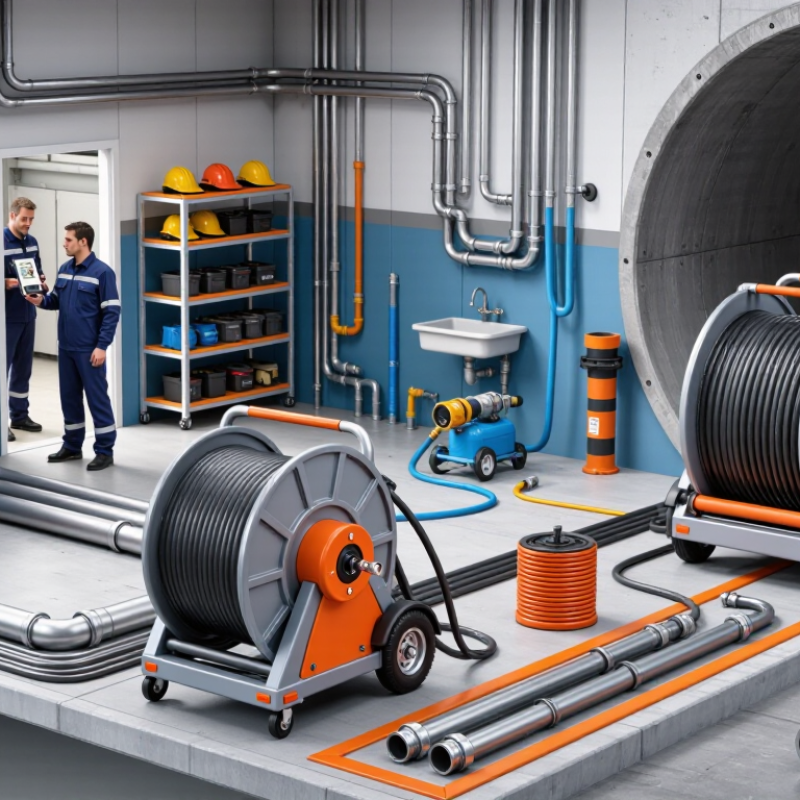
Commercial drain cleaning machines remove grease, hair, scale, roots, and other obstructions from pipework. A powered cable machine turns a flexible steel cable through the drain, breaking up or retrieving debris. Larger sectional units suit longer runs and tougher blockages, while compact drum machines are easier to move through narrow service corridors. Water jetters use high-pressure water to scour pipe walls and carry loose material downstream. They require suitable access and careful pressure control.
These machines are used in restaurants, hotels, hospitals, schools, apartment buildings, and commercial kitchens. In a restaurant, a technician might clear a grease-bound branch line beneath a prep sink. Maintenance crews may use cable machines for floor drains, toilets, and shorter branch pipes. Jetters can be useful for longer lines with recurring buildup, but they are not right for every pipe. Older, cracked, or poorly supported pipes may need inspection before aggressive cleaning. A camera inspection can help locate a blockage and show whether the pipe has damage. It does not answer everything, though. Pipe material, diameter, access points, and the type of debris all affect which machine is appropriate. A powerful machine is not automatically the safer or faster choice.
How to Choose a Commercial Drain Cleaning Machine in 2026? — What Commercial Drain Cleaning Machines Do and Where They Are Used
Typical operating ranges are approximate and vary by machine configuration, cable or hose size, and drain condition. Check the equipment specifications and follow applicable safety procedures before use.
| Machine Type | How It Cleans | Typical Pipe Range | Typical Reach | Best-Suited Applications | Main Advantages | Selection Considerations |
|---|---|---|---|---|---|---|
| Drum cable machine | A rotating motor turns a flexible cable fitted with a cutting or retrieval head to break through or remove obstructions. | About 1¼–4 in (32–100 mm), depending on the model and cable. | Commonly about 50–100 ft (15–30 m) of cable. | Interior sinks, floor drains, branch lines, and routine service calls in kitchens, offices, and commercial buildings. | Enclosed drum contains much of the rotating cable; compact models are comparatively easy to transport and store. | Match the cable diameter and cutter to the pipe. A drum can be heavy when loaded, and the cable may be less suitable for very long or large-diameter mains. |
| Sectional cable machine | Rotates short, connectable cable sections with interchangeable cutting heads to negotiate bends and clear deposits or blockages. | Commonly about 2–10 in (50–250 mm), with suitability depending on machine and cable size. | Extended in sections; total working length is determined by the number of cables carried and the job setup. | Building laterals, floor drains, and longer lines where technicians need to add or remove cable as they work. | Flexible working length and separate cable sections can be easier to carry than one long cable. | Requires correct cable handling and secure connections. Choose cable size, section length, and cutter range for the pipe and access conditions. |
| High-speed flex-shaft machine | Spins a small, flexible inner shaft at high speed, usually with a chain knocker or compatible cleaning head, to scour the pipe wall. | Often about 1¼–4 in (32–100 mm), subject to the shaft and tool configuration. | Commonly around 50–100 ft (15–30 m), depending on the shaft. | Grease, scale, and soft deposits in smaller drain lines; useful where wall cleaning is desired after an opening has been made. | Can clean along more of the pipe circumference and is often compact for indoor work. | Not a substitute for every heavy blockage-clearing task. Use compatible tooling and observe restrictions for pipe material, condition, and bends. |
| High-pressure water jetter | Uses a pump and specialized nozzle to send pressurized water through a hose; rear-facing jets propel the hose and flush debris back toward the access point. | Commonly about 2–12 in (50–300 mm), depending on flow, pressure, nozzle, and pipe condition. | Hose lengths are often roughly 100–300 ft (30–90 m), depending on the system. | Grease, sludge, and recurring buildup in restaurant lines, commercial laterals, and other drains suited to water-based cleaning. | Can flush loosened material out of the line and clean deposits around the pipe wall. | Choose by both flow rate and pressure, not pressure alone. Requires water supply, suitable drainage, and careful assessment of fragile or damaged piping. |
| Large-capacity main-line cable machine | Drives a heavy-duty cable and larger cutting head through substantial drains to cut roots or clear major obstructions. | Often about 3–10 in (75–250 mm), with model-specific limits. | Varies by cable system; may be extended using compatible cable sections. | Building sewers, larger commercial drains, and accessible main lines with root intrusion or tough blockages. | Designed for larger cables and cutting tools than small branch-line machines. | Consider machine weight, access to the cleanout, cable control, and the condition of the pipe. A cutting cable can worsen damage in a compromised line. |
| Portable compact cable machine | Rotates a smaller cable through short, narrow drain runs to retrieve or break up common obstructions. | Typically about ¾–2 in (19–50 mm), depending on the machine and cable. | Often about 25–50 ft (8–15 m). | Small sinks, lavatories, and short branch drains in offices, hospitality spaces, and other tight-access locations. | Lightweight and convenient for frequent indoor service calls. | Limited cable size and reach make it unsuitable for many large mains or heavy root blockages. Confirm that the cable and head fit the fixture and trap configuration. |
| Combination sewer cleaner | Combines high-pressure jetting with a vacuum system to flush and recover liquid, sludge, and debris. | Commonly used on larger sewer and storm-drain lines; capacity depends on the vehicle and equipment setup. | Hose reach varies by vehicle, hose reel, and site layout. | Municipal and large-facility sewers, storm drains, catch basins, and heavy cleanout work. | Can jet lines and collect recovered material in one service operation. | High purchase, transport, and operating requirements. Assess site access, disposal needs, water supply, and the scale of the work before choosing this equipment. |