Pressure Reducing
Pressure Sustaining / Pressure Relief
Flow Control valves
Float Valves - Level Control
Electrically Actuated Valves
Pressure Modulation - Remote Control
Altitude Valves - Level Control
Burst Control Valves
Pump Control
CLA-VAL "HYTROL" Main Valve
Valve Controllers and Data Loggers
Air Valves
Selecting a Nickel Alloy Round Bar Manufacturer is not a paperwork exercise alone. The choice affects machining, corrosion resistance, delivery schedules, and the reliability of finished components. A bright surface can look reassuring. It proves very little by itself. Buyers need evidence that the alloy, dimensions, and inspection records match the job.
John R. Davis, editor of ASM Specialty Handbook: Nickel, Cobalt, and Their Alloys, is a recognized technical reference in this field. The following is a practical paraphrase of the selection principles reflected in such materials guidance, not a verbatim quotation: “Choose an alloy for its service environment, not its name alone.” That distinction matters when bars will face heat, corrosive media, or demanding machining conditions. Ask for traceable test certificates, clear grade identification, and documented dimensional tolerances. Check whether the supplier can explain how each requirement is verified.
Details matter. A mill certificate should connect the supplied bar to its heat or batch, while inspection records should address the dimensions your drawings actually specify. Ask about stock availability, lead times, packaging, and how nonconforming material is handled. Then compare answers, not just prices. A technically capable supplier should welcome specific questions and provide consistent documentation. If answers remain vague, pause.
This guide outlines ten practical checks, from alloy expertise and quality controls to communication and delivery performance. No checklist removes every risk. Even experienced buyers can overlook a small mismatch between service conditions and grade selection. A second technical review may be worthwhile before placing a large order.
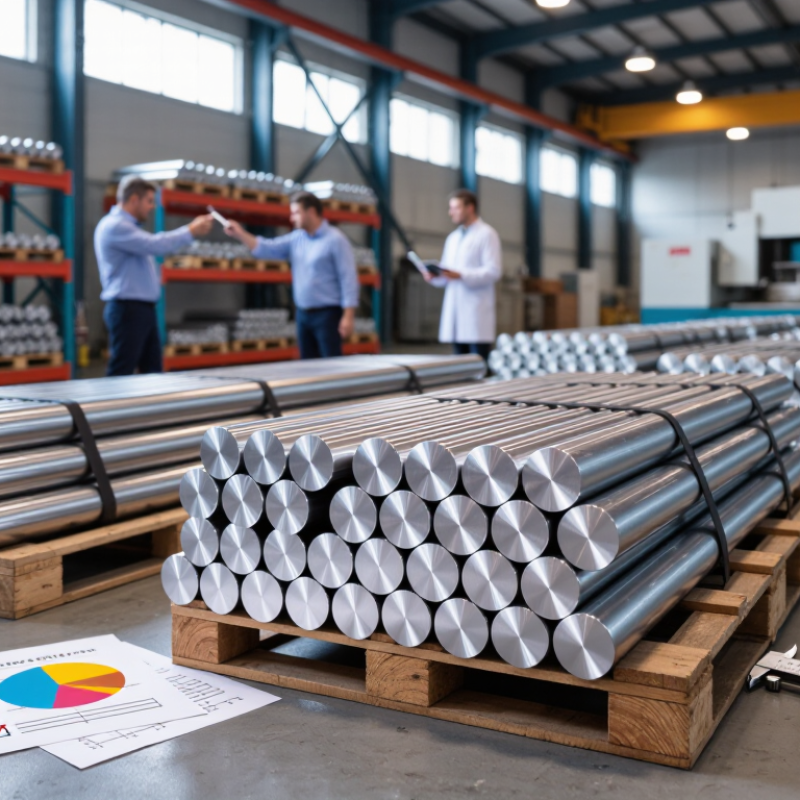
Before comparing manufacturers, define the bar’s job. Record the alloy grade, diameter, length, quantity, and dimensional tolerance. Add service temperature, pressure, and exposure, such as hot chloride water or reducing acid. These details help distinguish commercially pure nickel from nickel-copper and nickel-chromium alloys. “Nickel alloy” alone is not a purchase specification.
The Nickel Institute reports that stainless steel accounts for roughly two-thirds of global nickel use. That broad figure is a useful reminder: nickel describes a large family of materials, not one interchangeable product. For round bars, identify the relevant specification, such as ASTM B160 for nickel rod and bar, or ASTM B164 for nickel-copper rod, bar, and wire. Confirm the grade and current standard edition with your engineering team.
State certification needs before requesting quotations: chemical composition, tensile properties, heat-treatment condition, test reports, traceability, and surface finish. Ask how diameter and straightness are checked along the bar. A spot measurement may miss variation near a cut end. It is easy to overlook machining allowance. Too little stock risks scrap; too much adds cost and waste. The tightest tolerance may not be the safest choice. Recheck that assumption against the actual fit and machining process.
A nickel alloy round bar can look flawless and still be the wrong grade. Ask the manufacturer to identify the exact alloy designation, product form, and applicable specification. Standards such as ASTM or ASME may define chemistry, dimensions, and testing, but the required edition matters. A familiar grade name alone is not enough.
Tip: Request a material test certificate before purchase. Match its heat number to the bar’s stamped or tagged number, then check that chemical composition and mechanical results meet the purchase specification. Confirm the certificate covers the supplied batch, not merely a similar product. Small paperwork gaps are easy to overlook.
Traceability should follow the bar from the mill through cutting and delivery. Ask how the supplier preserves heat identification after bars are cut, and whether records link each piece to its original certificate. Review sample documents when possible. A polished certificate is useful, but it does not replace clear markings and consistent records. I would still verify a few details twice; busy purchasing teams can miss a mismatched number.
Assess whether a manufacturer can control each stage, from billet selection to final inspection. Ask how it handles melting or remelting, hot working, heat treatment, and machining. A capable supplier should explain how each process suits the specified alloy and bar diameter, not offer one generic route. Ask for heat numbers linking the bar to its material test certificate. Then verify the chemistry, tensile results, hardness, dimensions, and applicable test methods. For critical applications, request ultrasonic inspection records and clarify acceptance criteria before ordering. Details matter.
Quality controls should be documented and repeatable. Ask how instruments are calibrated, how nonconforming bars are isolated, and whether test reports match the delivered heat. The World Stainless Association reported 58.4 million tonnes of global stainless-steel melt-shop production in 2023, up 4.6% from 2022. This is not a nickel-alloy bar statistic, but it reflects the scale of adjacent metal production—and why traceable, consistent processing matters. Still, certificates alone are not proof of strong process control. Compare a sample report with the physical bar: check its stamped identification, surface condition, straightness, and measured diameter. If a supplier cannot explain a result clearly, pause. I would also ask how it handles an out-of-tolerance reading; real systems sometimes miss things, and the response is revealing.
| # | Evaluation area | What to verify | Useful evidence or question |
|---|---|---|---|
| 1 | Grade and specification coverage | Confirm the supplier can provide the exact alloy grade, product form, dimensions, and delivery condition required. Requirements differ between alloys and standards. | Request a written quotation identifying the grade, applicable material specification, size, condition, and any customer-specific requirements. |
| 2 | Manufacturing route and capability | Understand whether the bar is produced by processes such as hot working, forging, or subsequent machining, and whether the route suits the ordered size and application. | Ask for the proposed production route, available diameter range, maximum length, and whether processing is performed in-house or by a qualified subcontractor. |
| 3 | Chemical composition verification | Check that the material’s reported chemistry meets the specified grade limits. Positive material identification can help confirm alloy identity, but the method may not measure every element or replace a full laboratory analysis. | Request heat-specific chemical test results and ask which analytical methods are used for the required elements. |
| 4 | Mechanical testing | Verify that required mechanical properties are tested using the applicable test methods and acceptance criteria for the ordered grade and condition. | Review test reports for properties specified by the purchase order, such as tensile strength, yield strength, and elongation, where applicable. |
| 5 | Heat treatment control | Where heat treatment is required, confirm the supplier controls the specified cycle and can link treatment records to the relevant material lot. Not every alloy or order uses the same treatment. | Ask whether time-and-temperature records, furnace controls, and any required furnace calibration records are available for review. |
| 6 | Dimensional and surface inspection | Ensure diameter, length, straightness, and surface condition are checked against the purchase order and applicable specification. Tolerances should be agreed before production. | Request the inspection plan, measuring-tool calibration status, and sample dimensional inspection records. |
| 7 | Non-destructive testing options | Determine whether any required non-destructive examination is suitable for the bar and specified in the order. Inspection method, coverage, and acceptance criteria should be defined rather than assumed. | Ask which methods can be arranged, who performs them, and whether reports identify the material lot and applicable acceptance criteria. |
| 8 | Traceability and documentation | Check that heat or lot identification is maintained through processing, inspection, and shipment, and that documents correspond to the delivered bars. | Review a sample material test certificate and confirm it includes traceable identification, specification details, and required test results. |
| 9 | Quality management and corrective action | Assess whether documented controls cover nonconforming material, inspection records, customer complaints, and corrective actions. A certificate alone does not prove a specific product meets an order. | Ask about the quality management system, audit availability, nonconformance process, and how corrective actions are verified. |
| 10 | Packaging, handling, and delivery control | Confirm bars will be protected from handling damage, contamination, and loss of identification during storage and transport. Agree shipment quantities and delivery documentation. | Specify packaging, marking, preservation, shipping documents, and notification procedures for delays or order changes. |
When assessing a nickel alloy round bar manufacturer, look beyond a polished quotation. Ask which tests are performed for each heat and whether results match the material specification. A tensile report, chemical analysis, and hardness readings each reveal different aspects of the bar’s condition. Check that the report identifies the heat number marked on the stock. Traceability matters.
Documentation should arrive with the material, not as an afterthought. Review the certificate of conformance, inspection records, and any required non-destructive examination reports before approving shipment. Compare the alloy grade, diameter, length, and condition across all documents. Small mismatches can delay machining or create questions during receiving. A report may look complete while omitting one heat number, so check the details carefully and request corrections before dispatch.
Delivery performance involves more than a promised date. Ask how long bars are protected from bending, moisture, and handling damage, and how often shipment updates are provided. Confirm realistic lead times for cut-to-length stock, since processing can add days. Compare past delivery dates with actual receiving records, not estimates. No schedule is perfect. A clear explanation of a delay is more useful than a confident promise that later changes. These checks help determine whether testing evidence and logistics support your production needs.
Review testing, documentation, and delivery performance using a consistent supplier-audit checklist.
How to read this chart: The scores are an illustrative example, not measured industry data. Score each item from 0 (not verified) to 5 (fully verified): confirm alloy and dimensional requirements, review test methods and results, verify heat-number traceability and material test reports, check quality-system documentation, and assess lead-time commitments, on-time delivery records, packaging, and communication.
When comparing nickel alloy round bar manufacturers, do not judge an offer by its unit price alone. Request separate costs for alloy surcharge, cutting, testing, packaging, and freight. Ask for line items. The USGS Mineral Commodity Summaries 2025 estimated world nickel mine production at 3.7 million metric tons in 2024. That figure does not predict your bar price; alloy grade, dimensions, and stock availability also matter. Request a dated quotation and confirm its validity period.
Tip: Test communication before placing a large order. Ask for a sample material certificate and a clear delivery estimate for a specific diameter and length. Notice whether the supplier answers directly or leaves technical questions vague. Keep replies and revised specifications together. Small details matter.
Tip: Discuss support after delivery. Ask how the manufacturer handles dimensional discrepancies, replacement stock, and repeat orders. Confirm which inspection records are available and who will answer technical questions later. A low quote may look attractive, but delayed clarification can disrupt production. I would still recheck assumptions; a polished response is not proof of reliable service. Long-term support should be specific, not just promised.
CLA-VAL UK Limited
Dainton House
Goods Station Road
Tunbridge Wells
Kent, TN1 2DR
© 2025 CLA-VAL UK | site map | Terms and Conditions of Sale and Warranty | Privacy policy