
Pressure Reducing
Pressure Sustaining / Pressure Relief
Flow Control valves
Float Valves - Level Control
Electrically Actuated Valves
Pressure Modulation - Remote Control
Altitude Valves - Level Control
Burst Control Valves
Pump Control
CLA-VAL "HYTROL" Main Valve
Valve Controllers and Data Loggers
Air Valves
Choosing a Ro Plant Water Chiller is not simply a matter of selecting the lowest price. The correct unit must match the plant’s flow rate, operating schedule, feedwater temperature, and installation environment. A chiller that looks powerful on paper may struggle beside a hot membrane room.
In practical RO plant assessments, engineers begin with the actual heat load. They check the pump motor, membrane pressure, water circulation, and expected cooling demand. Every detail matters. A few degrees can affect membrane performance, product quality, and equipment stability. The required cooling capacity should include a sensible safety margin, but excessive oversizing can increase energy costs and cause inefficient cycling.
Consider the condenser type carefully. Air-cooled models suit locations with limited water availability, while water-cooled systems may perform better in controlled industrial spaces. Ambient temperature, ventilation, noise, and maintenance access also influence the decision. Stainless steel or corrosion-resistant components are valuable where moisture and chemical exposure are constant.
Control accuracy deserves attention. A reliable temperature sensor, clear alarm system, and automatic shutdown can protect the RO process during abnormal conditions. Service support is equally important, especially when filters, compressors, or pumps need urgent replacement. Published performance data should be checked against recognized testing methods, not accepted without questions.
One point is often missed. Real operating conditions change. Seasonal heat, dirty filters, and unstable production schedules can reduce performance. Therefore, selecting a Ro Plant Water Chiller requires technical calculation, site observation, and honest review of long-term operating risks. A slightly imperfect estimate is better than false precision, but it should always be improved before purchase.
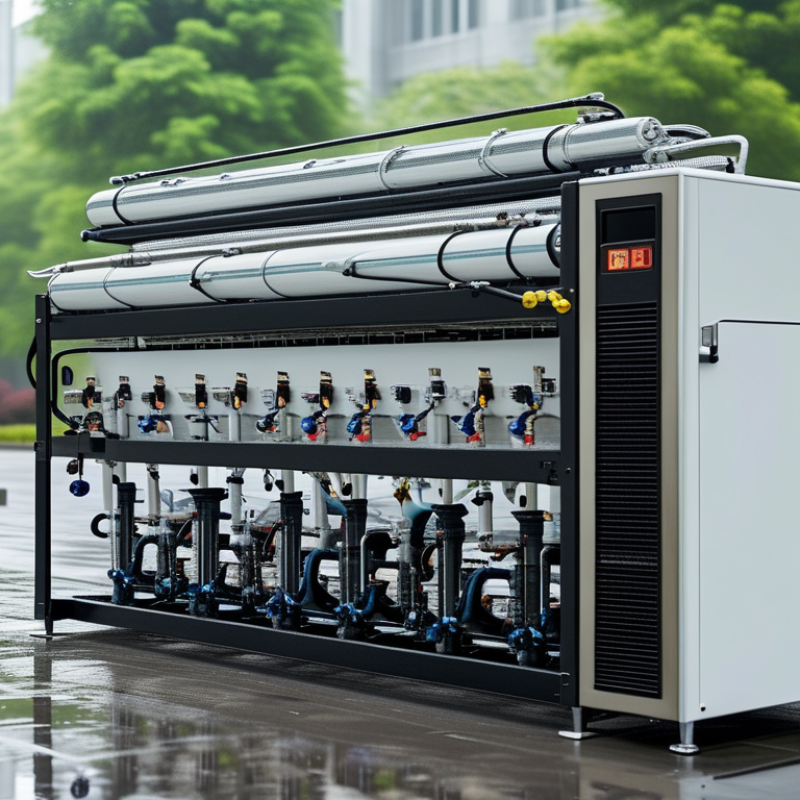
An RO plant water chiller is a cooling system that lowers feedwater temperature before it reaches the reverse osmosis membranes. It usually includes a refrigeration unit, circulation pump, heat exchanger, temperature sensors, and control valves. The goal is stable membrane performance, not simply colder water.
Temperature changes water viscosity and membrane permeability. Warm feedwater can increase permeate flow, but salt rejection may become less consistent. Cold water moves more slowly through the membrane and may require higher operating pressure. A controlled temperature helps operators maintain predictable flow, conductivity, and product quality. It can also reduce thermal stress on membrane elements and connected equipment.
The required chiller capacity depends on feed flow, inlet temperature, target temperature, local climate, recovery rate, and heat entering the piping. A practical design should include automatic alarms for low flow, high pressure, and abnormal temperature. Poor sensor placement can create false readings. That mistake is easy to overlook. Use suitable materials for the water chemistry, and leave access for cleaning the heat exchanger.
A chiller cannot fix fouling, scaling, or poor pretreatment. These problems still demand filtration, dosing control, and regular inspection. In field evaluations, operators often focus on cooling capacity and forget energy use. A slightly oversized unit may provide comfort, but it can cycle inefficiently. The better choice balances stable temperature, reliable controls, maintenance access, and reasonable power consumption.
What Is an RO Plant Water Chiller and Why Is It Needed?
This chart shows the theoretical cooling capacity required to reduce water temperature by 5°C at different RO feedwater flow rates. The calculation uses the specific heat of water, approximately 4.186 kJ/kg·°C, and assumes a water density of 1,000 kg/m³. Actual chiller selection should also consider heat gain, fouling, ambient conditions, pump heat, safety margin, and the RO membrane manufacturer’s temperature limits.
How to Choose a RO Plant Water Chiller?
Assessing cooling requirements starts with the water, not the chiller catalog. Measure feed flow, inlet temperature, desired outlet temperature, and daily operating hours. RO membranes often lose performance as temperature changes. Warmer water may increase flow, but it can also affect salt rejection and operating stability. Record temperatures during morning, afternoon, and peak summer conditions. A single reading is rarely enough.
Calculate the heat load with flow rate, water heat capacity, and the required temperature drop. Include heat from high-pressure pumps, nearby equipment, sunlight, and warm storage tanks. For example, a large flow with a small temperature reduction may still create a substantial cooling demand. Leave practical capacity for seasonal variation, but avoid extreme oversizing. An oversized chiller may cycle frequently and waste energy. I have seen calculations look accurate until pump heat was ignored. That mistake is easy to repeat.
Tips: Use measured data whenever possible. Confirm whether cooling is continuous or batch-based. Check the chiller’s performance at the plant’s highest ambient temperature, not only laboratory conditions. Review the available water quality, because scaling or fouling can reduce heat-transfer efficiency. A buffer tank may improve temperature stability, although it adds space and maintenance needs. Keep the design adjustable. Real plants rarely behave exactly like the first spreadsheet.
| RO Product Water Capacity (m³/h) | Typical Recovery (%) | Required Feedwater Flow (m³/h) | Inlet Water Temperature (°C) | Target Outlet Temperature (°C) | Cooling Temperature Difference (°C) | Estimated Cooling Load (kW) | Recommended Chiller Capacity (kW) | Approximate Refrigeration Capacity (TR) | Suggested Application |
|---|---|---|---|---|---|---|---|---|---|
| 5 | 70–75 | 6.7–7.1 | 30 | 25 | 5 | ≈39 | ≈47 | ≈13.4 | Small pilot plant or laboratory-scale production |
| 10 | 70–75 | 13.3–14.3 | 30 | 25 | 5 | ≈78 | ≈94 | ≈26.7 | Light industrial process-water treatment |
| 20 | 70–75 | 26.7–28.6 | 30 | 25 | 5 | ≈156 | ≈187 | ≈53.2 | Medium industrial or utility-water system |
| 50 | 70–75 | 66.7–71.4 | 30 | 25 | 5 | ≈390 | ≈468 | ≈133.1 | Large-scale industrial water treatment |
Calculation basis: Estimated cooling load = feedwater flow × 1.163 × temperature difference, where 1.163 is the approximate heat capacity factor for water in kW per m³/h per °C. Recommended chiller capacity includes an approximately 20% design allowance.
Selection checks: Confirm actual feedwater temperature, required outlet temperature, operating hours, seasonal ambient conditions, fouling potential, water quality, available electrical power, and whether the chiller uses a closed-loop or direct-process-water circuit.
Important: The values are preliminary sizing estimates. Final equipment selection should be verified using site measurements and the chiller manufacturer's performance data at the required leaving-water temperature and ambient conditions.
Choosing an RO plant water chiller requires more than checking cooling capacity.
Energy performance matters because cooling already consumes about 10% of global electricity, according to the International Energy Agency’s The Future of Cooling report. Compare kW per ton at design load and IPLV or NPLV at part load. These figures follow methods outlined by AHRI 550/590.
A 100 kW cooling load needs roughly 28.4 refrigeration tons.
At 0.7 kW per ton, the chiller uses about 20 kW electrically. Measure actual load hours before trusting this estimate.
Water quality comes next.
AWWA M46, Reverse Osmosis and Nanofiltration, emphasizes feed temperature, conductivity, turbidity, and scaling ions. The chiller should hold stable water temperature, not simply produce cold water. Temperature swings can alter membrane flux and salt passage.
Small deviations become expensive.
Operating cost includes more than electricity.
Include pump power, cooling-water use, chemical cleaning, filter replacement, and rejected water. A chiller with excellent COP may perform poorly if its condenser fouls quickly. This is often overlooked.
I would request a five-year cost model using local electricity rates and seasonal temperatures. Real plants are messier than spreadsheets.
One uncomfortable question remains: is the chiller correcting poor pretreatment rather than solving a genuine thermal problem?
Plan the installation around actual heat load, not the chiller’s advertised capacity. Record RO feed flow, inlet temperature, ambient temperature, and operating hours for several days. A small data logger helps reveal afternoon temperature peaks. IEA’s The Future of Cooling reports that cooling already uses about 10% of global electricity. Efficient planning therefore affects both water quality and operating cost. Leave service clearance around filters, pumps, electrical panels, and condenser coils. Poor access often turns simple maintenance into an expensive shutdown.
Maintenance should follow water chemistry, not only the calendar. Check scale, biofouling, refrigerant pressure, vibration, and differential pressure across strainers. Keep a trend sheet with outlet temperature, power demand, and alarm history. ASHRAE guidance supports regular coil cleaning and airflow checks because fouling reduces heat transfer. The U.S. Department of Energy also emphasizes measurement before industrial efficiency improvements. A spreadsheet is useful, but it can hide sensor errors. Verify readings with calibrated instruments at least twice yearly. This is easy to forget.
Tips: Select a unit with stable performance at partial load. Install temperature sensors before and after the chiller. Protect the condenser from dust and direct sunlight. Keep critical seals and sensors in stock. Review performance quarterly against the original design point. If energy use rises without higher production, investigate early. A two-degree temperature drift may signal fouling, low refrigerant, or a failing sensor. Do not replace parts blindly. Test first.
CLA-VAL UK Limited
Dainton House
Goods Station Road
Tunbridge Wells
Kent, TN1 2DR
© 2025 CLA-VAL UK | site map | Terms and Conditions of Sale and Warranty | Privacy policy