How to Choose the Best Cordless Drill for Your Projects?
Choosing the right Cordless Drill can significantly impact your project outcomes. According to a recent industry report by MarketWatch, the global power tools market is projected to reach $43 billion by 2026. A significant portion of this growth is attributed to the increasing popularity of cordless drills. These tools offer the freedom of mobility and the convenience of operation without tangled cords, making them indispensable for both professionals and DIY enthusiasts.
When selecting a cordless drill, consider battery life, torque, and weight. Over 60% of users reported frustration with drills that lack durability and power. It's essential to know your specific needs to avoid investing in tools that may not serve you well. A balance between functionality and personal comfort is necessary for an effective drilling experience. A drill that feels good in your hand can enhance precision and reduce fatigue during extended use.
Research indicates that brands with strong customer loyalty often produce drills that stand the test of time. Users must weigh options and read reviews to avoid poor choices. The right cordless drill can transform your projects, but the wrong one may lead to unnecessary setbacks. Understanding the nuances of these tools will empower you to make informed decisions for better results.
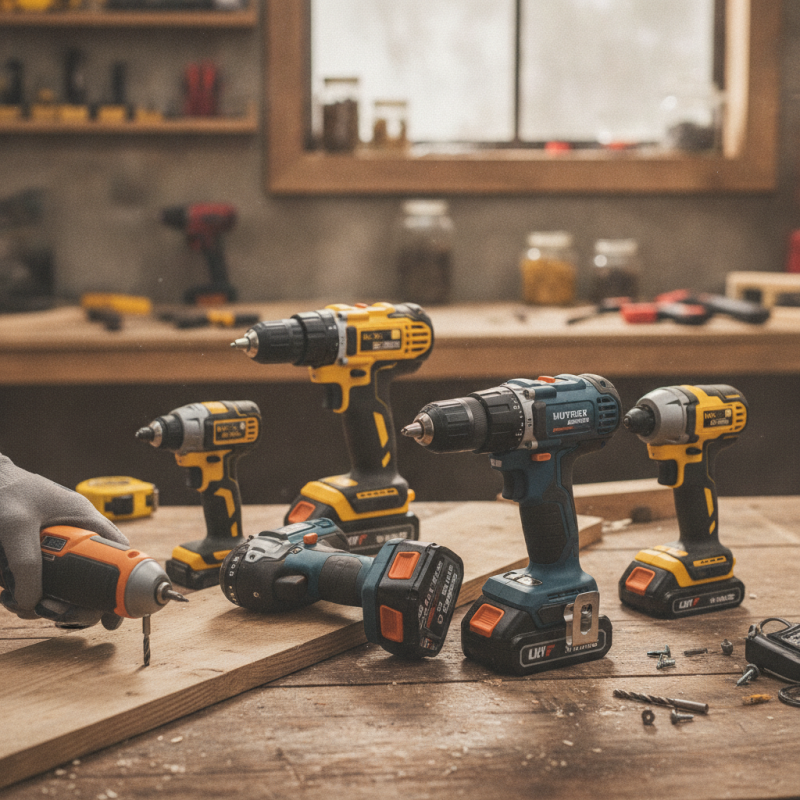
Choosing the Right Voltage: Understanding Cordless Drill Power Levels
Choosing the right voltage is essential when selecting a cordless drill. The power levels determine how effectively the drill can handle various tasks. Generally, cordless drills come in 12V, 18V, and 20V options. A lower voltage, like 12V, is suitable for light-duty tasks. This includes small repairs and furniture assembly. If you’re tackling household projects, a 12V drill may suffice.
For heavier-duty applications, you might consider an 18V or 20V model. These provide more torque and power for tasks like drilling into hard materials or driving long screws. However, higher voltage drills can be bulkier and heavier. A heavier drill can lead to fatigue during extended use. Balancing power and ease of handling is crucial.
Many users underestimate the significance of battery life and weight. A powerful drill that can’t last long on a single charge may not be practical. It's worth reflecting on your specific needs and how often you will use the tool. Sometimes, the most powerful choice isn’t the best choice. Consider your typical projects and select accordingly.
Battery Types: Comparing Lithium-Ion and Nickel-Cadmium Options
When choosing a cordless drill, battery type is crucial. Lithium-ion and nickel-cadmium are the main options. Each has advantages and disadvantages that can impact your projects significantly.
Lithium-ion batteries are lightweight and have a longer lifespan. They hold their charge well and are less prone to memory effect. This means they can be charged at any time without losing capacity. However, they can be more expensive and may not perform well in extreme temperatures.
Nickel-cadmium batteries are often cheaper and more durable. They perform better in cold conditions but can suffer from memory effect, which limits their usability. They also have a shorter lifespan compared to lithium-ion. This may require more frequent replacements.
**Tip:** Consider the types of projects you will tackle. For heavy-duty use, lithium-ion is often a better choice. For occasional tasks, nickel-cadmium could suffice.
Battery weight matters. If you’re doing overhead work, a lighter lithium-ion option reduces fatigue.
**Tip:** Check the drill’s compatibility with battery types. Some drills may require specific batteries for optimal performance. Always review user feedback to make informed decisions.
Chuck Size and Type: Impact on Bit Compatibility and Performance
When selecting a cordless drill, chuck size and type significantly influence your project's success. The chuck holds the drill bit, and its size ranges from 1/4 inch to 1/2 inch. Larger chucks accommodate wider bits, crucial for heavy-duty tasks. However, smaller chucks are easier to handle and lighter, making them ideal for precision work.
Data from the Power Tool Institute highlights that nearly 70% of users prefer a 1/2 inch chuck for versatility, allowing for both large and small bits. A key aspect to consider is the chuck type. Keyed chucks offer secure grip but can be time-consuming to operate. Keyless chucks, while convenient, may not secure bits as tightly, leading to slippage during heavy use. Surveys suggest that nearly 60% of professionals report issues with bit compatibility when using the wrong chuck. This reflects the importance of matching your drill to the specific bits for better performance.
When making a choice, consider whether you prioritize convenience or performance. Heavy-duty users might reflect on their experiences with chuck types and bit compatibility, often regretting choices made in haste. Each option has pros and cons, which can significantly affect workflow and outcomes. A well-informed decision can enhance efficiency and reduce frustration in your projects.
Torque Ratings: How to Assess Clamping Power for Your Projects
When choosing a cordless drill, torque ratings play a crucial role. Torque is the twisting force that the drill can exert. Higher torque ratings mean the drill can handle tougher materials and larger screws. Evaluating torque is essential, especially for specific projects that require precision and power.
Consider your projects. For light tasks like assembling furniture, lower torque ratings may suffice. However, if you are working with dense wood or metal, you will need a drill with higher torque. Look for a drill that offers adjustable torque settings. This feature allows you to adapt the power to suit different materials.
It's important to note that a higher torque rating doesn’t always mean better performance. Some drills may have high torque but lack balance and control. Poor ergonomics can lead to fatigue and hinder your work. Always test the drill before a purchase to find one that feels comfortable in your hands. Engage with it; feel its weight and balance. Sometimes, the right drill isn’t the one with the highest power, but the one that fits your unique needs.
Additional Features: Key Technologies to Look For in Modern Drills
When selecting a cordless drill, consider key technologies that enhance performance. Battery life is crucial. A high-capacity lithium-ion battery can significantly extend usage time. Look for models that offer fast charging capabilities, allowing you to minimize downtime between tasks. Ergonomics also matter. A comfortable grip can reduce fatigue during prolonged use.
Another technology feature to consider is torque settings. Adjustable torque helps you control the drill better, preventing over- or underdriving screws. Some drills come with brushless motors, which provide greater efficiency and longevity. This can be particularly useful for heavy-duty applications.
Finally, additional features can enhance your project experience. Integrated LED lights are great for working in low-light conditions. Consider if the drill has multi-speed settings for different materials. Each of these features adds to the tool’s versatility but may increase complexity. Evaluate your needs against these advancements, and always reflect on whether they align with your projects.
How to Choose the Best Cordless Drill for Your Projects? - Additional Features: Key Technologies to Look For in Modern Drills
| Feature | Description | Benefits |
| Brushless Motor | Utilizes electronically controlled motors for increased efficiency and performance. | Longer runtime, less heat generation, and reduced maintenance. |
| Variable Speed Settings | Allows users to adjust the speed of the drill to match specific tasks. | Greater control for precise drilling and driving. |
| LED Light | Built-in LED lighting to illuminate work areas. | Improves visibility in dark or tight spaces. |
| Battery Capacity | Measures the energy storage capacity of the drill's battery. | Longer working time and fewer interruptions for recharging. |
| Torque Settings | Adjustable torque output for different materials and applications. | Prevents stripping screws and damaging materials. |
| Weight | The overall weight of the drill, often affecting handling comfort. | Easier to maneuver and reduces fatigue during extended use. |