
How to Choose Reflective Strips for Global Sourcing in 2026?

How to Choose Reflective Strips for Global Sourcing in 2026?

Choosing Reflective Strips for global sourcing in 2026 requires more than comparing prices. Visibility performance, material durability, certification, and supply reliability must work together. The WHO Global Status Report on Road Safety 2023 estimated 1.19 million annual road traffic deaths worldwide. That figure keeps visibility products relevant across transport, construction, logistics, and emergency services.

Workplace risk also remains significant. The U.S. Bureau of Labor Statistics recorded 5,283 fatal work injuries in 2023. Reflective garments cannot prevent every incident. They can, however, help workers stand out under headlights, rain, dust, or poor warehouse lighting. A practical sourcing review should examine retroreflective brightness, strip width, adhesive or stitching quality, wash resistance, and performance after repeated bending.

Standards matter.

ANSI/ISEA 107-2020 and ISO 20471:2013+A1:2016 provide recognized frameworks for high-visibility apparel. These documents address visibility materials, garment design, and testing expectations. Buyers should confirm which standard applies in the destination market. A certificate alone may not prove consistent production quality.

A low unit price can look attractive. It can also become an expensive illusion. Early samples may pass visual inspection but fail after ten industrial washes. Test strips on the actual fabric, not only on a supplier’s sample card. Check production batches, inspection records, lead times, and replacement policies. This guide examines those details while recognizing an uncomfortable truth: global sourcing decisions often involve incomplete information. Careful buyers reduce that uncertainty with documented tests, independent verification, and realistic use conditions.
How to Choose Reflective Strips for Global Sourcing in 2026?

Define Reflective Strip Types and Their Global Applications

How to Choose Reflective Strips for Global Sourcing in 2026?

Define Reflective Strip Types and Their Global Applications

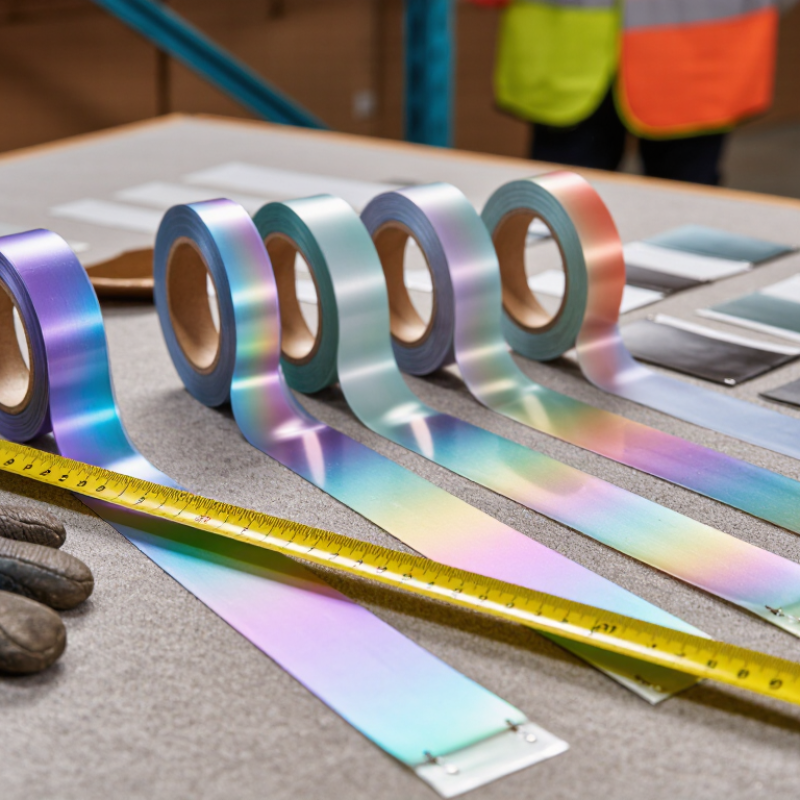
Reflective strips usually fall into three groups: glass-bead, microprismatic, and fluorescent reflective materials. Glass-bead strips offer practical visibility for workwear, bags, and school clothing. Microprismatic strips return stronger light over longer distances, making them suitable for road crews, cycling gear, and transport uniforms. Fluorescent materials improve daytime recognition but need reflective layers for night visibility.

Attachment methods also shape global applications. Sew-on strips suit reusable jackets and heavy fabrics. Heat-transfer strips create clean layouts on sportswear and lightweight garments. Pressure-sensitive strips work on smooth equipment surfaces, though edge lifting can occur in cold or wet climates. A bright sample can still disappoint.

During sourcing, check the base fabric, washing method, bending resistance, and storage temperature. Request test reports that match the destination market’s visibility requirements. Compare performance after repeated laundering, not only before delivery. In humid regions, inspect adhesive stability and mildew resistance. In colder areas, test flexibility below normal room temperature.

I have found that simple strip layouts often perform more consistently than crowded designs. Yet this is not universal. Curved surfaces, dark fabrics, and frequent abrasion can change the result. Suppliers should provide production samples, measurement records, and clear batch identification. Buyers also need to review color, width tolerance, and application instructions before approving mass production.

Match Reflective Performance to Visibility and Safety Requirements

For global sourcing in 2026, reflective strips should match the real visibility risk, not merely look bright under office lighting.

The WHO Global Status Report on Road Safety 2023 records about 1.19 million road deaths annually. Poor night visibility remains a serious sourcing concern.

Start with the required retroreflective performance, usually measured by coefficient of retroreflection. Then check color, viewing angle, width, and night-time recognition distance. A silver strip may perform well on highways, while fluorescent yellow-green fabric can improve daytime visibility near workers and moving vehicles.

Standards guide the specification. ISO 20471 evaluates high-visibility clothing, while ANSI/ISEA 107 covers garment classes and reflective material placement.

Ask suppliers for recent laboratory reports, wash-cycle results, adhesive testing, and performance data at different temperatures. In practical factory audits, a sample can pass visual inspection yet fail after repeated washing or outdoor exposure. That assumption needs testing.

The NHTSA evaluation of retroreflective tape on heavy vehicles also reported measurable safety benefits, supporting stronger conspicuity requirements for transport-related products.

Do not compare prices before comparing usable performance.

A cheaper strip may require wider placement, more frequent replacement, or additional daytime material. Request samples in realistic conditions: wet pavement, low-angle headlights, dusty fabric, and curved surfaces.

Measure the result. Some suppliers provide incomplete test details, and buyers sometimes accept them too quickly. Reflective quality is not always consistent across a roll.

Include batch inspection, minimum retroreflection values, and traceable test dates in the purchase specification.

Evaluate Materials, Construction Quality, and Environmental Durability

How to Choose Reflective Strips for Global Sourcing in 2026?

Material choice should match the garment’s actual risks. Glass-bead tape is flexible and economical, but microprismatic film usually delivers stronger long-distance visibility. Ask suppliers for coefficient of retroreflection results, not photographs. EN ISO 20471 and ANSI/ISEA 107 provide useful testing frameworks. The World Health Organization reported about 1.19 million annual road deaths in its Global Status Report on Road Safety 2023. Visibility is not a decorative feature. It can affect workplace exposure after dark.

Construction quality often appears at the edges. Inspect stitching density, adhesive coverage, backing consistency, and joint strength. A strip that looks bright in a showroom may crack after repeated laundering. Request abrasion, flexing, wash-cycle, and low-temperature test data from an independent laboratory. Do not trust a single rating. Samples should be tested on the exact fabric, because nylon, polyester, and coated textiles behave differently.

Environmental durability needs equal attention. UV exposure, rain, salt spray, mud, and temperature changes can reduce performance before visible damage appears. Textile Exchange’s Materials Market Report 2024 recorded global fiber production at approximately 124 million tonnes in 2023, increasing pressure to consider recycled inputs and product life. Recycled backing materials may be appropriate, but only if adhesion and reflectivity remain stable. I would also request chemical compliance documents and realistic service-life evidence. Supplier claims are sometimes incomplete. That is worth challenging.

Verify International Standards, Testing Records, and Supplier Capabilities

How to Choose Reflective Strips for Global Sourcing in 2026?

Reflective strips are not interchangeable, even when two rolls look equally bright. Match the finished garment to ISO 20471 or ANSI/ISEA 107, not only a material datasheet. These standards address visibility performance, placement, durability, color, and labeling. Request original laboratory reports showing the coefficient of retroreflection in cd/lx/m². Check the test method, specimen size, wash temperature, cycle count, and laboratory accreditation. An impressive first reading proves little. ISO 20471 evaluations may include cleaning, abrasion, and environmental exposure. Requirements can differ by material and garment class. The WHO Global Status Report on Road Safety 2023 records approximately 1.19 million annual road deaths, keeping conspicuity a practical safety concern.

Supplier capability needs evidence, not polished presentations. Ask for ISO/IEC 17025 laboratory records, lot-specific test results, production traceability, retained samples, and documented change control. Verify whether the supplier controls coating thickness, adhesive strength, color consistency, and lamination temperature. Confirm capacity using your real order quantity and seasonal schedule. A factory may pass a sample test, then struggle with a large batch. I would quarantine the first shipment until independent testing confirms performance after the intended wash cycles. This adds cost, but skipping it creates a bigger uncertainty. Also check technical support, complaint response time, and replacement procedures. Forecast reports can indicate market growth, but they cannot replace batch-level evidence.

Compare Costs, Customization Options, Logistics, and Import Conditions

When choosing reflective strips for global sourcing in 2026, compare total cost rather than unit price. A low quote may exclude sampling, tooling, inspection, or inland delivery. Request prices for several order volumes, such as 1,000, 10,000, and 50,000 meters. Confirm material thickness, reflective performance, adhesive type, roll length, and packaging. Small details matter.

Customization can include color, width, cutting, printing, woven edges, and application temperature. Ask for a physical sample before approving mass production. Test adhesion on the actual fabric, plastic, or coated surface. Cold storage may weaken some adhesives. I have seen attractive samples fail after repeated washing. That mistake is expensive. Custom colors may also increase minimum order quantities and production time. Keep artwork files, tolerance limits, and inspection requirements in one controlled document.

Logistics can change the final cost quickly. Compare sea, rail, air, and consolidated freight using the same delivery terms. Check carton dimensions, moisture protection, pallet rules, and estimated production dates. Import conditions need equal attention. Confirm the product’s customs classification with a qualified broker, because classification can vary by construction and use. Prepare commercial invoices, packing lists, origin details, test reports, and required labeling before shipment. Some destinations may request chemical or product-safety declarations. Requirements change, and supplier assumptions are not enough. Build time for customs questions, port delays, and one imperfect document.

How to Choose Reflective Strips for Global Sourcing in 2026? - Compare Costs, Customization Options, Logistics, and Import Conditions

The figures below are practical 2026 planning ranges for bulk orders, generally quoted in USD per linear metre on an FOB basis. Actual pricing depends on width, reflective performance, backing, order quantity, testing, packaging, destination, and agreed trade terms.

Reflective Strip Type Typical Widths Indicative FOB Cost Typical MOQ Customization Options Reflective Performance and Durability Production Lead Time Logistics Profile Import and Compliance Considerations
Glass-Bead PVC Reflective Tape
Suitable for workwear, safety vests, bags, and general visibility applications.
25, 50, 70, 100 mm
Common thickness: 0.20–0.35 mm
US$0.10–0.35/m 5,000–20,000 m
per color or width
Solid colors Segmented patterns Logo printing Adhesive backing Economical retroreflective construction. Suitable for routine garment use; abrasion, washing, and heat performance vary substantially by backing and coating. 15–30 days after artwork and material approval Low-to-medium volume density. Usually packed in rolls or cartons; economical by ocean freight and suitable for consolidated shipments. Often falls under textile narrow fabrics or plastic-sheet classifications depending on construction. Confirm the HS code, composition, labeling, and chemical requirements with the destination customs authority.
Microprismatic PVC or TPU Tape
Higher-intensity visibility tape for professional workwear, road personnel, and outdoor equipment.
25, 50, 75, 100 mm
Common thickness: 0.25–0.45 mm
US$0.35–1.20/m 3,000–10,000 m
per specification
Color matching Segment design Printed graphics Heat-seal backing Generally provides stronger initial retroreflection than basic glass-bead tape. TPU options may offer improved flexibility and resistance to repeated laundering. 20–40 days, including tooling or sample approval where required Rolls are compact but heavier than lightweight fabric tape. Ocean freight is normally the lowest-cost option; air freight is practical for urgent sampling. Performance claims should be supported by current laboratory reports. Apparel applications may require testing against EN ISO 20471 or ANSI/ISEA 107, depending on the market and end use.
Heat-Transfer Reflective Film
Used for logos, names, numbers, decorative graphics, and cut-and-press garment decoration.
480–1,500 mm roll width
Applied graphics commonly 10–300 mm
US$1.20–4.50/m² 100–500 m²
per color or finish
Custom artwork Digital cutting Metallic finish Perforation Offers clean, precise graphics and can reduce sewing labor. Application temperature, pressure, dwell time, and fabric compatibility must be validated before mass production. 10–25 days for standard colors; 20–45 days for custom constructions High value-to-weight ratio and efficient for air courier shipments. Rolls should be protected from crushing, excessive heat, and moisture during transport. Customs classification may differ from sewn textile tape because the product is supplied as a coated film. Provide technical data, composition, and intended use to the customs broker.
Woven Reflective Tape
Appropriate for uniforms, bags, footwear, accessories, and products requiring a soft textile hand feel.
10, 15, 20, 25, 50 mm
Common thickness: 0.5–1.2 mm
US$0.25–1.10/m 5,000–15,000 m
per color or design
Jacquard patterns Custom weaving Multiple colors Edge finishing Flexible and sewable with a textile appearance. Reflective intensity is usually lower than premium microprismatic products, so the intended safety standard must be checked. 20–35 days; custom woven artwork may require additional sampling Lightweight and carton-efficient. Suitable for ocean consolidation, rail, or air freight when the order is time-sensitive. Commonly treated as narrow woven fabric, but classification depends on fiber content and construction. Fiber composition and country-of-origin marking may be required for apparel imports.
Sew-On Reflective Fabric
Designed for repeated-use workwear, uniforms, outerwear, backpacks, and industrial garments.
25, 50, 75, 100 mm
Fabric widths may be supplied in larger panels
US$0.45–1.80/m 2,000–8,000 m
per construction
Fluorescent base colors Contrast borders Segmented bands Custom backing Strong sewing compatibility and good flexibility. Industrial garment grades can be designed for repeated home or industrial laundering, but the exact wash cycle must be specified. 25–45 days, including testing and wash validation Higher volume and weight than film products. Ocean freight is generally preferred; roll diameter and carton dimensions should be confirmed for container planning. For high-visibility garments, confirm the complete garment standard rather than relying only on strip certification. Chemical restrictions may include limits for azo dyes, formaldehyde, and restricted substances under the destination market.
Elastic Reflective Binding
Used on sportswear, cycling apparel, children's garments, underwear, and stretch panels.
10–30 mm
Elastic extension commonly 20–80%, depending on construction
US$0.30–1.40/m 3,000–10,000 m
per width and color
Stretch ratio Color matching Printed marks Custom edge finish Improves comfort on curved or moving areas. Reflective continuity and recovery after washing should be tested on the actual garment construction. 20–40 days Compact and easy to consolidate. Protect from excessive compression and prolonged high temperatures that may affect elastic recovery. Import documentation should state fiber composition and elastic components. Children's products may trigger additional flammability, chemical, or small-part requirements in certain markets.
Reflective Transfer Label or Emblem
Suitable for small logos, care labels, serial identifiers, and decorative safety marks.
Common size: 20–150 mm
Supplied as individual pieces, sheets, or rolls
US$0.03–0.25/piece 10,000–50,000 pieces
per artwork
Logo reproduction Variable data Multiple colors Custom shape Efficient for branding and identification. Adhesion, edge lift, colorfastness, and wash durability depend on the fabric, application process, and surface finish. 12–30 days after artwork approval Very low shipping volume and suitable for courier or air freight. Packaging should prevent sheets from bending or sticking together. Confirm whether the item is classified as a coated article, printed textile article, or plastic transfer. Artwork files, material declarations, and test reports may be requested by the importer.

Cost basis: Indicative bulk-sourcing ranges for planning only. They exclude tooling, laboratory testing, inland delivery, duties, VAT or GST, customs brokerage, insurance, and destination charges.

Logistics guide: Ocean freight generally offers the lowest cost for commercial volumes; air freight is faster but typically has a higher cost per kilogram. Lead times exclude international transit, customs clearance, public holidays, and delays caused by artwork or sample approval.

Import conditions: HS classification and duty rates vary by material composition, construction, processing, and destination country. Obtain a binding tariff ruling or confirmation from a licensed customs broker before placing a large order.

Compliance note: EN ISO 20471 and ANSI/ISEA 107 apply to specific high-visibility clothing and performance requirements, not automatically to every reflective strip sold separately. Test the finished garment or finished product against the standard required in the target market.