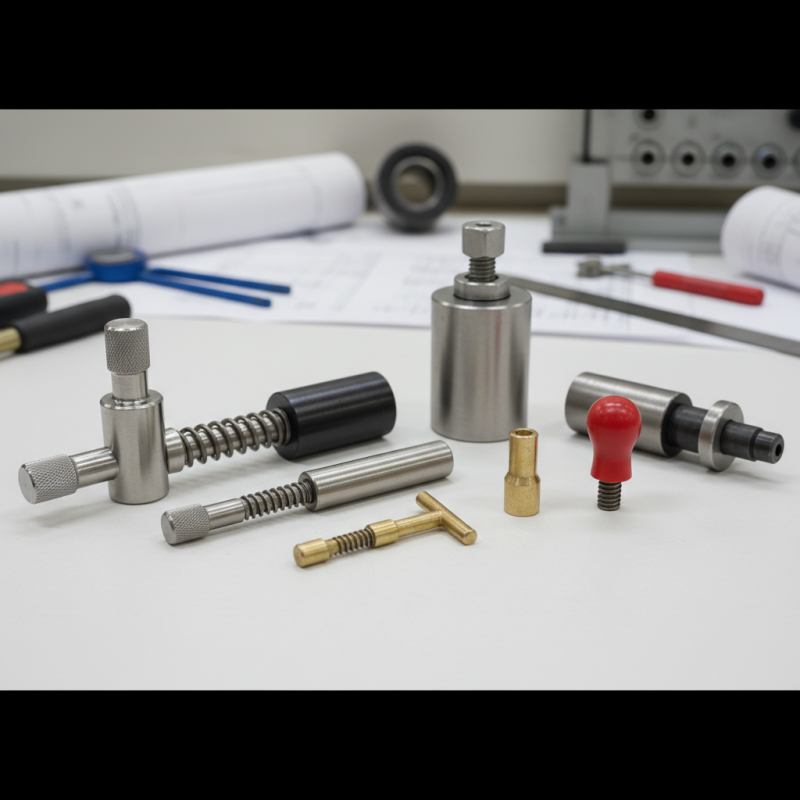
How to Choose the Right Hand Retractable Spring Plunger?
Choosing the right Hand Retractable Spring Plunger is crucial for ensuring functionality and reliability in various applications. These devices provide a simple yet effective solution for tasks requiring repeated engagement and disengagement. However, not all plungers are created equal.
Understanding the specific requirements of your project will help narrow down your options. Factors such as material, load capacity, and dimensions play a vital role. For example, a plunger made from stainless steel may offer durability in demanding environments.
It's easy to overlook the details, yet they can make a significant impact. Selecting an inappropriate plunger can result in malfunction or inconsistencies in performance. Spend time researching different types. Consult experts or reliable sources in the field. Remember, the right choice enhances not just efficiency but overall safety in your operations.
Understanding the Functionality of Hand Retractable Spring Plungers
Hand retractable spring plungers are essential components used in various machinery and equipment. They provide a reliable solution for quick adjustments and secure locking mechanisms. Understanding their functionality is crucial for selecting the right type for your application. Plungers work by utilizing a spring mechanism, allowing for easy engagement and disengagement. This feature is valuable for users in industries like manufacturing, automotive, and aerospace.
According to industry reports, the demand for retractable plungers has grown by 15% over the past three years. This growth indicates a shift towards automation and precision in assembly processes. Users must consider the load capacity and material compatibility when choosing a plunger. For instance, steel plungers may offer high strength, while plastic options provide lightweight and corrosion resistance.
**Tip:** Always assess the specific requirements of your application. Consider factors like space constraints and environmental conditions.
Another critical aspect is retention force. A plunger that does not maintain adequate force can lead to operational failures. Testing plungers in real-world conditions can highlight performance issues before full implementation.
**Tip:** Engage with suppliers to obtain detailed technical specifications. This helps in making well-informed decisions.
Key Factors to Consider When Selecting a Spring Plunger
Choosing the right hand retractable spring plunger involves careful consideration of specific factors. One important aspect is the intended application. Know the load capacity and force requirements. This ensures optimum functionality in your design.
Material selection is another key factor. Stainless steel is popular for its durability and resistance to corrosion. However, plastic options may be needed for lighter applications. Always assess the environmental conditions where the plunger will be used. This impacts the longevity and effectiveness of the device.
Tips: Test different plungers before finalizing your choice. This hands-on approach can reveal practical insights. Consider how easy the plunger is to operate. User-friendly designs enhance workflow efficiency. Don't overlook maintenance requirements. Regular inspections can prevent premature wear and tear.
Different Types of Hand Retractable Spring Plungers and Their Uses
When selecting a hand retractable spring plunger, it’s crucial to understand the various types and their unique applications. Some plungers are fitted with locking mechanisms. These are ideal for scenarios where stability during operation is required. They prevent unwanted movements that can lead to failures in assembly or disassembly.
Another type is the ball plunger. This option is commonly used in areas where a simple, spring-loaded function is sufficient. Ball plungers are versatile and serve many purposes, from indexing to locating components. The variety in sizes also adds to their appeal, allowing engineers to choose based on specific requirements.
Some plungers may not perform as expected in certain environments. For example, those exposed to moisture might rust quickly. It’s essential to consider the operating conditions before deciding. Additionally, installation can sometimes be tricky, leading to frustrations. Testing and assessment ensure the chosen plunger meets operational needs effectively. Understanding these details can save time and enhance the overall reliability of your assembly processes.
Materials and Durability: Choosing the Right Plunger for Your Needs
When selecting a hand retractable spring plunger, the choice of materials is essential. Popular options include stainless steel, plastic, and brass. Stainless steel is known for corrosion resistance, making it suitable for harsh environments. According to industry reports, over 70% of users prefer stainless steel for its durability and strength.
Plastic plungers are lightweight and cost-effective. They work well in applications where weight matters. However, they may not be as resilient under extreme conditions. Research indicates that about 30% of users experience performance issues with plastic in high-temperature environments. This highlights that even popular choices may have limitations.
Tips: Always consider the environmental conditions before making a decision. Assess the temperature range and potential exposure to chemicals. Users should also conduct load tests to ensure they choose the right material for their specific application.
Brass might be suitable for less demanding situations due to its aesthetic appeal. However, it can corrode over time. Learn from others' experiences to avoid common pitfalls. Users often overlook these factors, leading to replacements sooner than expected. Reflect on the pros and cons to make an informed choice.
Installation Tips for Optimal Performance of Spring Plungers
When installing hand retractable spring plungers, achieving optimal performance is key. Proper installation ensures longevity and reliability. Begin by selecting the correct size for your application. Too tight or loose may lead to malfunction. Identify the mounting surface, ensuring it is clean and free of debris.
**Tip:** Use a thread-locking compound on the threads. This will help prevent loosening due to vibrations over time. Careful alignment is crucial during the installation. Misalignment can create friction, leading to premature wear on the plunger. It’s wise to check the plunger’s movement after installation. It should retract smoothly without excessive force.
**Another Tip:** Pay attention to the spring tension. It impacts how the plunger engages and disengages. If the tension feels off, reassess the plunger type used. Remember, proper torque is just as critical. Over-tightening can strip threads or damage the plunger. Always follow manufacturer guidelines.
Consider testing the plunger under actual working conditions. This can highlight any potential issues before full deployment. Adjustments may be necessary based on performance feedback. Reflecting on these details will enhance the functionality of your spring plungers, leading to better overall performance.
How to Choose the Right Hand Retractable Spring Plunger? - Installation Tips for Optimal Performance of Spring Plungers
| Dimension | Description | Material | Load Capacity | Installation Tip |
| M6 | Standard retractable plunger with a 6mm diameter | Stainless Steel | 500 N | Ensure proper alignment during installation to prevent jamming |
| M8 | Medium-sized plunger for general use | Nickel Plated Steel | 800 N | Use lubrication on the plunger tip for smoother operation |
| M10 | Larger plunger for heavy-duty applications | Carbon Steel | 1000 N | Ensure stable mounting surface for heavy loads |
| M12 | Heavy-duty plunger suitable for sturdy equipment | Alloy Steel | 1200 N | Check for wear and tear on spring during maintenance |