How to Choose the Right Asphalt Tank in 2026?
Choosing the right Asphalt Tank in 2026 requires more than comparing capacity and price. The tank must match your asphalt grade, heating method, production schedule, and available site space. A 20,000-gallon tank may appear efficient, but it can become wasteful when daily demand is much lower. Stored asphalt may remain heated longer than necessary, increasing energy use and maintenance pressure.
Dr. Ray Brown, a respected asphalt materials expert, once emphasized, “Good asphalt performance begins with good temperature control.” That principle remains practical today. A reliable Asphalt Tank should provide even heating, dependable insulation, safe access, and accurate temperature monitoring. Look closely at heating zones, burner controls, circulation lines, and emergency shutdown features. Small design details matter. Cold corners can create hardened deposits. Weak insulation can quietly raise fuel costs. Poor access can turn routine cleaning into a difficult task.
The best choice is not always the largest model. It is the tank that fits your real operating pattern. Review average consumption, peak demand, delivery frequency, and future expansion plans. Ask suppliers for service records, material specifications, and performance data. Do not accept vague promises. I have seen projects focus heavily on purchase price and overlook installation space, which later caused expensive changes. That mistake is easy to repeat.
A careful decision also requires reflection. Forecasts can be wrong. Asphalt demand can shift with weather, contracts, and regional construction activity. Choose flexibility where possible, but avoid paying for features your operation cannot use. In 2026, the strongest Asphalt Tank decision will balance safety, efficiency, durability, and honest operational evidence.
Asphalt Tank Basics: Types, Functions, and Core Components
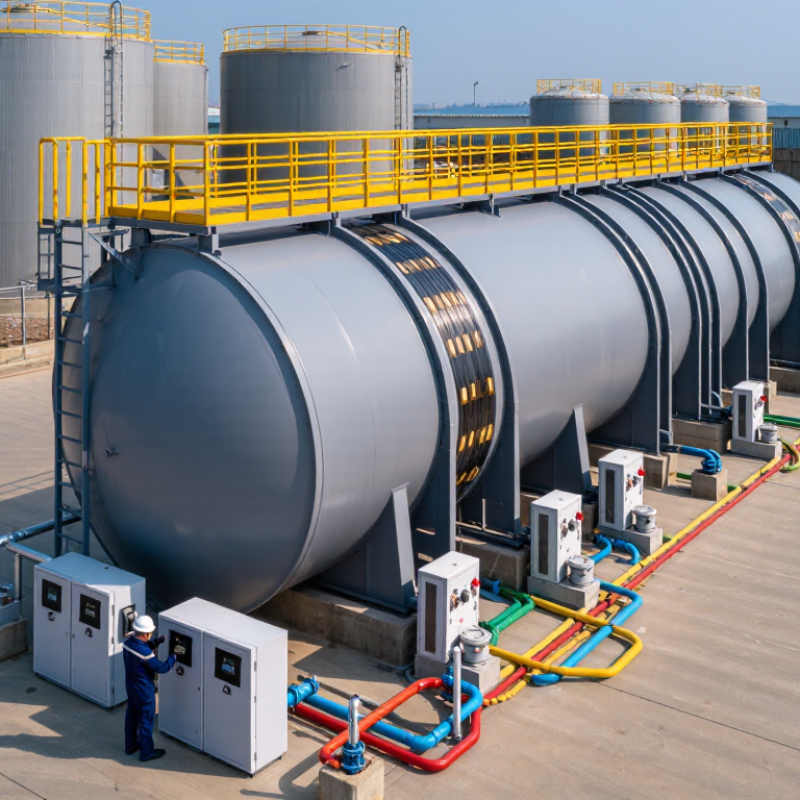
Choosing the right asphalt tank in 2026 starts with understanding its job, not its appearance. An asphalt tank stores, heats, and transfers viscous material at controlled temperatures. In daily operations, tank selection affects paving quality, fuel use, and worker safety. Fixed tanks suit high-volume plants. Portable tanks fit temporary sites and changing production needs. Horizontal tanks often simplify access, while vertical designs can save valuable ground space.
The heating system is a core component. Electric, thermal-fluid, and direct heating systems provide different control levels and operating costs. Insulation reduces heat loss around the shell, roof, valves, and pipelines. A reliable tank should include temperature sensors, pressure-relief devices, level indicators, and emergency shutoff controls. Transfer pumps must match the material’s viscosity and required flow rate. Undersized pumps may overheat, while oversized pumps can waste energy.
Maintenance access matters more than many buyers expect. Inspectors need clear openings, safe platforms, drain points, and visible weld areas. Corrosion-resistant construction also supports a longer service life. I have seen operators focus heavily on capacity and overlook cleaning time. That choice can create delays later. Heating capacity should match real production conditions, not optimistic estimates. Leave room for expansion, but avoid paying for unused volume. Review inspection records, control accuracy, insulation quality, and local operating requirements before purchase. Some advanced controls look impressive, yet simple systems may prove easier to repair.
Define Your Asphalt Storage Capacity and Heating Requirements
Choosing the right asphalt tank begins with storage capacity, not tank dimensions. Estimate daily asphalt demand, delivery frequency, and the longest expected holding period. A useful working formula is: capacity = peak daily use × storage days, plus 10–15% operating reserve. That reserve protects production during delayed deliveries, but excessive volume increases heating costs and oxidation risk. NAPA’s 2023 Asphalt Pavement Industry Survey reported that approximately 89.6 million tons of reclaimed asphalt pavement were used in new mixtures in 2022. Recycled material can change binder demand and inventory planning, so one capacity estimate may be insufficient.
Heating requirements need equal attention. Asphalt Institute guidance in MS-22 recommends following the binder supplier’s temperature range, rather than using one universal setting. Many paving binders are stored near 275–325°F, but grades differ. FHWA’s Warm-Mix Asphalt Technical Working Group has documented production temperature reductions of roughly 30–70°F for suitable technologies. Lower temperatures may reduce energy use, but they do not remove the need for stable circulation and insulation. A neat spreadsheet can still be wrong when heat loss, pipe length, or winter wind is ignored.
Tips: Record actual tank temperature for seven days. Compare it with fuel or electricity use. Size burners from heat-up time, product mass, insulation quality, and ambient temperature. Keep separate tanks for incompatible grades or recycled-content requirements. I would also challenge a common assumption: “more capacity is safer.” Sometimes, a smaller insulated tank with reliable replenishment performs better. That judgment should follow real consumption data, not habit.
How to Choose the Right Asphalt Tank in 2026? - Define Your Asphalt Storage Capacity and Heating Requirements
| Nominal Tank Capacity | Approx. Usable Capacity
(85% Fill Level) | Approx. Asphalt Stored
(at 1.03 t/m³) | Typical Daily Demand | Estimated Storage Coverage | Recommended Storage Temperature | Estimated Cold-Start Heating Duty* | Approx. Maintenance Heating Duty** |
| 20 m³ | 17.0 m³ | 17.5 tonnes | 10–15 tonnes/day | About 1 day | 150–180°C | 180–250 kW | 15–30 kW |
| 40 m³ | 34.0 m³ | 35.0 tonnes | 20–30 tonnes/day | 1–1.5 days | 150–180°C | 300–420 kW | 25–50 kW |
| 60 m³ | 51.0 m³ | 52.5 tonnes | 30–45 tonnes/day | 1–1.5 days | 150–180°C | 420–580 kW | 35–70 kW |
| 100 m³ | 85.0 m³ | 87.6 tonnes | 45–70 tonnes/day | 1–2 days | 150–180°C | 600–750 kW | 55–100 kW |
| 150 m³ | 127.5 m³ | 131.3 tonnes | 70–105 tonnes/day | 1–2 days | 150–180°C | 700–900 kW | 80–140 kW |
Selection Guidelines
- Select usable capacity based on average daily consumption, delivery frequency, required reserve, and the maximum safe operating fill level. An 85% working fill level is used in this example.
- The asphalt mass estimates use a representative density of 1.03 tonnes per cubic metre. Actual density varies with asphalt grade and temperature.
- Use the asphalt supplier's recommended storage temperature. Prolonged exposure to excessive heat can accelerate oxidation and aging of the binder.
- Provide independent temperature control, high-temperature protection, level measurement, insulation, and safe access for inspection and maintenance.
* Cold-start heating duty: Indicative heater capacity for raising asphalt from approximately 20°C to 160°C within roughly 12–18 hours, including an allowance for heat losses. Final sizing must account for ambient temperature, insulation performance, tank geometry, fuel type, and startup schedule.
** Maintenance heating duty: Indicative capacity for maintaining temperature after the asphalt has reached operating temperature. Actual heat loss depends strongly on insulation thickness, wind exposure, tank fittings, and operating conditions.
Evaluate Safety Features, Maintenance Needs, and Operating Costs
Choosing the right asphalt tank in 2026 requires more than comparing capacity and purchase price. A practical evaluation begins with safety during heating, transfer, inspection, and cleaning. Look for calibrated temperature controls, automatic overheat protection, emergency shutoffs, secure access platforms, and clearly marked pressure relief routes. Insulated walls and sealed fittings can reduce heat loss, while secondary containment helps limit the impact of accidental leaks. Small details matter. Ask whether operators can reach valves without standing near hot surfaces.
Maintenance Maintenance needs often determine the real ownership cost. Choose a tank with accessible inspection points, drain sections, replaceable seals, and corrosion-resistant internal surfaces. Check the recommended inspection schedule and the availability of ordinary replacement parts. Keep a written log. It should record temperature readings, pump behavior, residue removal, and unusual odors. A tank may look robust but still hide difficult cleaning areas. That weakness can increase downtime.
Operating Costs Operating costs depend on insulation quality, heating efficiency, warm-up time, standby losses, and pump power. Request energy estimates based on your actual daily throughput, not ideal conditions. Compare those figures with service labor and expected component replacement. I would not rely on a spreadsheet alone. Real performance can change during cold mornings, partial loads, or delayed deliveries. An oversized tank may waste energy, while an undersized unit may require repeated heating cycles. Allow room for uncertainty. Perfect forecasts are rare. Choose equipment supported by clear records, practical service access, and verifiable operating data.