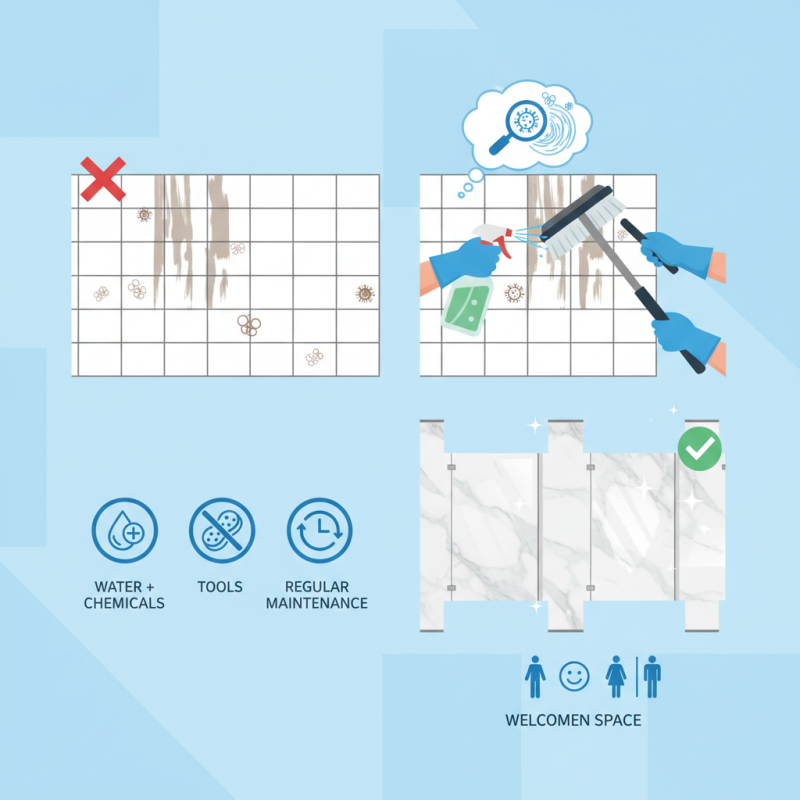
How to Clean Restroom Stall Walls Effectively?
Cleaning Restroom Stall Walls can be a challenging task. Often overlooked, these surfaces accumulate dirt, grime, and germs over time. Maintaining cleanliness in restroom areas is crucial for hygiene and user experience.
Restroom stall walls require specific cleaning methods to achieve the best results. A simple approach might seem tempting, but neglecting details can lead to unsatisfactory outcomes. Effective cleaning involves more than just wiping down surfaces. Using appropriate cleaning agents and proper tools ensures that germs are eliminated and surfaces remain intact.
Consider the material of the stall walls. Different surfaces may require unique care. Additionally, some stains are more stubborn than others. Regular maintenance can prevent these issues from worsening. A well-cleaned restroom reflects attention to detail. It's not just about cleaning; it's about creating a welcoming space for users.
Understanding the Importance of Clean Restroom Stall Walls
Clean restroom stall walls are crucial for maintaining hygiene and public health. According to the Centers for Disease Control and Prevention (CDC), most germs thrive in restrooms. Contaminated surfaces can harbor bacteria like E. coli and norovirus. A clean environment reduces the risk of illness transmission.
Neglecting restroom cleanliness can lead to negative experiences. A 2018 report by the Cleaning Industry Research Institute found that 88% of patrons judge a facility's overall cleanliness based on restroom conditions. Clean stall walls create a positive impression.
Tips for effective cleaning include using disinfectants that kill germs within 10 minutes. Focus on high-touch areas, like door handles and stall locks. Additionally, utilize microfiber cloths. They capture more dirt than traditional cloths. Regular cleaning routines keep germs at bay.
It's essential to involve restroom users in creating a culture of cleanliness. Encourage patrons to report issues, like stains or graffiti. Addressing concerns promptly can enhance the restroom's hygiene level. Remember, a clean stall wall is not just an aesthetic issue—it's a matter of health.
Gathering Necessary Cleaning Supplies and Equipment
Cleaning restroom stall walls effectively requires proper supplies and equipment. The right tools ensure a thorough job and help maintain hygiene. According to the ISSA (International Sanitary Supply Association), restroom cleanliness significantly impacts customer satisfaction. This makes gathering the necessary cleaning supplies crucial.
Basic supplies include an all-purpose cleaner, disinfectant, buckets, and microfiber cloths. A survey by the American Cleaning Institute found that 75% of people judge a facility’s cleanliness based on its restrooms. Using a dedicated scrubbing brush may aid in removing stubborn stains. Ensure that the cleaning agents are safe for use on the surfaces being cleaned.
Additionally, consider using gloves and protective eyewear for safety. For optimal results, some equipment like a scrubber can help, but not everyone has access to high-end tools. It’s common for cleaning processes to overlook tight corners and high-touch areas. This could lead to lingering bacteria. Regularly reassessing your cleaning supplies is essential. Often, old supplies may fail to meet sanitation standards. Investing in quality equipment can seem costly but is vital for maintaining restroom hygiene.
Step-by-Step Guide to Cleaning Restroom Stall Walls
Cleaning restroom stall walls is essential for maintaining hygiene. Follow this step-by-step guide for effective cleaning.
Start by gathering your supplies: a bucket, a non-abrasive cleaner, a sponge, and microfiber cloths. This will make the process smoother. Begin by removing any visible debris or stains. Pay attention to the corners and edges; dirt often piles up in neglected spots. Apply the cleaner directly to the walls. Let it sit for a few moments to break down grime. The smell of the cleaner can be overwhelming, but it’s part of the process.
Next, use a sponge to scrub the walls. Focus on stained areas, but avoid applying too much pressure. It’s easy to damage surface finishes. Rinse the sponge frequently to avoid redistributing dirt. After scrubbing, wipe the walls with a damp microfiber cloth. Ensure you remove all cleaning residue. Inspect your work afterward—there might be spots you missed. Remember, cleaning is not just about appearance; it’s about creating a safe environment. Regular checks can help maintain standards.
Best Practices for Maintaining Cleanliness Between Deep Cleanings
Keeping restroom stall walls clean is essential for hygiene. Regular maintenance helps prevent the buildup of grime and unpleasant odors. One effective practice is to establish a daily cleaning routine. Use a simple solution of water and mild detergent. Focus on high-touch areas like door handles and walls near sinks.
Provide staff with checklists to ensure thorough cleaning. It can be as simple as checking for stains or splatters. Training is essential. Staff should know how to spot clean effectively. They can often miss spots unless they are trained to pay attention to detail.
Periodically, do a deeper inspection to identify areas needing attention. Encourage feedback from users. Sometimes, cleaning staff might overlook specific locations. Maintaining a clean restroom is a continuous process. It requires diligence and a proactive approach to keep it inviting. Regular cleaning can help reduce the workload during deep cleanings.
Identifying and Addressing Common Stains and Marks on Walls
Restroom stall walls often bear the brunt of daily use. Over time, stains from soap, water, and other substances can build up. Identifying these common marks is key to keeping them clean. Look for water spots, soap residue, and even graffiti. Each type of stain requires a different approach for effective cleaning.
To tackle water spots, use a simple vinegar and water solution. Spray it on the affected areas and wipe down with a microfiber cloth. For soap residue, a gentle abrasive cleaner can help. Apply it, scrub lightly, and rinse with clean water. Graffiti can be more challenging. Sometimes, a bit of solvent is needed. Remember, not all solutions work for every surface.
Each cleaning endeavor may not go as planned. Some stains may still linger. It’s important to reflect on what methods did not work. Adjustments are necessary. With consistency and patience, restroom stall walls can be made presentable again.