What is Flow Control in Supply Chain Management?

What is Flow Control in Supply Chain Management?

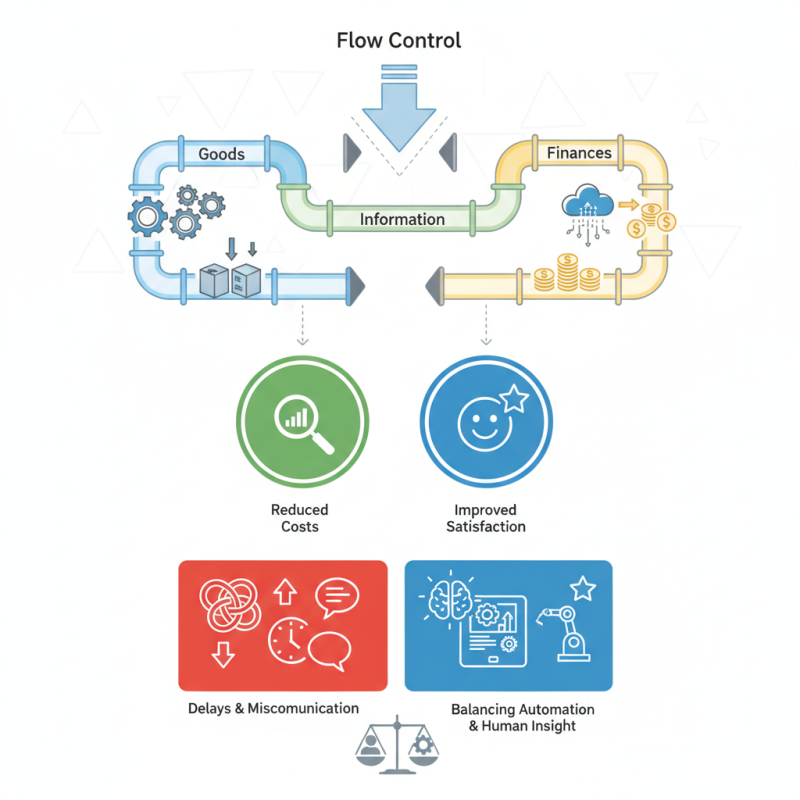
Effective flow control is essential in supply chain management. Renowned expert Dr. Lisa Anderson, president of LMA Consulting Group, emphasizes, "Optimizing flow control can significantly reduce costs and improve customer satisfaction." This fundamental concept involves managing the movement of goods, information, and finances throughout the supply chain.

Understanding flow control is critical for businesses today. It impacts everything from inventory levels to supplier relationships. Companies striving for efficiency must consider real-time data and automation. However, many organizations still struggle with delays and miscommunication. These challenges can lead to increased costs and missed opportunities.

To improve flow control, organizations must analyze their processes. They should identify bottlenecks and work towards solutions. Embracing technology can aid this endeavor. Still, companies must be wary of over-reliance on systems without proper human oversight. Balancing automation and human insight is key to mastering flow control in supply chain management.
What is Flow Control in Supply Chain Management?

Definition of Flow Control in Supply Chain Management

Flow control in supply chain management refers to the systematic approach to managing the movement of goods and information. It ensures that products flow efficiently from suppliers to customers. Effective flow control is crucial for minimizing delays and reducing costs.

In practice, flow control involves monitoring various stages of the supply chain. This includes procurement, production, and distribution. Each step must be aligned to prevent bottlenecks. Companies often use real-time data to track inventory levels and shipping progress. This transparency helps in making informed decisions.

Despite its importance, many organizations struggle with flow control. Common issues include overstocking and stockouts. These problems can disrupt operations. Mistakes in forecasting demand can lead to excess inventory. Regularly reviewing and adjusting strategies is essential. There is always room for improvement.
Key Components of Flow Control in Supply Chain Processes

What is Flow Control in Supply Chain Management?

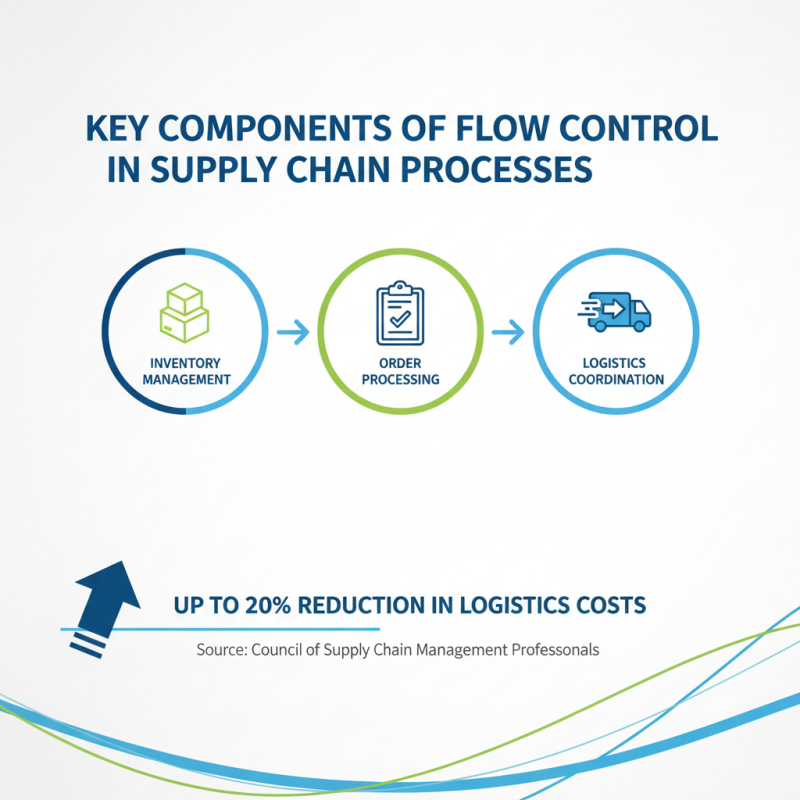
Flow control in supply chain management is essential for ensuring timely and efficient product delivery. Key components include inventory management, order processing, and logistics coordination. Each element plays a critical role in maintaining the flow of goods. According to a report by the Council of Supply Chain Management Professionals, companies with effective flow control can reduce logistics costs by up to 20%. This highlights the economic benefits of optimizing supply chain processes.

Effective inventory management relies on real-time data. This allows companies to forecast demand accurately. However, many organizations struggle with data integration, which can lead to stockouts or overstock situations. A survey by Deloitte found that 79% of businesses experience challenges with inventory tracking. This inefficiency can hinder overall performance and customer satisfaction.

Order processing is another vital component. Swift order fulfillment can significantly improve customer experience. Yet, research from McKinsey indicates that only 40% of companies have automated their order management systems. This gap shows a need for improvement. Businesses that invest in technology can expect faster processing times and error reduction. Enhanced logistics coordination can further streamline operations, but many companies face communication breakdowns. Addressing these issues is crucial for supply chain success.

Importance of Flow Control in Enhancing Supply Chain Efficiency

What is Flow Control in Supply Chain Management?

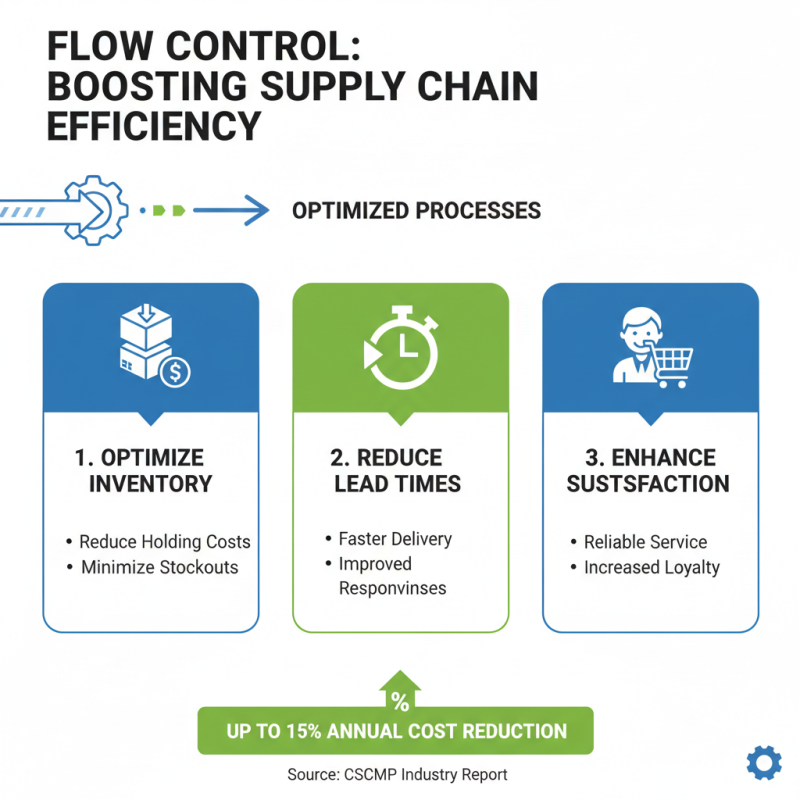
Flow control plays a crucial role in enhancing supply chain efficiency. Proper flow control helps businesses optimize inventory levels, reduce lead times, and improve customer satisfaction. According to a recent industry report by the Council of Supply Chain Management Professionals (CSCMP), companies with effective flow control can reduce operating costs by up to 15% annually. This is significant as logistics costs make up a substantial portion of total supply chain expenses.

To achieve effective flow control, organizations should monitor their supply chain metrics closely. Regular assessments of transit times and inventory turnover rates can reveal inefficiencies. A study indicated that businesses that implement continuous flow analysis improve their performance by 20%. It’s essential to identify bottlenecks and address them promptly.

**Tip:** Invest in technology that provides real-time data on shipments. This enables quicker decision-making and adaptability.

Moreover, maintaining communication with suppliers and customers enhances flow control. Discrepancies in expectations can lead to delays. Ensure alignment on delivery schedules and product availability. Flexibility in adjusting processes is key to adapting to market changes.

**Tip:** Conduct regular training for your team on flow control practices. This knowledge can lead to improved execution and overall supply chain performance.

Techniques and Strategies for Effective Flow Control

Flow control in supply chain management is essential for improving efficiency. Effective flow control helps track the movement of goods. It ensures that products reach the right place at the right time. This process involves various techniques and strategies tailored to specific needs.

One important strategy is inventory management. It requires balancing stock levels to avoid shortages or excess. Another technique is demand forecasting. Accurate predictions help align supply with customer needs. Companies often face challenges in these areas. Poor inventory control can lead to delays. Inaccurate forecasts may cause lost sales or wasted resources. It's crucial to regularly assess these processes to enhance performance.

Collaboration among stakeholders is vital. Open communication builds a responsive supply chain. Sharing data among partners can streamline operations. Yet, many organizations struggle to achieve this level of collaboration. Trust and transparency must be cultivated. Reflecting on existing practices can reveal areas for improvement. Embracing change may be uncomfortable but is necessary for growth.

What is Flow Control in Supply Chain Management? - Techniques and Strategies for Effective Flow Control

Technique/Strategy Description Benefits Example Use Case
Just-in-Time (JIT) An inventory strategy that aligns raw-material orders with production schedules. Reduces inventory costs, increases efficiency. Automotive manufacturing, where parts arrive exactly when needed.
Supply Chain Visibility The ability to track orders and shipments in real time. Improves decision-making, enhances customer satisfaction. Retailers using software platforms to monitor stock levels.
Demand Forecasting Predicting future customer demand using historical data and analytics. Helps reduce overstock and stockouts, improves resource allocation. E-commerce businesses analyzing trends to optimize inventory levels.
Cross-Docking The practice of unloading materials from an incoming truck and loading them directly onto outbound trucks. Reduces storage costs, speeds up the distribution process. Distribution centers where products are shipped directly to retailers.
Inventory Management Systems Software solutions that track and manage inventory levels in real-time. Enhances accuracy, reduces waste and stock discrepancies. Warehouses implementing automated inventory tracking technologies.

Challenges and Solutions in Implementing Flow Control

Implementing flow control in supply chain management presents multiple challenges. Many organizations struggle with inadequate visibility across their operations. Without clear data, decision-making becomes complex. Furthermore, various stakeholders often work in silos, hindering effective communication. This disconnection can lead to misalignment in goals and processes. Data discrepancies also arise when systems are not integrated. As a result, inefficiencies can multiply, spiraling out of control.

Solutions must focus on enhancing transparency and connectivity. Utilizing modern technologies, such as real-time tracking systems, can significantly improve visibility. Integrating systems through platforms that allow seamless communication is crucial. This approach fosters collaboration between different parties in the supply chain. Companies may need to invest in training as well. Employees must be equipped to adapt to these systems. However, transitioning to a more integrated model can present its own challenges, such as resistance to change. Achieving flow control requires patience and ongoing effort.

Flow Control in Supply Chain Management