
What Is a Gantry Mill and How Does It Work?

What Is a Gantry Mill and How Does It Work?

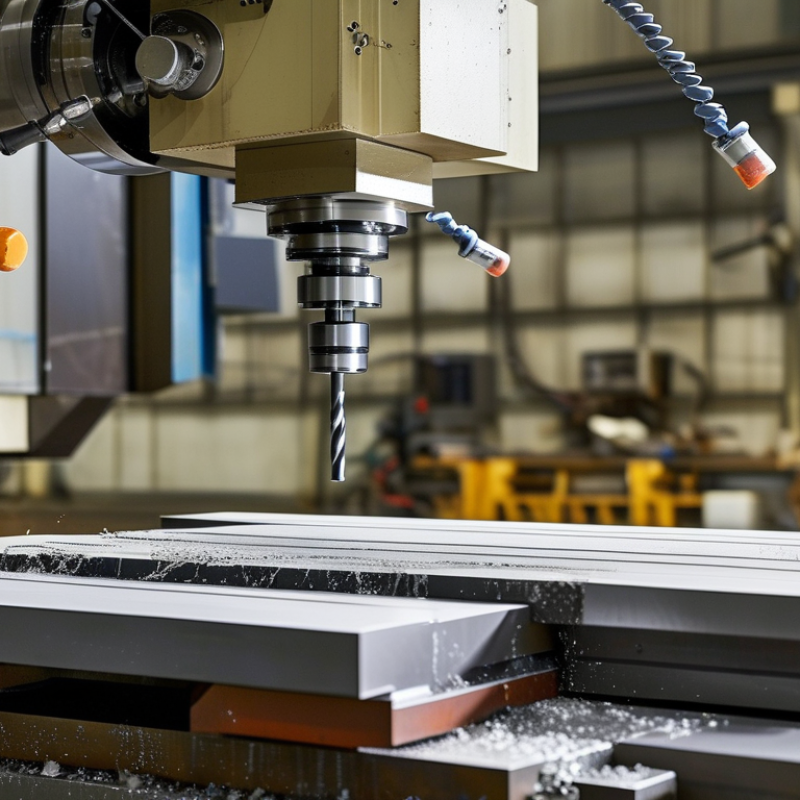
A Gantry Mill is a large machine tool designed to cut, drill, and finish heavy or oversized workpieces. Its defining structure is a bridge-like gantry that travels along fixed rails. A crossbeam supports the cutting head, while the spindle moves across the work area. Imagine a steel bridge carrying a powerful tool over a secured plate. That image explains the basic motion.

Professor Yusuf Altintas, a leading machining scientist and author of Manufacturing Automation, emphasizes that “machine tools must combine accuracy, stiffness, and productivity.” This principle is central to understanding how a Gantry Mill works. Its rigid frame reduces vibration during deep cuts. Its wide table supports components used in aerospace, energy, shipbuilding, and heavy equipment production. Linear guides, ball screws, or rack-and-pinion drives control movement along multiple axes. The CNC system coordinates these movements from programmed instructions.

The process appears straightforward. It is not. Operators must select suitable cutting speeds, feeds, tools, and workholding methods. A poorly supported workpiece can shift slightly, leaving visible marks or incorrect dimensions. Heat can also change the machine’s geometry during long production cycles. Experienced machinists monitor chips, spindle sound, coolant flow, and surface finish. These small details matter.

A Gantry Mill offers impressive capacity, but it is not automatically precise. Accuracy depends on machine design, calibration, maintenance, programming, and human judgment. This article examines each working principle clearly, while recognizing an often-overlooked truth: advanced equipment still needs careful decisions.
What Is a Gantry Mill and How Does It Work?

What Is a Gantry Mill?

A gantry mill is a computer-controlled machine tool with a bridge-like frame. The bridge spans the worktable and carries the cutting head. Unlike a traditional vertical mill, its side columns support the moving structure. This design gives the machine strength across a wide cutting area.

The workpiece rests on a rigid table, often secured with clamps or a vacuum fixture. Motors move the bridge, spindle, or table along the X, Y, and Z axes. A rotating cutter removes material in carefully planned passes.

Gantry mills commonly process large plates, molds, panels, and fabricated assemblies. Their open layout can improve loading access, but it also demands careful chip control and accurate workholding. A loose fixture can ruin an otherwise precise setup. That happens more often than people admit.

Tips:

Check the table for chips before positioning material. Confirm tool clearance at every travel limit. Use a slower feed when cutting unfamiliar material. Measure the first part, then adjust the program if needed. A dry run can reveal collisions before metal is removed. Keep the spindle, rails, and guides clean. Small maintenance habits protect accuracy over long production runs. Still, no setup is flawless. Experienced operators review unusual tool marks instead of ignoring them.

Key Components of a Gantry Milling Machine

What Is a Gantry Mill and How Does It Work?

Key Components of a Gantry Milling Machine

A gantry mill uses a bridge-like frame to support heavy cutting forces. Its main structure includes two columns, a crossrail, and a moving spindle head. The worktable carries large plates, castings, or welded assemblies. Unlike a moving-column mill, the gantry often keeps its table fixed while the bridge travels along precision guideways. This layout improves access to wide workpieces, though floor space becomes a serious concern.

The spindle removes material through rotating cutters. Servo motors drive the X, Y, and Z axes through ball screws, rack-and-pinion systems, or linear motors. Encoders monitor position, while the CNC controller coordinates feed rates, tool paths, and spindle speed. Automatic tool changers reduce setup time. Coolant systems control heat and carry chips away from the cutting zone. According to Grand View Research’s 2024 analysis, the global CNC machine tools market is expected to expand at a compound annual growth rate above 8% through 2030. That growth increases pressure for faster, more repeatable machines.

Tips: Check the table’s load rating before selecting tooling. Measure thermal drift during long cycles. A clean guideway matters more than many operators expect. The International Organization for Standardization’s ISO 230 series provides useful methods for checking machine-tool accuracy. I have seen alignment errors blamed on software when the real problem was uneven foundation support. That assumption is not always correct. Even advanced feedback systems cannot fully rescue poor installation, weak fixturing, or neglected lubrication.

How a Gantry Mill Moves and Removes Material

A gantry mill is a large machining system built around a rigid frame. Its bridge spans the worktable, while the cutting head travels across that structure. This layout supports wide, heavy parts that smaller mills cannot hold securely. The 2023 World Machine Tool Survey estimated global machine-tool consumption at roughly 82 billion dollars in 2022. That scale reflects continuing demand for precise metal removal in industrial production.

The cutting process begins when the spindle rotates a tool against the workpiece. The table usually moves along the X-axis. The bridge or head moves across the Y-axis, while the spindle travels vertically on the Z-axis. Together, these movements create controlled three-dimensional paths. Feed rate, spindle speed, and cutting depth determine how quickly material leaves the surface. Coolant carries away heat and chips, but poor chip control can still damage the finish.

A gantry mill needs careful setup. A small alignment error can appear across a large part. In practice, the first setup is rarely perfect. Operators check workholding, tool runout, and axis calibration before heavy cutting. ISO 230-2 testing procedures help evaluate positioning accuracy and repeatability. The 2024 World Robotics report recorded 541,302 industrial robot installations worldwide in 2023, showing how automation is expanding around machining operations. Yet judgment remains essential. A machine may follow code flawlessly and still cut the wrong feature.

What Is a Gantry Mill and How Does It Work? - How a Gantry Mill Moves and Removes Material

Machine Element or Operation Primary Movement How It Works Material-Removal Role Typical Applications
Gantry Structure Travels along the machine bed or remains fixed, depending on the design Two upright columns support a crossbeam, creating a rigid frame over the worktable. Maintains tool alignment and resists cutting forces during machining. Large plates, molds, dies, structural parts, and oversized workpieces
X-Axis Longitudinal movement along the machine bed The table or gantry moves horizontally relative to the workpiece, depending on machine configuration. Positions the cutting tool along the length of the part. Long slots, faces, rails, cavities, and large surface areas
Y-Axis Transverse movement across the work area The milling head or cross-rail assembly moves from side to side across the gantry. Controls the tool’s position across the width of the workpiece. Wide faces, pockets, contours, and cross-sectional features
Z-Axis Vertical movement toward or away from the workpiece The spindle head or ram moves vertically to set cutting depth. Determines how deeply the cutter enters the material. Step-down cuts, drilled features, pockets, and height adjustments
Spindle Rotates the cutting tool around its axis A motor drives the spindle, which holds the cutter in a tool holder or arbor. Provides the rotational speed needed for cutting edges to shear material. Face milling, end milling, slotting, drilling, and contouring
Cutting Tool Rotates while following programmed linear or circular paths Flutes or inserts engage the workpiece as the tool advances through the material. Removes chips through repeated shearing and cutting actions. Cutter selection depends on material, feature geometry, surface finish, and cutting depth.
Worktable and Fixture Supports and locates the workpiece Clamps, vises, bolts, or custom fixtures hold the part against cutting forces. Prevents movement that could cause dimensional errors or tool damage. Large or heavy components requiring stable, accurately repeatable positioning
CNC Control System Coordinates multiple axes simultaneously Interprets programmed toolpaths and commands axis position, feed rate, spindle speed, and auxiliary functions. Controls the exact path and cutting conditions used to produce the part. Complex profiles, repeat production, 3-axis machining, and simultaneous multi-axis work
Feed Rate Movement of the tool relative to the workpiece The programmed feed determines how quickly the cutter advances through the material. Affects chip thickness, cutting time, heat generation, and surface finish. Adjusted according to tool diameter, material, spindle speed, and required finish
Depth of Cut Vertical engagement of the tool with the workpiece Material is removed in one or more passes rather than necessarily in a single cut. Balances removal rate with spindle power, tool strength, rigidity, and surface quality. Roughing uses heavier passes; finishing uses lighter passes for improved accuracy.
Coolant and Chip Management Fluid delivery and chip evacuation Coolant, air, or mist may reduce heat and carry chips away from the cutting zone. Helps protect the tool, improve surface finish, and prevent chips from being recut. Long machining cycles, deep pockets, heat-sensitive materials, and high-volume chip removal
Typical Machining Sequence Position, engage, cut, retract, and inspect The machine establishes work coordinates, approaches the part, removes material, and repeats passes until the target geometry is reached. Transforms a stock block, plate, or casting into a specified shape and size. Roughing, semi-finishing, finishing, drilling, tapping, and dimensional inspection

Common Types and Applications of Gantry Mills

What Is a Gantry Mill and How Does It Work?

A gantry mill is a large machining center with a bridge-like frame over the worktable. The cutting head moves along this frame and removes material with controlled motion. Unlike a traditional column mill, its gantry supports the cutting forces from both sides. This design improves stability when machining wide or heavy parts. Operators commonly use digital programs to control speed, feed, and cutting depth.

Small detail: alignment matters.

Common Types and Applications of Gantry Mills

Fixed-gantry mills keep the bridge stationary while the table moves beneath it. They suit heavy workpieces that need strong cutting support. Moving-gantry mills move the bridge across a fixed table, making them useful for long plates and structural components. Bridge mills use a wide overhead frame and often provide generous access around the workpiece. Double-column designs add rigidity for deep cuts and large molds.

These machines are widely used for aircraft structures, ship components, energy equipment, construction machinery, and large industrial molds. A moving-gantry model may cut a steel frame several meters long, while a fixed-gantry machine may shape a thick casting.

In real workshops, chip removal and temperature control can affect accuracy more than expected. I have found that a perfect program cannot correct poor fixturing.

This deserves attention. Technicians should inspect tool wear, table leveling, and vibration during production, not only after defects appear.

Advantages and Limitations of Gantry Milling

A gantry mill uses two vertical columns, a crossrail, and a moving cutting head. The columns support the beam across the worktable. This rigid structure helps control vibration during heavy cutting. In practical machining, it suits large plates, molds, and welded assemblies. Large parts fit.

The main advantage is stability. A well-aligned gantry mill can remove substantial material while maintaining consistent tool movement. Its open work area also simplifies loading with overhead lifting equipment. Modern controls can coordinate multiple axes, improving surface accuracy and reducing manual adjustments. However, the machine requires considerable floor space and a strong foundation. Installation can be expensive, especially when the table is very long. Its size does not automatically guarantee precision. Thermal growth in the columns or crossrail can shift dimensions during extended cycles. Operators must monitor temperature, tool wear, alignment, and workholding pressure. Smaller components may be inefficient because setup time can exceed cutting time. I would not call it universally better. It is powerful, but demanding. Poor fixturing still causes chatter, visible tool marks, and uneven edges. Experienced technicians usually verify alignment with calibrated measurement equipment before demanding work begins. That extra check seems slow. It often prevents a costly mistake.

What Is a Gantry Mill and How Does It Work?

A gantry mill uses a bridge-like structure that spans the worktable, with the cutting head moving along the bridge and columns. The chart shows a normalized 1–5 suitability index based on common engineering characteristics: higher values indicate stronger advantages, while lower values indicate typical limitations compared with smaller conventional milling machines.

Article Source: