
How to Choose a Fire Resistant Fan?

How to Choose a Fire Resistant Fan?

Choosing a Fire-Resistant Fan is not simply a matter of selecting the highest temperature rating. The right choice depends on the fire scenario, airflow requirement, installation position, and verified test performance. A fan designed for smoke extraction may not suit a commercial kitchen, tunnel, generator room, or industrial process. These applications create different heat, pressure, contamination, and operating challenges.

Fire protection engineer James A. Milke emphasizes, “Fire protection is a systems problem, not a single-product problem.” That principle matters when comparing fan casing materials, impeller strength, motor placement, bearings, seals, and control systems. A casing may withstand intense heat, yet the motor controller could fail first. A powerful motor may deliver excellent airflow, but poor pressure performance can reduce smoke movement through long ducts.

Look beyond the brochure. Request the complete test report, temperature-time rating, airflow data, pressure curves, and approved installation limits. Check whether the stated rating applies to continuous operation, emergency duty, or both. Confirm that the product matches the required regional certification and local fire-safety requirements. A certificate without clear scope deserves careful questioning.

Small details matter. Imagine a fan running above a hot ceiling void, with ash entering the bearings and duct pressure changing during evacuation. That picture reveals weaknesses that a clean showroom cannot show. Noise, maintenance access, replacement parts, and emergency power compatibility also affect real reliability.

There is no perfect checklist. Even experienced buyers can overlook site conditions. A responsible selection process combines engineering calculations, documented testing, qualified installation, and periodic inspection. Safety depends on the whole system, not the label alone.
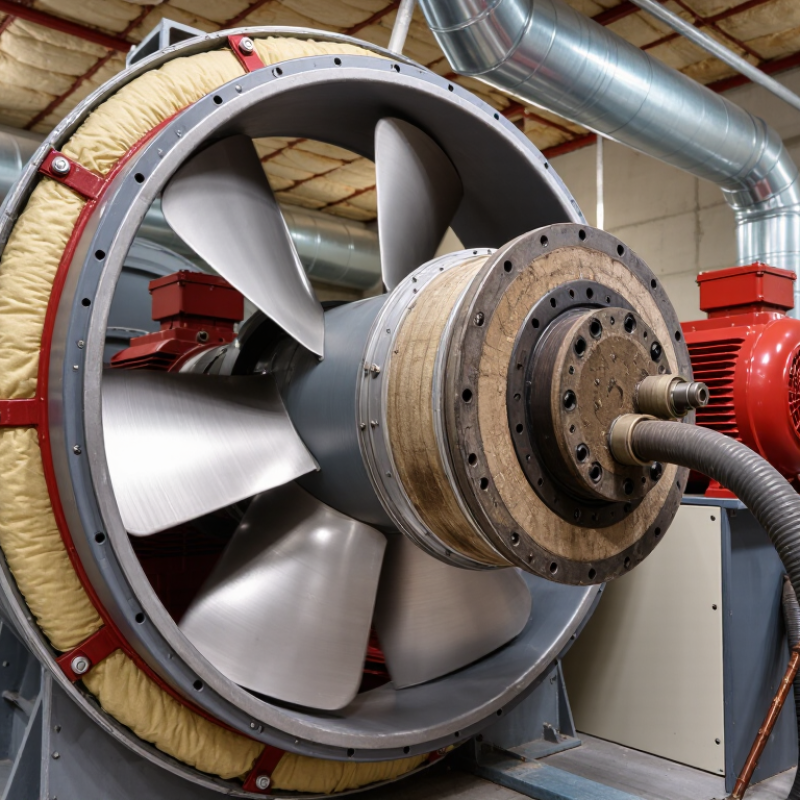
How to Choose a Fire Resistant Fan?

What Makes a Fan Fire Resistant?

What Makes a Fan Fire Resistant?

A fire-resistant fan is more than a metal casing. It must keep moving air, limit ignition, and survive verified heat exposure. The motor, bearings, wiring, impeller, seals, and mounting frame all matter. A weak cable can defeat a strong housing. So can grease buildup.

NFPA reported 1,504,500 U.S. fires in 2023, with 3,670 civilian deaths and 13,250 injuries. These figures do not prove that fans caused fires. They show why ventilation equipment deserves evidence, not marketing language. Check the test standard, temperature class, duration, airflow rating, and installation limits. EN 12101-3 classifications, such as F300 60, indicate operation at 300°C for 60 minutes. The exact class must match the smoke-control design.

Motor thermal protection is essential. Bearings need documented high-temperature performance. Insulation should resist heat and moisture. The fan should also limit flame spread through connected ducts and penetrations.

AMCA 212 addresses smoke-control fan performance, while AMCA 210 supports airflow and pressure testing. Ask for the complete test report, not only a certificate. Real sites are less tidy than laboratories.

Dust, vibration, poor wiring, and blocked inlets can reduce protection. I would inspect access panels and cable routes before accepting a specification. “Fire resistant” is not a universal promise. It is a tested performance claim, and sometimes the paperwork still leaves uncomfortable questions.

How to Identify the Required Fire Safety Rating

How to Choose a Fire Resistant Fan?

How to Identify the Required Fire Safety Rating

A fire resistant fan should match the building’s actual emergency purpose. Is it removing smoke, supplying escape routes, or serving a high-risk industrial area? Each use may require a different rating. Do not guess.

Check the required operating temperature and duration in the project’s fire strategy. A rating such as 300°C for two hours describes tested performance, not general product quality. The correct value depends on local building codes, ventilation design, and the fire compartment. Some systems need continuous operation during evacuation. Others need short, controlled extraction periods.

Review independent test reports and certification documents. They should identify the complete fan assembly, mounting method, airflow direction, temperature, and test duration. A motor that survives heat is not enough if bearings, wiring, or supports fail first. Verify whether the test applies to the intended installation position. Ceiling, roof, and shaft installations can behave differently.

Check the fan’s duty point under fire conditions, not only normal airflow. Pressure losses from dampers, filters, ducts, and protective grilles can reduce performance. Installation quality matters just as much as selection. Poor sealing may allow smoke to bypass the designed route.

Ask a qualified fire engineer to confirm the rating before purchase. Regulations differ between regions, and project drawings may contain hidden requirements. A higher rating is not automatically safer or more suitable. I have seen specifications chosen from a catalogue table, then changed after a full system review. That extra review can prevent an expensive mistake.

How to Match Fan Materials With Operating Conditions

Choosing a fire resistant fan starts with the operating environment, not the catalog temperature.

NFPA’s Fire Loss in the United States 2023 report recorded about 1.39 million fires and over 3,670 civilian deaths. These figures show why material selection cannot rely on appearance alone.

For hot smoke extraction, specify steel casing and an impeller tested to the required temperature and duration. EN 12101-3 classifications commonly include 250°C for two hours or 300°C for two hours. The actual rating must match the building’s fire strategy.

Galvanized steel suits dry, moderately corrosive air. Stainless steel is safer near moisture, salts, or chemical vapors. Aluminum is light, but its strength can decline sharply during intense heating. It is not automatically a fire-safe choice.

Check every component. Seals must tolerate heat without shrinking. Bearings need suitable lubrication and external cooling where required. Dust can insulate surfaces and increase motor temperature. NFPA 92 identifies smoke-control systems as engineered life-safety systems, so fan selection should include airflow, pressure, emergency duty, and maintenance access. A high-temperature casing cannot compensate for a weak seal.

Small details matter. Inspect the real exhaust chemistry. A clean test chamber is not a kitchen, tunnel, or process plant. Engineers sometimes choose the strongest metal and overlook corrosion, vibration, or restart performance. That mistake deserves review. Require third-party test evidence, traceable material data, and installation conditions that match the certification.

How to Select the Correct Fan Size and Airflow

How to Choose a Fire Resistant Fan?

Choosing the correct fan size starts with the required airflow, not the fan casing. Calculate the room volume and determine the required air changes per hour. For smoke-control systems, follow the project’s fire strategy and applicable local standards. Normal ventilation figures may be dangerously inadequate during an emergency.

Measure the duct length, bends, grilles, filters, and dampers. Each component adds resistance and reduces delivered airflow. Select a fan from its performance curve, checking the duty point where airflow meets static pressure. A fan rated at 10,000 cubic meters per hour may deliver far less through a restrictive duct system. Check the details carefully.

Temperature rating matters too. A fire-resistant or smoke-exhaust fan must suit the expected temperature and operating duration. Confirm certification, motor protection, mounting requirements, and emergency power compatibility with a qualified engineer. Oversizing is not automatically safer; it can increase noise, energy use, and control problems. Undersizing leaves smoke moving too slowly. That mistake is common.

Leave room for testing. Measure airflow after installation, inspect damper operation, and compare results with the design values. Building changes can alter resistance, so the original calculation may need revision. A practical selection records airflow, pressure, temperature rating, duty time, and test conditions before purchase.

How to Choose a Fire Resistant Fan?

Select the fan by matching the required airflow and static pressure to the system duty point. The chart below shows the theoretical airflow through circular fan areas at a representative face velocity of 12 m/s. Actual fan performance depends on pressure, blade design, efficiency, temperature rating, and fire-test classification.

Selection guidance: Choose a fan size that can deliver the required airflow at the system’s operating pressure, then verify the required fire-resistance rating, operating temperature, duration, installation position, and electrical protection.

How to Verify Installation, Certification, and Maintenance Needs

Choosing a fire resistant fan requires more than checking its appearance or airflow rating. Verify that its certification matches the intended use, fire temperature, operating time, and installation position. A certificate alone can mislead. Check the issuing body, test standard, model number, production date, and approved configuration. The fan, motor, casing, wiring, and control system should match the certified design.

Installation records deserve equal attention. Confirm that the fan is mounted on stable supports, with correct clearances and vibration isolation. Inspect duct connections, fire dampers, access panels, and cable routes. Emergency power should be tested under realistic conditions. During commissioning, measure airflow, pressure, rotation, noise, and temperature rise. Record the readings. Small gaps around a duct may seem harmless, but they can weaken smoke control performance.

Maintenance needs a written schedule based on local fire codes and the manufacturer’s instructions. Inspect bearings, belts, terminals, seals, corrosion, and unusual vibration. Test automatic controls and backup power regularly, not only during annual inspections. Keep dated reports, photographs, test results, and repair records. If a component is replaced, confirm that the new part preserves the approved assembly. This step is often missed. A clean inspection form is not proof of reliable operation. Independent review may be worthwhile when the system protects occupied buildings or evacuation routes.

How to Choose a Fire Resistant Fan? - How to Verify Installation, Certification, and Maintenance Needs

Category Verification Point What to Check Recommended Evidence or Acceptance Criterion Typical Timing
Application Define the required duty Confirm whether the fan is for smoke extraction, stairwell pressurization, car-park ventilation, heat removal, or a combination of these functions. The design brief should state airflow, static pressure, smoke temperature, operating duration, duty point, standby requirements, and the applicable local fire strategy. Before selection
Fire Performance Verify temperature and duration classification Check the fan's tested hot-gas temperature and operating duration. Common European smoke-control classifications include F200, F300, and F400, with the duration stated separately. Use a valid test report or certificate identifying the exact fan configuration, temperature class, operating time, mounting arrangement, and installation limitations. Do not infer fire performance from the motor's insulation class alone. Before purchase
Certification Check the applicable product standard For smoke and heat control fans, review the applicable edition of EN 12101-3 or ISO 21927-3, where these standards are adopted for the project. The certificate should identify the manufacturer-independent product model, tested accessories, performance class, test method, issuing body, certificate number, validity, and any restrictions. Before approval
Certification Confirm third-party certification Distinguish between a manufacturer's declaration and independent product certification. Verify that the certificate applies to the complete fan assembly rather than only to a motor or component. Obtain the original certificate, scope of certification, test report, factory-production-control information where required, and traceable serial or model details. Confirm validity directly through the issuing certification body. Before delivery
Performance Match airflow and pressure requirements Review the certified performance curve at the actual system resistance, including filters, dampers, grilles, shafts, ducts, louvers, and fittings. The selected duty point should meet the approved design airflow and pressure with an appropriate margin, without exceeding motor current, fan speed, vibration, or noise limits. Design review
Installation Verify mounting and orientation Check that the installed orientation, support system, flexible connections, access clearances, and connected ductwork match the tested or certified arrangement. Use approved installation drawings and the manufacturer's installation instructions. Supports, anchors, fire-stopping, dampers, and access panels must be suitable for the system's fire and mechanical loads. During installation
Electrical Safety Confirm emergency power and wiring Verify the normal and emergency power sources, automatic transfer arrangements, protective devices, control panels, cable routes, and fire-resistant cabling requirements. The electrical design should maintain fan operation for the required period and coordinate with the approved smoke-control sequence. Cable penetrations and electrical enclosures should be fire-stopped or rated where required. Design and commissioning
Controls Test the cause-and-effect sequence Check manual start, automatic fire-alarm start, remote emergency controls, damper interlocks, fault indications, fan status feedback, and shutdown logic. Conduct a witnessed functional test using the approved cause-and-effect matrix. Record start time, rotation, airflow or pressure, alarm indications, interlocks, and failure signals. Commissioning
Commissioning Measure installed performance Measure airflow, static pressure, electrical current, voltage, vibration, rotation direction, and control response under normal and emergency operating modes. Prepare a commissioning report showing calibrated test instruments, test locations, operating conditions, measured results, design values, deviations, and corrective actions. At handover
Maintenance Establish a preventive maintenance plan Inspect bearings, belts, impellers, guards, housings, flexible connectors, dampers, electrical terminals, control panels, sensors, and emergency power systems. Follow the equipment instructions and the authority having jurisdiction's requirements. Keep inspection dates, findings, repairs, replacement parts, test results, and responsible personnel in a permanent log. Routine service
Maintenance Schedule operational testing Run the fan at the required intervals and verify automatic and manual operation, abnormal noise, vibration, airflow, pressure, electrical load, and fault reporting. Testing frequency must follow local regulations, the approved fire strategy, and the equipment instructions. A change in vibration, current, airflow, or pressure should trigger investigation. Periodic
Documentation Maintain a complete handover file Collect approved drawings, calculations, certificates, test reports, installation records, commissioning data, operating instructions, spare-parts information, and maintenance schedules. The documentation should allow future personnel to identify the installed configuration and prove that later repairs or replacements remain compatible with the certified system. Handover and updates
Compliance Obtain final authority approval Confirm requirements from the local building code, fire code, electrical code, occupational-safety rules, and the authority having jurisdiction. Final acceptance should be based on the approved design, applicable regulations, witnessed tests, and complete records. Local requirements take precedence where they are more restrictive. Before occupancy