China Top Automotive Vent Membrane Manufacturers?
China has become an important sourcing base for automotive protection components, including Automotive Vent Membrane solutions. These membranes help equalize pressure inside lamps, electronic control units, battery packs, and sensors. They also limit water, dust, oil mist, and road contaminants from entering sensitive housings.
A useful review of China’s top automotive vent membrane manufacturers should examine more than product catalogs. Practical experience matters. Strong suppliers usually explain membrane materials, pore structure, adhesive systems, and temperature limits clearly. They should also provide samples, technical drawings, traceability records, and test reports. Relevant evaluations may include water resistance, air permeability, chemical exposure, thermal cycling, vibration, and salt spray testing. Manufacturing discipline matters too, especially during die cutting, lamination, clean assembly, and automated inspection.
The market is not perfectly transparent. Some rankings remain debatable because manufacturers serve different vehicle programs and application conditions. A supplier with excellent ePTFE performance may not be ideal for a high-temperature battery enclosure. Another company may offer competitive pricing but limited validation support. That difference is easy to miss.
Look for evidence, not polished claims. Reliable manufacturers should discuss production capacity, quality controls, tooling experience, and after-sales communication. Certifications such as IATF 16949 or ISO 9001 can support credibility, but certification alone proves little. Consistent batches matter more. Ask how suppliers manage membrane bonding, peel strength, storage life, and field complaints. The following overview focuses on manufacturers that demonstrate technical competence, responsive service, and realistic automotive application experience. It may not identify one universal winner, because the best choice depends on design, climate, volume, and validation requirements.
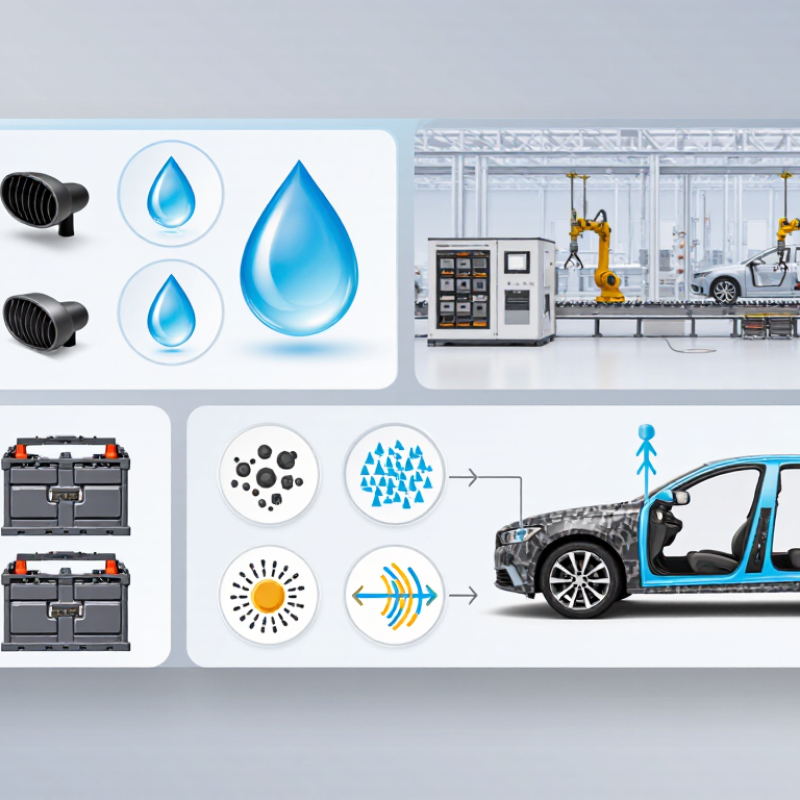
What Are Automotive Vent Membranes?
What Are Automotive Vent Membranes?
Automotive vent membranes are thin, engineered barriers inside sealed vehicle components. They allow air and pressure to move while blocking liquid water, dust, and many contaminants. This balance matters because enclosed parts heat up during operation and cool down after shutdown.
A sealed housing can behave like a small pressure chamber. Temperature changes may force air through weak joints or distort gaskets. A vent membrane reduces this stress without leaving a large opening. Engineers commonly use them in lamps, electronic control units, battery enclosures, motors, and sensors. The membrane must match the application’s airflow, water resistance, temperature range, and chemical exposure.
Material selection is only one part of reliable performance. Adhesive strength, vent placement, housing design, and assembly cleanliness also affect results. In production testing, engineers may check airflow, water entry, dust resistance, vibration, and temperature cycling. Real vehicles are less predictable than laboratory samples. Road spray, oil mist, pressure pulses, and installation errors can expose weaknesses.
The design is rarely perfect. A membrane with high water resistance may provide less airflow. A highly breathable structure may need stronger protection from contamination. Engineers must balance these competing needs and verify performance under realistic conditions. Small details matter. Even a blocked vent can cause condensation, pressure buildup, or premature component failure.
Why Automotive Components Require Vent Membranes
China Top Automotive Vent Membrane Manufacturers?
Why Automotive Components Require Vent Membranes
Automotive components face pressure changes every day. A parked vehicle may move from freezing weather to a hot engine bay within hours. Internal air expands, contracts, and searches for weak points. A vent membrane allows controlled airflow while blocking liquid water, dust, mud, and oil mist.
This small part protects headlights, electronic control units, sensors, motors, and battery housings. Without pressure equalization, seals can deform or pull moisture inward. Condensation may then appear on a circuit board or inside a lamp. The damage is often gradual. It may begin with corrosion around one connector.
A reliable membrane needs suitable pore structure, chemical resistance, and strong bonding. It must survive vibration, salt spray, pressure washing, and repeated temperature cycling. Material selection matters. So does the housing design. A perfect membrane cannot rescue a badly positioned vent.
Testing teams commonly use pressure decay, water ingress, dust exposure, and thermal cycling tests. Field results can still surprise engineers. A membrane may pass laboratory checks but fail after adhesive aging. That weakness deserves honest review. Manufacturing consistency also matters, especially for automotive suppliers producing large volumes. Small variations in coating, cutting, or placement can change long-term protection. Components need breathing room, but not an open door.
China Top Automotive Vent Membrane Manufacturers? - Why Automotive Components Require Vent Membranes
| Automotive Component | Primary Venting Requirement | Common Membrane Material | Typical Airflow Range1 | Typical Water-Entry Pressure2 | Typical Operating Temperature | Main Protection Benefit |
| Exterior LED Lamp | Equalizes pressure caused by heating, cooling, and altitude changes | Expanded PTFE, often oleophobic | 10–80 mL/min/cm² at 1 kPa | ≥20–80 kPa | −40°C to +150°C | Reduces condensation while blocking rain, splash, and dust |
| Electronic Control Unit | Controls pressure differential during thermal cycling | Microporous PTFE or laminated PTFE composite | 5–50 mL/min/cm² at 1 kPa | ≥30–100 kPa | −40°C to +125°C | Helps prevent seal stress, moisture ingress, and corrosion |
| Battery Pack Housing | Vents normal pressure changes while supporting enclosure sealing | High-strength expanded PTFE or multilayer vent | 20–150 mL/min/cm² at 1 kPa | ≥30–100 kPa, design-dependent | −40°C to +85°C or higher locally | Limits water and particle entry while reducing enclosure pressure buildup |
| Electric Motor Housing | Releases pressure generated by motor heat and cooling cycles | Expanded PTFE with oil- and chemical-resistant treatment | 10–100 mL/min/cm² at 1 kPa | ≥20–80 kPa | −40°C to +150°C | Protects bearings, windings, and electronics from humidity and contaminants |
| Pressure and Temperature Sensor | Maintains pressure balance without interfering with sensor response | Thin expanded PTFE membrane | 5–60 mL/min/cm² at 1 kPa | ≥10–50 kPa | −40°C to +125°C | Allows gas exchange while filtering water droplets and dust |
| Transmission and Gearbox Housing | Balances pressure from lubricant and housing temperature changes | Oil-resistant expanded PTFE or PTFE composite | 10–100 mL/min/cm² at 1 kPa | ≥30–80 kPa | −40°C to +150°C | Reduces lubricant leakage, seal loading, and external moisture entry |
| Fuel System Module | Manages pressure changes while resisting fuel vapor and liquid exposure | Chemically resistant PTFE or fluoropolymer composite | 5–50 mL/min/cm² at 1 kPa | Application-specific; commonly ≥20 kPa | −40°C to +120°C | Supports vapor management and protects sensitive components from liquid contamination |
| Charging Inlet and High-Voltage Connector | Equalizes pressure in sealed connector or terminal cavities | Hydrophobic expanded PTFE | 5–80 mL/min/cm² at 1 kPa | ≥30–100 kPa | −40°C to +125°C | Helps prevent condensation, corrosion, and pressure-driven seal failure |
Why automotive components require vent membranes: Automotive enclosures experience rapid temperature changes, altitude variation, humidity, water splash, dust, oils, and chemical exposure. A vent membrane allows air and vapor to pass through while restricting liquid water and particles. This pressure equalization helps reduce condensation, enclosure deformation, seal stress, corrosion, and premature electronic failure.
Notes: 1 Airflow values are representative engineering ranges measured under a pressure differential of approximately 1 kPa; actual performance depends on membrane area, thickness, backing material, and test method. 2 Water-entry pressure is a typical design range rather than a universal requirement. Final validation should consider the complete vent assembly, housing design, chemical exposure, spray conditions, and applicable vehicle-level specifications.
Key Criteria for Evaluating Chinese Manufacturers
China Top Automotive Vent Membrane Manufacturers: Key Criteria for Evaluating Chinese Manufacturers
When evaluating Chinese automotive vent membrane manufacturers, begin with material performance, not price. MarketsandMarkets reported that the automotive sensor market could grow from about USD 25.7 billion in 2023 to USD 45.6 billion by 2028. More sensors mean greater pressure on enclosure reliability. A vent membrane should balance airflow, water resistance, oil resistance, and pressure equalization. Request test data for IP protection, thermal cycling, salt spray, vibration, and chemical exposure. Test conditions must match the vehicle’s actual installation environment.
Production control matters equally. Check IATF 16949 certification, incoming-material inspection, membrane pore-size control, and batch traceability. Ask for PPAP documents, control plans, and failure-analysis records. A capable supplier should explain how die-cutting, adhesive application, and clean-room handling are monitored. According to a 2024 automotive manufacturing quality survey by the International Automotive Task Force, process consistency and traceability remain key supplier-evaluation priorities. Certificates alone prove little.
Audit the factory floor when possible. Observe humidity control, storage methods, sampling frequency, and operator training. Request independent laboratory results, not only internal reports. A low unit price can mislead. It may hide unstable adhesive strength or inconsistent venting performance. No audit is perfect. I would still compare three production batches before approval, because one attractive sample cannot represent long-term reliability.
Leading Automotive Vent Membrane Manufacturers in China
China’s automotive vent membrane sector is expanding with vehicle electronics and sealed battery systems. The China Association of Automobile Manufacturers reported 30.16 million vehicle sales in 2023. Export volume reached 4.91 million units. These figures increase demand for reliable pressure-equalization components. Leading automotive vent membrane manufacturers in China now serve lamps, cameras, control units, motors, and battery enclosures. Their products commonly use expanded PTFE membranes, adhesive layers, and molded protective caps.
Supplier evaluation needs more than catalog claims. Technical teams should check airflow, water-entry pressure, oil resistance, salt spray performance, and thermal cycling results. Automotive electronics market data from Grand View Research projects continued growth through 2030, supporting higher demand for compact environmental protection. Yet this connection is indirect. Vent membranes are only one component, and market reports rarely separate them clearly. That limitation deserves attention.
Experienced Chinese manufacturers usually provide customized pore structures, die-cut shapes, and automated inspection records. ISO 9001 systems are useful, but automotive programs often require stronger process controls and traceability. PPAP support, material lot records, and failure analysis experience can reveal supplier maturity. A practical audit should inspect bonding equipment and aging-test samples. Small details matter.
Some suppliers still emphasize low unit prices too heavily. That approach can weaken adhesive consistency or long-term sealing performance. Buyers should compare total service life, not only initial cost. Independent test data remains essential before approval.
How to Choose the Right Chinese Manufacturer
China Top Automotive Vent Membrane Manufacturers: How to Choose the Right Chinese Manufacturer
Choosing a Chinese automotive vent membrane manufacturer requires more than comparing unit prices. OICA reported 93.5 million vehicles produced worldwide in 2023. The IEA recorded nearly 14 million electric car sales that year. These figures increase demand for reliable pressure equalization in batteries, lamps, sensors, and control units. Production scale matters. Quality discipline matters more.
Ask for membrane material data, air-permeability results, water-entry pressure, thermal cycling records, and salt-spray performance. The supplier should explain how adhesive strength changes after heat, humidity, and vibration exposure. Request samples from the same production line used for mass orders. Laboratory prototypes can look perfect. Factory output may not.
Check whether the facility follows IATF 16949 and ISO 9001 procedures, with traceable batches and documented corrective actions. An independent test report is stronger than a sales presentation. Still, reports need method details, sample sizes, and test dates.
MarketsandMarkets identifies increasing electronic content as a major trend in automotive components, raising demands on sealing and venting reliability. A manufacturer should therefore support custom pressure targets, housing geometries, and automated inspection. Confirm tooling ownership, minimum order quantities, replacement policies, and response times before signing.
One overlooked detail is packaging: folded membranes or contaminated adhesive can fail during assembly. I have seen technically strong samples lose value because communication was slow. That risk deserves a practical trial order, not a promise.