
-
Solutions
-

Waterworks

Pressure Reducing
Pressure Sustaining / Pressure Relief
Flow Control valves
Float Valves - Level Control
Electrically Actuated Valves
Pressure Modulation - Remote Control
Altitude Valves - Level Control
Burst Control Valves
Pump Control
CLA-VAL "HYTROL" Main Valve
Valve Controllers and Data Loggers
Air Valves
See all
Waterworks
-

Military Fuelling
-
- About us
- Blog
- Support
- Contact


Blog
Top 10 Types of Pallet Rack Systems
A Pallet Rack system does more than hold cartons above a warehouse floor. Its design affects how goods move, how much space remains for aisles, and how quickly workers can reach each load. A selective rack, for example, gives direct access to many pallet positions. A drive-in system can store more pallets in a smaller footprint, but access to individual loads may be less immediate. Small differences in daily order patterns can make that trade-off matter.
The Top 10 Types of Pallet Rack Systems introduces common options, including selective, double-deep, push-back, pallet-flow, and cantilever racks. Each type serves different storage needs. Product dimensions, pallet weight, inventory turnover, available floor space, and handling equipment all deserve attention before a layout is chosen. A forklift’s turning radius can change how useful a proposed aisle plan really is. So can an uneven mix of pallet sizes.
There is no single system that suits every warehouse. Even a well-planned installation may need adjustment as inventory changes. That detail is easy to overlook. This guide explains how the main rack types work, where they may fit, and what limitations to consider. It is a practical starting point, not a substitute for a site-specific assessment by qualified professionals.
What Pallet Rack Systems Are and How They Support Warehouse Storage
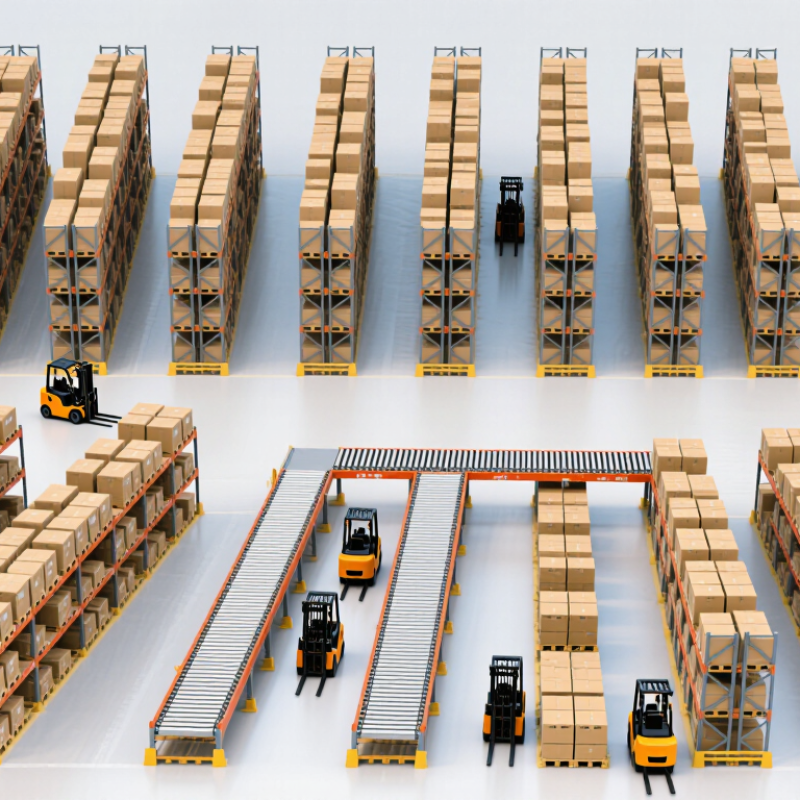
A pallet rack system is a steel structure that stores palletized goods above the floor, using upright frames and horizontal beams. It turns vertical space into accessible storage. In a typical warehouse, forklifts place pallets onto beam levels, while clear aisles let operators retrieve them. The arrangement can make stock easier to see and help teams use floor space more efficiently.
Different systems suit different work. Selective racks provide direct access to each pallet, while drive-in designs store more pallets in a smaller area but limit access to individual loads. The right choice depends on inventory turnover, pallet size, ceiling height, floor conditions, and forklift dimensions. Measure actual loads, including uneven or overhanging goods. Small details matter.
A rack should be treated as a working structure, not just shelving. Installers need to follow the system’s load ratings, and staff should know how to spot bent beams, loose connections, or impact damage. Keep aisles clear, and arrange inspections at regular intervals. No layout is perfect. Dense storage may slow picking, while wider access can use valuable space. Reviewing how stock moves through the building helps reveal which compromise is practical.
Top 10 Types of Pallet Rack Systems — What Pallet Rack Systems Are and How They Support Warehouse Storage
Pallet rack systems are structural storage frameworks that hold palletized goods and provide organized access for warehouse equipment. The right system depends on inventory rotation, pallet variety, available space, and the required level of access.
| Rack System | How It Stores Pallets | Access and Selectivity | Common Uses | Key Consideration |
|---|---|---|---|---|
| 1. Selective Pallet Rack | Pallets sit on horizontal beams in individual storage positions, with aisles between rack rows. | Direct access to each pallet; high selectivity. | Warehouses with many SKUs, mixed inventory, or frequent picking. | Aisles provide access but use floor space that could otherwise hold storage. |
| 2. Double-Deep Rack | Two pallet positions are placed one behind the other, typically on each side of an aisle. | Front pallets are directly accessible; rear pallets require a deep-reach truck. | Operations holding multiple pallets of the same SKU. | Access to rear pallets is less direct, so stock rotation and equipment compatibility matter. |
| 3. Drive-In Rack | A forklift enters a rack lane and places pallets on rails that support the pallet edges. | Typically accessed from one end; storage is commonly last-in, first-out (LIFO). | High quantities of similar products with relatively low SKU variety. | Forklifts travel inside the lanes, so careful operation and compatible pallets are important. |
| 4. Drive-Through Rack | A forklift enters a lane from one side and can exit from the opposite side. | Access from both ends can support first-in, first-out (FIFO) loading and retrieval when managed accordingly. | Bulk storage where product flow between two sides is useful. | Requires access aisles at both ends and suitable traffic planning. |
| 5. Push-Back Rack | Pallets rest on nested carts or rollers that move back along an inclined lane as new pallets are loaded. | Loaded and retrieved from the same aisle; generally operates on a LIFO basis. | Multiple pallets per SKU where greater storage density than selective rack is desired. | Pallet dimensions, load condition, and lane design affect smooth operation. |
| 6. Pallet Flow Rack | Pallets move by gravity along inclined roller or wheel lanes from the loading side to the picking side. | Separate loading and retrieval sides can support FIFO flow. | Goods needing stock rotation, including date-sensitive inventory. | Pallet quality, load stability, and flow-lane maintenance are important. |
| 7. Pallet Shuttle Rack | A powered shuttle travels along rack rails to move pallets into or out of deep storage lanes. | Forklifts place and retrieve pallets at lane openings; lane operation can be configured for different stock flows. | High-density storage of multiple pallets per SKU or product group. | Requires powered equipment, controls, and a plan for shuttle charging and maintenance. |
| 8. Mobile Pallet Rack | Rack rows are mounted on powered mobile bases that move to open an access aisle where needed. | Aisle access is created on demand; pallets can remain individually accessible within the opened aisle. | Facilities where storage density is important and access frequency can be managed. | Needs suitable flooring, safety controls, and coordination of aisle movements. |
| 9. Very Narrow Aisle (VNA) Rack | Rack is arranged with narrow operating aisles served by specialized turret or guided trucks. | Pallet positions can remain individually accessible, with aisle width reduced compared with conventional layouts. | Warehouses seeking to increase storage capacity while retaining selective access. | Requires compatible trucks and careful attention to floor flatness, guidance, and clearances. |
| 10. High-Bay Automated Storage and Retrieval System (AS/RS) | Automated cranes or other storage-and-retrieval machines place and retrieve pallet loads within tall rack aisles. | Access is directed by a control system rather than routine forklift travel within the storage aisles. | Operations with substantial throughput, consistent load units, and a need for automated inventory handling. | Requires significant systems planning, integration, and ongoing technical support. |
Note: Actual capacity, aisle requirements, and suitability depend on rack engineering, pallet and load specifications, handling equipment, building conditions, and applicable safety requirements.