
Top 11kV to 400V Distribution Power Transformers for Buyers

Top 11kV to 400V Distribution Power Transformers for Buyers

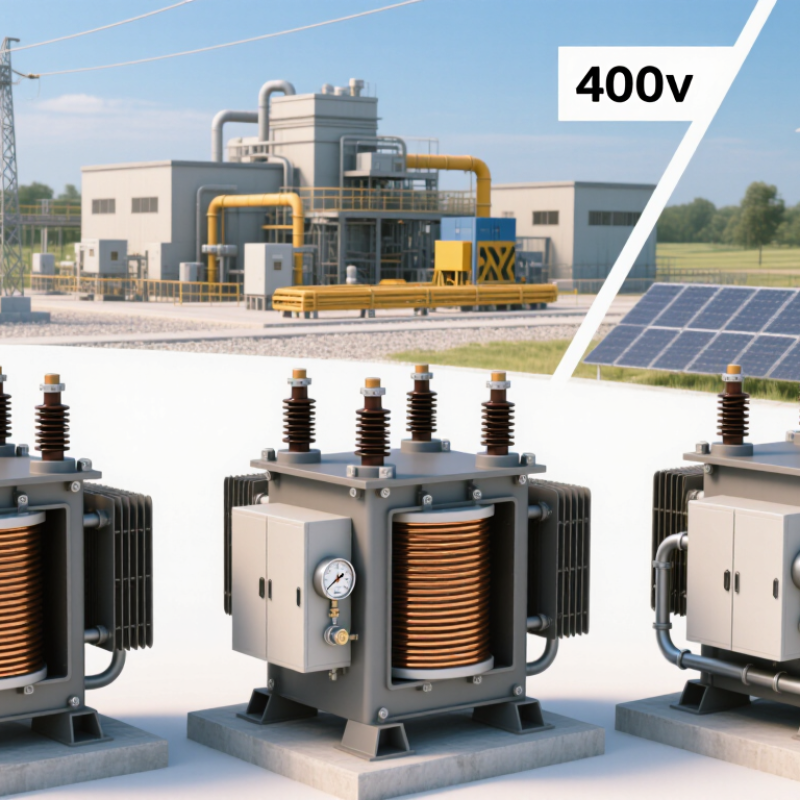
Choosing an 11kv To 400v Distribution Power Transformer is a practical decision, not merely a catalog exercise. It affects voltage stability, operating losses, maintenance costs, and equipment life. At the substation fence, the details become physical: copper windings, porcelain bushings, cooling fins, oil gauges, and a grounded steel tank.

Dr. Juan A. Martinez-Velasco, a respected power-system engineering author, offers a useful reminder: “Transformer selection must begin with the network, not the catalog.” That principle deserves attention. Buyers should verify the 11kV primary voltage, 400V secondary voltage, frequency, rated capacity, vector group, impedance, insulation level, and tap-changing range. A small mismatch can create heat, nuisance trips, or unstable downstream voltage.

This guide compares leading options for industrial plants, commercial buildings, renewable projects, and utility networks. It considers efficiency, no-load losses, load losses, temperature rise, cooling design, enclosure protection, noise, and service access. Compliance with IEC 60076 and applicable local requirements should support every technical comparison.

Real sites are rarely perfect. Dust enters cabinets. Loads change unexpectedly. Installation teams sometimes receive incomplete data. Buyers should leave room for those realities. A transformer that looks economical may cost more after transport, testing, oil handling, or delayed commissioning. Still, specifications alone cannot predict everything. Site conditions and supplier support matter greatly.

The strongest purchase decision combines tested performance, documented experience, and honest risk review. This list aims to make that review clearer before the purchase order is signed.
Top 11kV to 400V Distribution Power Transformers for Buyers

11kV to 400V Distribution Transformer Fundamentals

Top 11kV to 400V Distribution Power Transformers for Buyers

11kV to 400V Distribution Transformer Fundamentals

An 11kV to 400V transformer reduces medium voltage for factories, commercial buildings, and local networks. Its nominal voltage ratio is about 27.5:1. The low-voltage side normally supplies three-phase loads at 400V between phases. A 230V supply is available between one phase and neutral. Simple arithmetic helps, but site conditions matter more.

Core losses occur continuously, even during light loading. Copper losses increase sharply when demand rises. The U.S. Department of Energy reports that distribution transformers consume roughly 60 billion kWh annually in the country. Therefore, efficiency is not a minor purchasing detail. Check no-load loss, load loss, impedance, temperature rise, and declared efficiency. A transformer with lower purchase cost may create higher lifetime expenses.

The IEA Electricity 2024 report projects global electricity demand to grow by an average 3.4% annually through 2026. This growth increases pressure on distribution equipment and replacement planning. Buyers should verify tap settings, vector group, insulation level, enclosure protection, and cooling method. On-load or off-circuit taps can correct voltage variation, but they cannot repair an undersized network. Field inspections should also check cable length, harmonics, ambient temperature, and unbalanced loads. A neat spreadsheet can still lie. Real installations are less tidy. Reference IEC 60076 test requirements, request routine test records, and compare guaranteed losses with measured operating conditions. Some specifications remain incomplete; that is a reason to ask better questions, not to guess.

Core Components and Electrical Operating Principles

Top 11kV to 400V Distribution Power Transformers for Buyers

An 11kV-to-400V transformer reduces medium voltage for factories, commercial buildings, and local grids. The nominal ratio is about 27.5:1. Its laminated steel core guides alternating magnetic flux, while copper or aluminium windings transfer energy through electromagnetic induction. No direct electrical connection exists between the windings.

Important components include bushings, insulation, a tap changer, radiators, and protection relays. The tap changer corrects voltage variation, but it cannot repair poor system design. Core losses occur continuously, even without a load. Copper losses rise with current and heat. The International Energy Agency’s Electricity 2024 report expects global electricity demand to grow by roughly 4% annually through 2025, increasing pressure on efficient distribution equipment. The U.S. Department of Energy also identifies transformer efficiency as a major long-term energy-saving opportunity. These figures matter during procurement, not only during installation.

Tips: Check the rated power, impedance, cooling method, insulation level, and tap range. Ask for tested loss data under no-load and full-load conditions. IEC 60076 provides a useful technical reference. Leave space around radiators for airflow. A perfect calculation is not enough; cable length, harmonics, ambient heat, and unbalanced loads can change field performance. Small details often decide reliability.

Top 11kV to 400V Distribution Power Transformers for Buyers — Core Components and Electrical Operating Principles

Rated-current comparison for common three-phase transformer capacities. Values are calculated from I = S ÷ (√3 × V), using 11,000V on the high-voltage side and 400V on the low-voltage side.

Core Components and Operating Principle

A typical oil-immersed distribution transformer includes a laminated silicon-steel core, high-voltage and low-voltage windings, insulation system, transformer oil, tank, radiators, bushings, a tap changer, and protective accessories. Alternating voltage applied to the 11kV winding creates alternating magnetic flux in the core, which induces approximately 400V in the low-voltage winding through electromagnetic induction. The voltage ratio is determined mainly by the turns ratio, while the current increases on the 400V side as transformer capacity rises.

The chart shows ideal rated currents and does not include losses, voltage regulation, harmonics, ambient-temperature derating, or emergency loading. Actual equipment selection should also consider insulation level, impedance, cooling method, short-circuit withstand, earthing arrangement, and applicable standards.

Key Specifications for Selecting the Right Transformer

Top 11kV to 400V Distribution Power Transformers for Buyers

Selecting an 11kV to 400V transformer starts with the load profile, not the catalogue rating. The IEA Electricity 2024 report expects global electricity demand to rise by about 3.4% annually through 2026. This supports careful capacity planning. Record maximum demand, motor starting currents, harmonics, and future expansion. A 630kVA unit may suit a light industrial site today, but it can become undersized after new compressors or charging equipment arrive.

Key specifications must match the installation. Check rated power, frequency, vector group, impedance, insulation level, and tap range. Dyn11 is common, but the network operator must confirm compatibility. Lower impedance improves voltage regulation, yet it can increase short-circuit current. Compare no-load and load losses using IEC 60076 test methods. The U.S. Department of Energy’s distribution transformer analysis shows that efficiency improvements can produce substantial lifetime energy savings because transformers remain energized continuously. Small percentage gains matter.

Cooling method, temperature rise, enclosure protection, noise, and altitude ratings also deserve attention. For outdoor service, verify corrosion protection and oil containment. For indoor service, confirm ventilation and fire requirements. Field inspections often reveal an overlooked detail: cable lugs do not always match the planned conductor size. A perfect spreadsheet cannot replace a site survey. I would also question optimistic load forecasts, because real demand often grows unevenly. Allow practical spare capacity, but avoid excessive oversizing, which increases no-load losses and purchase cost.

Installation, Safety, and Grid Connection Requirements

Top 11kV to 400V Distribution Power Transformers for Buyers

Installing an 11kV to 400V transformer demands more than selecting the correct capacity. The foundation must be level, strong, and free from standing water. Provide ventilation around the enclosure, especially in warm or dusty substations. Confirm cable bending space before delivery. It is an easy detail to miss.

Qualified engineers should verify insulation resistance, winding resistance, transformer ratio, polarity, and phase sequence before energizing. The tank, neutral point, switchgear, and cable screens require a properly designed earthing system. Protection settings must match the transformer rating, fault level, and utility requirements. Keep oil-filled units inside suitable containment areas where local rules require them. Never rely on labels alone.

Tips: Request the utility’s connection requirements before ordering. Check the approved voltage variation, short-circuit impedance, tap range, metering position, and protection interface. Confirm that the 400V outgoing system matches the site’s load balance and neutral arrangement. During commissioning, use calibrated instruments and record every test result. Energize gradually, then inspect noise, temperature, leakage, and abnormal vibration. No checklist is perfect. A quiet transformer can still hide a wiring error, so independent verification remains worthwhile.

Maintenance, Efficiency, and Buyer Evaluation Criteria

Selecting an 11kV to 400V distribution transformer requires more than comparing purchase prices. Buyers should match the kVA rating with measured demand, future expansion, and daily load patterns. A lightly loaded unit may waste energy through constant no-load losses. An overloaded unit runs hotter and ages faster. Check guaranteed load and no-load losses carefully.

Maintenance conditions often reveal the real value of a transformer. Inspect oil levels, tank seals, bushings, earthing connections, and radiator surfaces during scheduled visits. Thermal imaging can expose a loose termination before it causes overheating. Oil-filled units may require insulation testing and dissolved-gas analysis. Dry-type units need clean ventilation channels. Small details matter.

Efficiency is also linked to installation quality. Confirm the vector group, impedance, tap range, harmonic environment, and short-circuit duty before ordering. Review IEC 60076 test records, factory inspection reports, warranty terms, spare-part access, and local service capability. Ask for sound levels and temperature-rise data, not vague efficiency claims. A low-cost transformer can become expensive when downtime, oil handling, or difficult repairs are included.

No checklist is perfect. Buyers sometimes focus too heavily on the nameplate and overlook access for inspection. Measure the door width, lifting points, cable-entry space, and drainage conditions at the site. A transformer that fits electrically may still create maintenance problems. Real operating data should guide the final decision.

Top 11kV to 400V Distribution Power Transformers for Buyers - Maintenance, Efficiency, and Buyer Evaluation Criteria
Rated Capacity Primary / Secondary Voltage Rated LV Current at 400V Typical Construction Vector Group Cooling Typical Impedance Indicative No-Load Loss Indicative Load Loss at 75°C Typical Efficiency at 50% Load Recommended Application Maintenance and Buyer Focus
100 kVA 11 kV / 0.4 kV 144 A Three-phase, oil-immersed, sealed or conservator type Dyn11 ONAN 4.0% to 4.5% Approximately 180–320 W Approximately 1.8–2.6 kW About 98.5%–98.9% Small commercial buildings, farms, workshops, and light industrial loads Check oil leakage, bushings, earthing, cable termination, and enclosure ventilation. Confirm future load growth before selecting the rating.
250 kVA 11 kV / 0.4 kV 361 A Three-phase, mineral-oil or ester-fluid immersed Dyn11 ONAN 4.0% to 4.5% Approximately 350–550 W Approximately 3.4–4.8 kW About 98.8%–99.1% Retail facilities, offices, apartment blocks, and medium commercial premises Review annual visual inspections, oil level, temperature indicators, surge protection, and low-voltage switchboard coordination.
400 kVA 11 kV / 0.4 kV 577 A Three-phase, oil-immersed distribution transformer Dyn11 ONAN 4.5% to 5.0% Approximately 550–850 W Approximately 5.0–7.0 kW About 99.0%–99.3% Hotels, schools, shopping centers, and small manufacturing plants Compare total ownership cost, not only purchase price. Verify tap-changer accessibility, short-circuit withstand, and transformer-room clearances.
630 kVA 11 kV / 0.4 kV 909 A Three-phase, oil-immersed, conservator or sealed tank Dyn11 ONAN 4.5% to 5.5% Approximately 750–1,100 W Approximately 6.5–9.0 kW About 99.1%–99.4% Large commercial buildings, data-support facilities, and industrial distribution systems Request guaranteed losses, temperature-rise data, sound level, routine test reports, and suitable protection settings before purchase.
1,000 kVA 11 kV / 0.4 kV 1,443 A Three-phase, oil-immersed, high-efficiency distribution transformer Dyn11 or project-specified vector group ONAN 5.0% to 6.0% Approximately 1.1–1.7 kW Approximately 9.5–13.0 kW About 99.2%–99.5% Manufacturing plants, hospitals, logistics centers, and high-demand commercial sites Evaluate parallel-operation compatibility, inrush-current effects, fire protection, oil containment, thermal monitoring, and spare-parts support.
1,600 kVA 11 kV / 0.4 kV 2,309 A Three-phase, oil-immersed transformer with reinforced mechanical design Dyn11 or specified by the distribution study ONAN; ONAF may be available 5.5% to 6.5% Approximately 1.5–2.3 kW Approximately 14–19 kW About 99.3%–99.6% Heavy commercial loads, process plants, large HVAC systems, and utility substations Confirm transport weight, lifting points, foundation loading, protection coordination, harmonic heating, and maintenance access.
2,500 kVA 11 kV / 0.4 kV 3,608 A Three-phase, oil-immersed power distribution transformer Dyn11 or project-specified vector group ONAN or ONAN/ONAF 6.0% to 7.0% Approximately 2.2–3.5 kW Approximately 21–29 kW About 99.3%–99.6% Large industrial plants, utility substations, mining facilities, and major infrastructure projects Prioritize fault-level calculations, differential and overcurrent protection, cooling redundancy, oil testing, condition monitoring, and lifecycle service capability.
Technical note: The figures above are typical indicative ranges for 50 Hz, three-phase, 11 kV to 400 V distribution transformers. Actual losses, efficiency, dimensions, sound level, temperature rise, and impedance depend on the applicable specification, conductor material, core design, tap range, cooling arrangement, and guaranteed test values.
Buyer Evaluation Criterion What to Verify Before Ordering Why It Matters
Efficiency and Total Cost of Ownership Guaranteed no-load loss, load loss, efficiency at expected loading, energy tariff, and operating hours. No-load losses occur continuously, while load losses rise approximately with the square of the load current. A higher purchase price may be justified by lower lifetime energy costs.
Applicable Standards Compliance with the project requirement and relevant parts of IEC 60076 or equivalent national standards. Standards define design, testing, insulation, temperature-rise, dielectric, short-circuit, and performance requirements.
Voltage and Tap Range Nominal 11 kV primary voltage, 400 V secondary voltage, tap position, tap range, and whether an off-circuit tap changer is required. Correct voltage regulation helps protect connected equipment and maintain acceptable voltage during changing supply conditions.
Vector Group and Earthing Dyn11 or the specified vector group, neutral accessibility, neutral earthing method, and system fault-current requirements. Vector group and earthing affect phase displacement, earth-fault behavior, protection settings, and parallel operation.
Insulation and Surge Protection Insulation levels, lightning impulse withstand, high-voltage cable arrangement, surge arresters, and clearances. Proper insulation coordination reduces the risk of failure caused by lightning, switching surges, or network disturbances.
Maintenance Requirements Inspection schedule, oil sampling requirements, gasket and bushing inspection, temperature monitoring, and spare-parts availability. Routine condition checks can identify overheating, moisture ingress, oil deterioration, loose connections, and insulation problems before failure.
Installation Environment Indoor or outdoor location, ambient temperature, altitude, humidity, pollution level, corrosion exposure, seismic conditions, and ventilation. Environmental conditions influence cooling performance, enclosure selection, insulation performance, corrosion protection, and service life.
Testing and Documentation Routine test certificates, type-test evidence where required, drawings, inspection and test plans, loss guarantees, operation manuals, and certificates of conformity. Complete documentation supports acceptance testing, commissioning, maintenance planning, and future troubleshooting.
Common buyer checklist: Confirm rated capacity, expected diversity factor, future load growth, fault level, installation clearances, transport route, lifting method, fire-safety requirements, warranty terms, commissioning support, and availability of local technical service.