
Pressure Reducing
Pressure Sustaining / Pressure Relief
Flow Control valves
Float Valves - Level Control
Electrically Actuated Valves
Pressure Modulation - Remote Control
Altitude Valves - Level Control
Burst Control Valves
Pump Control
CLA-VAL "HYTROL" Main Valve
Valve Controllers and Data Loggers
Air Valves
China’s abrasion resistant steel plate industry serves mining, cement, recycling, construction, and heavy transport. This guide examines ten manufacturers that compete through grade consistency, processing capability, delivery reliability, and technical support. It does not treat production volume as the only measure of quality.
Real performance begins with application details. A dump-truck floor may need impact resistance, while a chute liner may face constant sliding wear. Hardness matters. Toughness matters more than many buyers expect. Plate thickness, heat treatment, welding behavior, and cutting accuracy also influence service life. The best supplier should provide mill certificates, traceable heat numbers, test results, and clear tolerances. Independent verification remains valuable.
Tribology expert Iain M. Hutchings described wear as “the progressive loss of substance from the operating surface of a body as a result of relative motion between that surface and a contacting substance.” His definition explains why abrasion resistant steel plate should be selected against actual wear conditions, not marketing claims alone.
This comparison considers Chinese manufacturers from a practical buyer’s perspective. It reviews product range, quality systems, customization, export experience, and after-sales communication. Site inspections and sample testing can reveal weaknesses that brochures hide. No ranking is perfect. Some suppliers may excel in price, while others deliver stronger documentation or more stable chemistry. Buyers should challenge every assumption, especially when comparing hardness values from different testing methods. A reliable decision combines laboratory evidence, field experience, and realistic maintenance expectations.
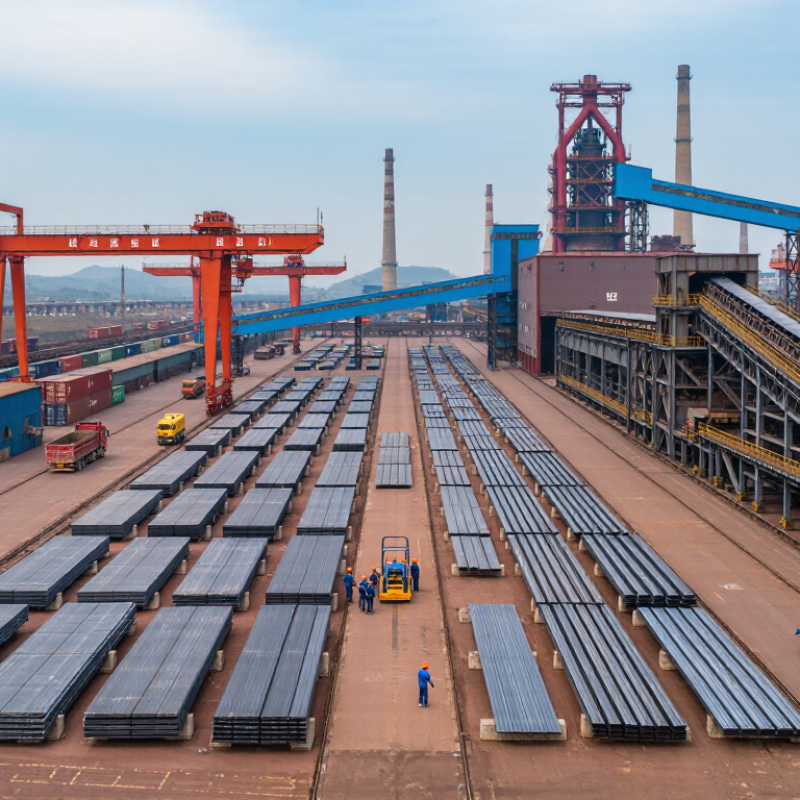
Abrasion-resistant steel plate is engineered to withstand repeated contact with rocks, sand, ore, and moving equipment. It is not ordinary plate. The steel typically receives controlled alloying, quenching, and tempering treatments. These processes increase hardness while preserving useful toughness. Hardness is often reported in Brinell values, such as 400 or 500 HBW. A higher number can reduce wear, but it does not automatically suit every project.
In practical use, this plate appears in dump bodies, mining chutes, conveyor liners, crusher parts, and agricultural machinery. Engineers should check material thickness, impact conditions, operating temperature, and expected wear pattern. Welding also requires attention because excessive heat can affect the heat-affected zone.
Reliable manufacturers should provide mill certificates, hardness test results, batch traceability, and clear welding guidance. Factory experience matters, but real site conditions can still surprise experienced engineers. The most expensive grade is not always the most effective choice.
Tips: Compare actual service conditions, not hardness alone. Ask for plate samples and independent test records when possible. Keep cutting heat controlled, and use suitable preheating procedures. Inspect holes, edges, and welded joints regularly. A small design mistake can shorten service life quickly.
Evaluating Chinese abrasion resistant steel plate manufacturers requires more than comparing quoted prices.
The World Steel Association reported China’s 2024 crude steel production at approximately 1.005 billion tonnes. This capacity is impressive, but it does not prove consistent plate quality. Buyers should verify whether the supplier owns production equipment or mainly trades finished material. Ask for mill certificates, heat numbers, rolling records, and recent third-party inspection reports.
Technical evaluation should begin with hardness, chemistry, impact performance, and thickness tolerance.
Confirm the stated grade against the required ASTM, EN, or equivalent specification. A reliable manufacturer can explain how chromium, carbon, and alloying elements affect wear resistance and weldability.
I would request samples from different heats, not only one attractive test sheet. Then compare laboratory hardness results with the certificate. Small differences may reveal uneven heat treatment. Surface cracks matter too, especially around plate edges and cut zones.
Production history also deserves attention.
Check delivery records, export experience, complaint handling, and traceability after shipment. ISO 9001 certification supports process control, but it is not a substitute for product testing. I still treat a polished certificate as evidence, not proof.
The International Organization for Standardization emphasizes documented quality systems, while real projects demand measurable performance under impact, sliding, or abrasive conditions. Factory audits can expose weaknesses that brochures hide, although audits themselves can miss problems. Photos are useful. Physical verification is better.
China’s top 10 abrasion-resistant steel plate manufacturers serve mining, construction, cement, and bulk-handling projects. Their products commonly include quenched and tempered plates for chutes, hoppers, liners, and dump bodies. A reliable manufacturer should show clear steel grades, heat numbers, thickness tolerances, and delivery records.
In practical inspections, hardness alone is not enough. A strong supplier provides impact data, chemical analysis, ultrasonic testing, and traceable mill certificates. Plate performance also depends on welding guidance and cutting control. Some manufacturers offer customized dimensions, while others focus on stable volume production. Buyers should examine surface cracks, flatness, edge quality, and test consistency before placing large orders.
The leading ten should be compared through verified production capacity, laboratory equipment, export experience, and after-sales response. Factory visits can reveal details that brochures miss, such as storage rust, poor labeling, or uneven plate stacking. Independent testing adds confidence when projects involve heavy impact and sliding wear. I would avoid ranking suppliers by price alone. That approach sounds efficient, but it can overlook premature replacement costs. Even experienced buyers may misjudge performance when operating conditions change. Steel that works well in dry quarry service may wear differently in wet, abrasive slurry. Clear application data makes the comparison more reliable.
China’s leading abrasion-resistant steel plate manufacturers compete through grades, consistency, and processing depth.
Common products include AR400, AR450, AR500, AR550, and AR600 plates, usually supplied in thicknesses from 4 to 120 millimeters. Lower grades suit dump bodies and hoppers. Higher grades serve crushers, mining chutes, and severe impact zones.
Manufacturing capability matters more than hardness alone. Reliable mills combine controlled rolling, accelerated cooling, and quenching and tempering. They also provide CNC cutting, bending, drilling, and welded liner fabrication.
According to World Steel Association data, China produced about 1.005 billion tonnes of crude steel in 2024. That scale supports broad capacity, but it does not guarantee stable plate quality. Buyers should request heat numbers, hardness maps, tensile results, and impact-test records.
ASTM G65 testing can help compare abrasive wear, although it does not replace application trials.
The strongest suppliers usually document chemistry, plate flatness, weldability, and delivery tolerance. Some offer customized grades between AR450 and AR500, which may reduce cracking during forming. This sounds useful, but every adjustment needs validation.
A plate that performs well in dry quarry dust may wear differently in wet, high-impact service. Independent inspection, ultrasonic testing, and sample cutting remain practical safeguards.
Rankings can change yearly. Production volume is only one part of manufacturing credibility.
China’s scale is impressive: the World Steel Association recorded about 1.005 billion tonnes of crude steel production in China during 2024. Scale alone proves nothing. For abrasion-resistant plate, select a manufacturer by process control, not catalogue length. Ask for furnace records, heat numbers, chemical composition, hardness maps, and ultrasonic inspection results. A reliable supplier should connect each plate to a specific production heat.
Define the working condition before requesting prices. Include impact energy, material size, temperature, welding method, and expected wear pattern. Hardness grades such as 400 or 500 HBW offer useful comparisons, but hardness is not the whole story. Plate toughness, thickness uniformity, residual stress, and cutting behavior affect service life. EN 10029 provides dimensional tolerance guidance, while ASTM A6/A6M supports common inspection practices. Use the standard that matches your project, not whichever document the seller prefers.
Check whether the factory performs testing internally or outsources it. Review recent reports, equipment calibration, corrective-action records, and delivery history. Third-party inspection can verify chemistry and hardness before shipment. The OECD Steel Committee has warned of substantial global excess steel capacity, exceeding 500 million tonnes in recent assessments. Low prices may reflect unused capacity, but they may also hide weaker controls. Request a small trial order and compare actual wear after installation. Laboratory results can mislead. Field performance remains the harder test.
CLA-VAL UK Limited
Dainton House
Goods Station Road
Tunbridge Wells
Kent, TN1 2DR
© 2025 CLA-VAL UK | site map | Terms and Conditions of Sale and Warranty | Privacy policy