Who Are the Top Analytical Balance Manufacturers in China?
Choosing an Analytical Balance is not just a price decision. It affects repeatability, sample handling, and confidence in routine results. In a busy laboratory, a readable display, a well-fitted draft shield, and stable leveling feet can make a practical difference. A 0.1 mg readability specification may look impressive, but it does not tell the whole story.
Lord Kelvin, a physicist whose work helped shape measurement science, wrote, “When you can measure what you are speaking about, and express it in numbers, you know something about it.” His point remains useful when comparing laboratory instruments. Look beyond headline specifications. Ask how the balance performs under everyday conditions, how calibration is supported, and whether local service is accessible. Small details matter.
China has a broad range of analytical balance manufacturers, from established brands to specialized suppliers. Their product pages may share similar numbers, yet differ in construction, documentation, software, and after-sales support. Some details are not easy to verify from a catalogue alone. That deserves attention.
This guide introduces leading Chinese manufacturers and practical criteria for evaluating them. It considers capacity, readability, repeatability, calibration options, and support, without treating any single specification as a guarantee. The comparison is useful, but not final. A balance should be assessed against the actual workload, sample environment, and quality procedures of the laboratory. Before choosing a supplier, request clear technical documents and, where possible, evaluate the instrument with representative samples. The right choice is rarely the one with the boldest claim.
What Is an Analytical Balance and How Is It Used?
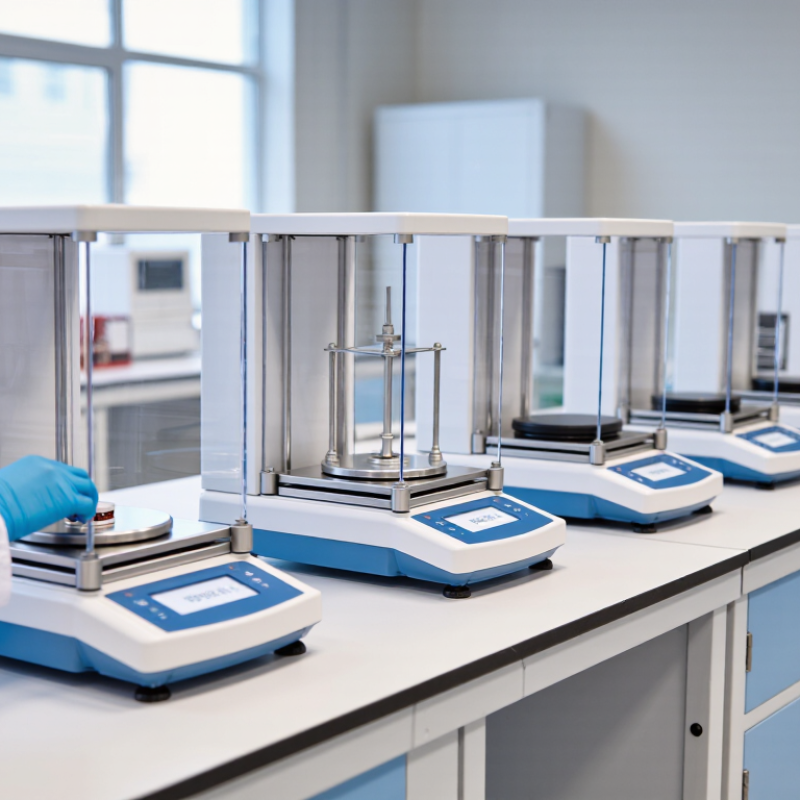
An analytical balance measures small masses with high precision; many laboratory models display readings to 0.1 milligram. It is used to prepare chemical solutions, weigh reference materials, and check sample portions. A few milligrams can matter. On a draft-free bench, an operator places a clean container on the pan, tares it, then adds material slowly. Air currents, vibration, temperature changes, and fingerprints can affect readings. The display looks definite, but the result still depends on technique.
USP General Chapter <41>, a professional compendial standard, sets a repeatability limit of 0.10% of the net weight. It also defines minimum weight as 2,000 times the balance’s standard deviation. This gives laboratories a practical basis for deciding whether a balance suits a particular weighing task. A finer display alone does not guarantee better results. Calibration and routine checks matter. So does the room. Even experienced staff can overlook a draft or a warm container; small oversights deserve attention.
Tips: Keep the balance level and draft-shield doors closed. Let samples reach room temperature, use clean tools, and record calibration checks. If readings drift, pause and investigate rather than averaging away the problem.
How Are Analytical Balance Manufacturers in China Evaluated?
When evaluating analytical balance manufacturers in China, buyers should look beyond readability claims. Check repeatability, linearity, eccentric loading, calibration traceability, and performance after warm-up. OIML R 76-1:2006 sets a useful technical reference: Class I instruments have at least 50,000 verification scale intervals. This figure is not a guarantee of real-world performance. Request test records for the specific model, including repeated readings with a fixed test mass and results from different pan positions. Numbers matter.
Factory quality systems also deserve scrutiny. ISO/IEC 17025:2017 sets competence requirements for testing and calibration laboratories, so ask whether calibration certificates come from an appropriately accredited laboratory. Check service response times, spare-parts availability, and whether technicians can document calibration procedures. In a working lab, a draft near the balance or a temperature shift can affect readings; manufacturers should explain operating limits and stabilization time. A polished specification sheet can hide gaps. I would compare raw test data, not just brochure figures, and note that published performance may not match every installation. That distinction is easy to overlook.
Which Chinese Companies Are Leading Analytical Balance Manufacturers?
China’s leading analytical balance manufacturers are generally established precision-instrument makers and specialist weighing-equipment companies. Their strengths include stable weighing sensors, controlled production, and calibration support. Without naming individual firms, buyers can compare companies by published repeatability, readability, linearity, and response time. These figures should be checked under similar conditions, not treated as interchangeable.
Look beyond the specification sheet. Ask whether the manufacturer provides installation guidance, routine calibration, and accessible technical support. A balance used for small powder samples may need draft protection and a stable, level bench; even nearby ventilation can disturb readings.
Check the stated operating temperature and recommended calibration schedule. Good documentation matters. So does local service. Some product pages make comparisons difficult, because test conditions are not always presented in the same way.
That is a real limitation. Request test records or a demonstration using your typical sample before choosing a supplier. The best fit depends on the work, not just the smallest displayed increment.
How Do Their Products and Technologies Compare?
Chinese analytical balance manufacturers differ less in basic function than in execution. Most offer models with 0.1 mg readability, while some ranges include 0.01 mg options for more demanding work. Compare repeatability and linearity, not just the smallest displayed digit. A balance that reads finely may still perform poorly on a vibrating bench. Small differences matter. Check whether calibration is internal or external, and how quickly readings stabilize after a sample is placed in the draft shield. A slow, steady result can be more useful than a fast display that keeps drifting.
Technology choices shape daily use. Some models include automatic calibration, adjustable filters, and environmental compensation; others keep controls simpler and costs lower. These features help, but they do not replace good weighing practice. A 100 mg sample can respond to drafts, static, or warm containers, so test balances under conditions close to the real laboratory. Look at pan access, display visibility, data connections, and whether the interface makes routine records easy to retrieve. Faster is not always better. I would also question glossy specifications without published repeatability data or clear service support. A small keypad can feel awkward after a week of frequent weighing, even when the measurement performance is sound.
Analytical Balance Specifications: Representative Market Examples
Rated capacity and readability illustrate common specification trade-offs across balance types. These examples are not a manufacturer ranking.
Representative specifications: analytical balances commonly offer around 220 g capacity at 0.1 mg readability; semi-micro models around 120 g at 0.01 mg; and micro balances around 6.1 g at 0.001 mg. Actual specifications vary by model. Electromagnetic force compensation, calibration options, and draft-shield design are among the technologies that can affect performance and usability.
What Should Buyers Consider When Choosing a Manufacturer?
A buyer should compare a balance’s performance with the smallest mass routinely measured, not just its displayed readability. A 0.1 mg display does not guarantee reliable results at 0.1 mg. Ask for repeatability data, minimum-weight guidance, and calibration records from the actual model. USP General Chapter <41> sets a repeatability criterion of no more than 0.10% of the test weight’s value. That benchmark helps buyers assess whether specifications suit their workflow. Small differences matter.
Manufacturer support matters just as much. Check whether calibration is traceable and whether service staff can document measurement uncertainty. ISO/IEC 17025:2017 sets requirements for testing and calibration laboratory competence, so ask whether calibration is performed by an appropriately accredited laboratory.
Also inspect practical details: draft-shield access, leveling feet, stabilization time, and spare-part availability. A balance near an air vent may drift; a neat brochure will not fix that. Ask for application testing using your sample containers and typical room conditions. Review the evidence, not only sales claims.
One point is easy to overlook: even a strong service plan cannot compensate for poor daily handling. Buyers should examine both the instrument and the routines it must live with.