Who Are the Top Oil Drilling Equipment Suppliers in China?
China is an important source of Oil Drilling equipment, with manufacturers serving projects across different rig sizes and operating conditions. Their product ranges may include drilling rigs, mud pumps, top drives, pipe-handling systems, and related components. Yet “top” is not a fixed ranking. A supplier that suits an inland workover project may not fit a deep, demanding drilling program.
This guide looks at how to identify established Chinese suppliers and compare their capabilities. Product brochures offer a starting point, not proof. Buyers should check technical specifications, manufacturing capacity, quality-control records, service coverage, spare-parts availability, and references from comparable projects. Ask for details such as operating limits, component origins, inspection procedures, and delivery schedules. Small differences matter. A pump’s rated pressure or a rig’s maintenance access can affect daily operations.
There is no single best choice. Equipment compatibility, local support, and a supplier’s ability to document its claims deserve close attention. Some information may be difficult to verify from a website alone, and that deserves a second look. The companies discussed should therefore be treated as candidates for further evaluation, not as an endorsement or final ranking. Careful comparison can help drilling teams focus on reliable performance, practical support, and fit for the intended application.
China’s 2024 Output: 213 Million Tonnes of Crude Oil and 246.4 bcm of Gas
China produced 212.82 million tonnes of crude oil in 2024, rounded to 213 million, and 246.4 bcm of natural gas, according to the National Bureau of Statistics’ 2024 communiqué. Crude output rose 1.8%, while gas output increased 6.2%. That gap matters. Operators need equipment for both liquid production and expanding gas flows, not simply more drilling capacity.
The figures point to demand for rigs, mud pumps, well-control systems, compressors, and corrosion-resistant pipework. The IEA’s World Energy Investment 2024 estimated global upstream oil and gas investment at about $570 billion in 2024, up 7% year on year. This is a broad benchmark, not a China-specific spending total. Output figures alone cannot show how much production came from new wells, mature-field workovers, or improved recovery.
That distinction is practical. Higher gas output can require more gathering lines, compression stages, and pressure monitoring. Mature oil fields may rely on dependable pumps and frequent maintenance. Suppliers should be assessed on equipment life, service response, and system integration, as well as quoted capacity. I would be cautious about treating rising output as proof of stronger rig demand; some gains come from existing assets. The production data are clear, but the precise equipment mix is less so.
Leading Suppliers: BOMCO, Honghua, Jereh, and Kerui
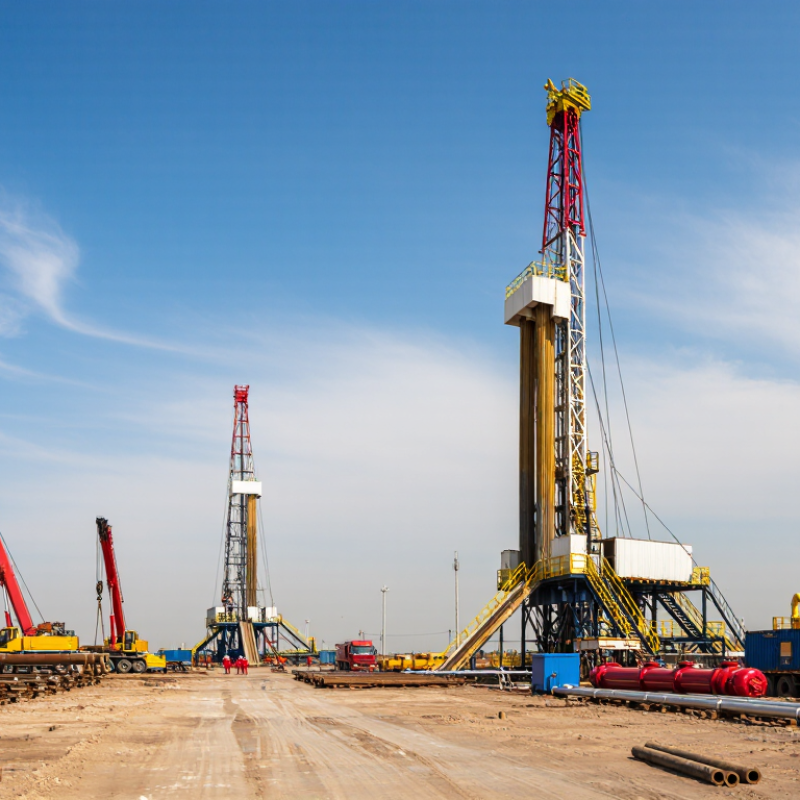
China’s oil drilling equipment suppliers serve different operating needs. Some focus on complete land rigs, with attention to drawworks, mud pumps, and rig control systems. Others offer drilling packages alongside field services, pressure-pumping equipment, or well-completion tools. These distinctions matter. A rig built for a remote inland field may not suit a compact site with strict transport limits.
When comparing leading suppliers, ask for operating data from equipment similar to yours. Check rated hook load, drilling depth, power configuration, and performance in the expected climate. Request maintenance intervals and spare-parts lead times, too. Small details count. A delayed pump seal can interrupt a whole shift. Supplier support should include clear commissioning plans, technician availability, and practical training for the crew.
Factory scale alone is not proof of reliability. Review inspection records, component traceability, and references from comparable projects. If possible, see equipment running before purchase. Specifications can look tidy on paper. Real conditions are less tidy. I would also leave room for uncertainty: published figures may use different test conditions, so ask how each number was measured before comparing offers.
China’s Oil Drilling Equipment Market: Production Context
China’s crude oil production rose steadily from 2020 to 2024, providing context for demand across the oil and gas equipment sector.
Annual crude oil production, million tonnes. Figures are rounded. Source: National Bureau of Statistics of China. This chart shows national production, not supplier performance or market share.
Core Products: Land Rigs, Top Drives, Mud Pumps, and Well-Control Systems
China’s oilfield-equipment suppliers are best compared by how their core systems work together, not by catalog size. Land rigs must handle the target depth, terrain, and transport limits. Top drives need dependable torque control and straightforward maintenance access. Mud pumps should sustain the planned flow and pressure while making routine valve and liner changes practical. Small details matter: hose routing, service-platform clearance, and the time needed to replace a worn part.
The International Energy Agency’s Oil 2024 report projected global upstream oil and gas investment would rise 7% in 2024, to about US$570 billion. That is a useful demand signal, not proof that every supplier is ready for a specific project. Buyers should request verifiable test records, operating references, spare-parts plans, and clear commissioning procedures. For well-control systems, check documented pressure ratings, interface compatibility, and maintenance requirements. Ask how equipment performs under realistic operating conditions.
A complete package still needs careful integration. A rig, top drive, and mud pump can each pass inspection yet work poorly as a combined system. Not on paper. Review drawings, test protocols, and service-response commitments before comparing bids. One weakness in this advice: supplier documents rarely show how quickly a field crew can solve an unexpected fault. That question deserves a direct, specific answer.
Quality Benchmarks: API Spec 7K for Drilling Equipment and API Spec 4F for Structures
When comparing oil drilling equipment suppliers in China, look beyond price and production capacity. API Spec 7K covers drilling and well-servicing equipment, while API Spec 4F addresses drilling and well-servicing structures. They are not interchangeable. Check that a supplier’s certification applies to the specific product and manufacturing site, then confirm the relevant standard edition and scope. A certificate alone does not prove every unit is ready for service.
Tips: Ask for material traceability, inspection records, and load-test documentation. For structures, review design calculations and weld inspection reports. For equipment, check component identification and maintenance instructions. Match each document to the equipment serial number or structure drawing. Small gaps matter.
A practical supplier review includes a factory audit and a close look at finished products. Inspect welds, nameplates, and protective coatings under good lighting; compare markings with the paperwork. Ask how nonconformities are recorded and resolved. Paperwork can look tidy while a record is missing. That is worth questioning. Standards offer useful benchmarks, but operating conditions, installation, and maintenance still affect performance. A careful buyer checks both compliance evidence and the details that are easy to overlook.