Top 10 Solar Panel Roof Mount Solutions for Global Buyers?
In today’s world, renewable energy is gaining prominence. Solar energy, in particular, is a key player in this shift. solar panel roof mount systems facilitate the effective harnessing of sunlight for electricity generation. Many homeowners and businesses are exploring these solutions. They aim to reduce energy costs and lessen their carbon footprint.
The market offers a variety of solar panel roof mount options. Different climates and building types require specific adaptations. For example, some mounts work better in snowy regions, while others suit tropical locations. Finding the right fit can be challenging. Buyers should consider both practicality and performance.
Choosing a reliable solar panel roof mount solution is crucial. Quality impacts durability and energy output. It’s not just about the initial cost; long-term benefits matter too. Several products appear promising on paper, but performance may vary in real-life applications. Research and expert insights are vital in making informed decisions.
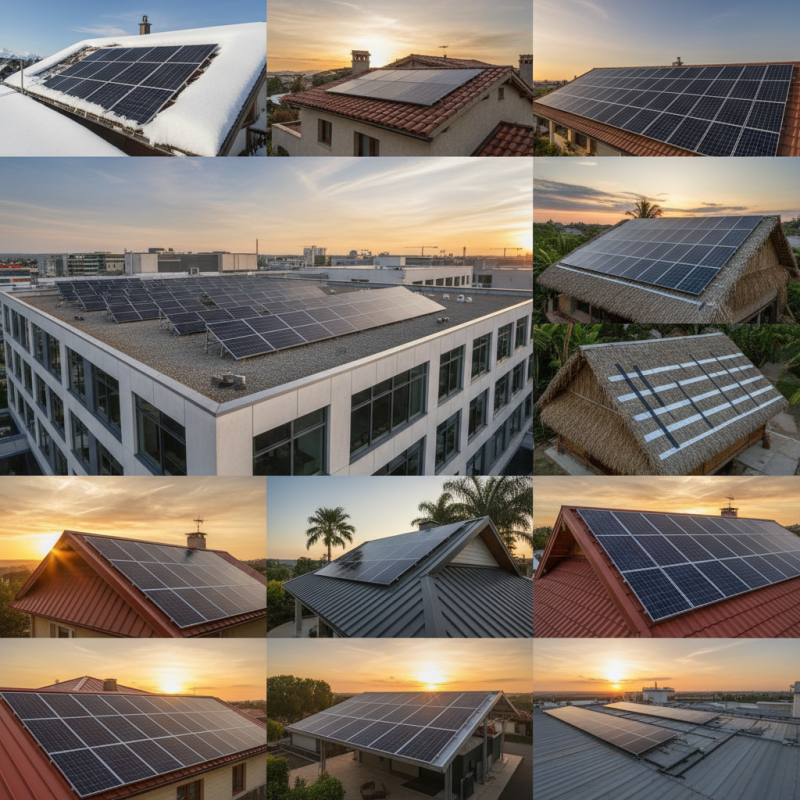
Top Trends in Solar Panel Roof Mounting Technologies for 2023
The solar panel roofing market is evolving rapidly. Trends in mounting technologies are driving innovations in efficiency and installation. According to a report by the International Renewable Energy Agency (IRENA), solar installations have increased by 22% globally in 2022. This growth reflects a heightened interest in green energy solutions.
A notable trend in 2023 is the shift toward integrated mounting systems. These systems improve aesthetics while enhancing performance. This approach can reduce installation time by up to 30%, according to the National Renewable Energy Laboratory. Furthermore, the development of lightweight materials offers new possibilities for residential installations. Yet, challenges remain. The cost of advanced materials can be prohibitive for some users, complicating access to these technologies.
Another key focus is on universal compatibility. Systems designed to fit a range of roofs address diverse consumer needs. However, achieving standardization is a work in progress. Research shows a lack of uniform testing for many products. This inconsistency can lead to customer confusion. Innovation continues, but the industry must ensure reliability and safety across all platforms.
Top 10 Solar Panel Roof Mount Solutions for Global Buyers
| Mount Type | Material | Weight Capacity (lbs) | Tilt Angle (Degrees) | Installation Time (hours) |
| Fixed Roof Mount | Aluminum | 200 | 15 | 4 |
| Adjustable Roof Mount | Steel | 250 | 5-30 | 6 |
| Ballasted Roof Mount | Concrete | 300 | 0 | 5 |
| Solar Shingle Mount | Composite | 150 | 10 | 8 |
| Ground Mount | Aluminum | 400 | 20 | 10 |
| Flush Mount | Aluminum | 200 | 0 | 3 |
| Hybrid Mount | Steel/Aluminum | 280 | 15 | 7 |
| Pole Mount | Steel | 350 | 10 | 9 |
| Rooftop Tracker | Aluminum/Steel | 500 | 0 | 12 |
| Integrated Roof Mount | Composite | 250 | 5-15 | 6 |
Key Factors to Consider When Choosing Solar Panel Mounting Systems
When choosing solar panel mounting systems, several key factors come into play. The pitch of the roof is crucial. For example, a steeper roof can enhance panel efficiency but may complicate installation. According to a report from the National Renewable Energy Laboratory (NREL), optimized angles can increase energy output by up to 25%. Inspecting structural integrity before installation is essential. Weak areas can lead to failures under weather stress.
Material choice affects durability and performance. Aluminum mounts are lightweight yet strong, while galvanized steel offers longevity. Each has trade-offs, impacting cost and installation complexity. A comprehensive study from the International Energy Agency (IEA) found that choosing the right material can extend the lifespan of mounting systems by as much as 15 years.
Tip: Always consult with professionals who have experience in solar installations. Their expertise can save time and money.
Consider local factors such as potential shading from trees and buildings. A well-placed array can maximize exposure. However, a poor choice may result in partial shading, reducing energy efficiency significantly.
Regular maintenance is also vital; neglected systems can underperform and incur additional costs.
Tip: Monitor your system’s performance after installation. Early detection of issues can prevent costly repairs later.
Comparison of Fixed vs. Adjustable Solar Roof Mount Solutions
When considering solar roof mounts, the choice between fixed and adjustable solutions is critical. Fixed mounts are simple and cost-effective. They are designed for optimal sun exposure at a specific angle. This makes installation straightforward. However, fixed mounts may not capture sunlight effectively in different seasons. Their lack of flexibility can limit overall energy production.
Adjustable mounts, on the other hand, provide users with versatility. These systems allow you to change the angle of the panels based on the sun's position. This can lead to increased efficiency over time. However, adjustable mounts tend to be more complex and often require careful setup. They can also cost more upfront. It’s essential to weigh these options based on your specific needs.
Installing the right mount is not just about preferences. It’s crucial to assess local weather conditions, space, and budget. Some might find that fixed mounts suffice in stable climates. Others may find that adjustable systems are worth the investment for harvesting more energy year-round. Ultimately, the decision should balance efficiency, usability, and long-term benefits.
Impact of Local Regulations on Solar Panel Roof Mount Installations
The installation of solar panels on rooftops is increasingly influenced by local regulations. These rules can vary dramatically by region, impacting the types of mounting solutions available. For instance, complex permitting processes in some cities can slow down installation times. In contrast, other areas offer simplified procedures that encourage solar adoption.
According to a report by the International Renewable Energy Agency (IRENA), about 26% of solar projects face delays due to regulatory hurdles. This can discourage potential buyers. In some regions, strict building codes dictate specific mounting solutions, limiting options for homeowners. Such restrictions can hinder innovation and adaptation to local housing styles.
Furthermore, incentives like tax credits can differ widely based on locality. Some regions offer substantial financial benefits, making solar panel installations more appealing. However, in places with less supportive policies, potential buyers might find the overall costs prohibitive. The disparity in regulations and incentives highlights the need for ongoing dialogue about solar energy implementation.
Cost-Benefit Analysis of Solar Roof Mount Systems in Different Markets
The cost-benefit analysis of solar roof mount systems reveals varied insights across different markets. In regions with high electricity rates, the financial return on investment can be substantial. Homeowners can save money on energy bills while contributing to sustainability. However, initial installation costs may deter some buyers. Not everyone can afford the upfront investment, even if the long-term savings are promising.
Different markets exhibit distinct trends in adoption. In developed areas, there is a growing acceptance of solar technology. In contrast, emerging markets face challenges such as limited financing options. Local policies can also impact installations, making affordable solutions difficult to achieve. Examining these disparities is crucial for stakeholders.
Potential buyers should also consider the durability of materials used in solar mounts. Not every system can withstand harsh weather conditions. This variability can influence both costs and long-term performance. Researching local conditions and expert opinions becomes essential for an informed decision. While solar panels offer a route to cleaner energy, the complexity of costs and benefits requires careful analysis.