
Pressure Reducing
Pressure Sustaining / Pressure Relief
Flow Control valves
Float Valves - Level Control
Electrically Actuated Valves
Pressure Modulation - Remote Control
Altitude Valves - Level Control
Burst Control Valves
Pump Control
CLA-VAL "HYTROL" Main Valve
Valve Controllers and Data Loggers
Air Valves
Choosing a reliable Stainless Steel Pipe Manufacturer in China requires more than comparing prices. Material grade, welding quality, dimensional accuracy, and delivery discipline all affect long-term performance. A polished website is not proof of a dependable mill.
Dr. James R. Davis, editor of ASM’s Stainless Steels, emphasizes a practical principle: “A stainless steel grade is only as reliable as its processing and inspection.” That idea guides this review of China’s leading manufacturers. The selection considers production experience, factory capacity, ASTM, ASME, and EN compliance, along with testing and traceability practices. It also examines whether each supplier can provide mill test certificates, PMI reports, hydrostatic testing, and clear welding procedures.
Details matter.
A pipe may look perfect on arrival. Its real value appears after installation, pressure changes, heat exposure, or years in a corrosive environment. Strong manufacturers usually maintain controlled annealing, accurate sizing equipment, and documented quality checks. They also communicate clearly when specifications change.
This ranking is not absolute. Buyer priorities differ. A food-processing project may value surface finish, while an oil and gas application may require stronger documentation and specialized grades. Export experience, packaging quality, and response time can also influence the final decision. Readers should verify certifications, inspect samples, and request recent project references before signing a contract. This guide offers a practical starting point, not a substitute for technical due diligence.
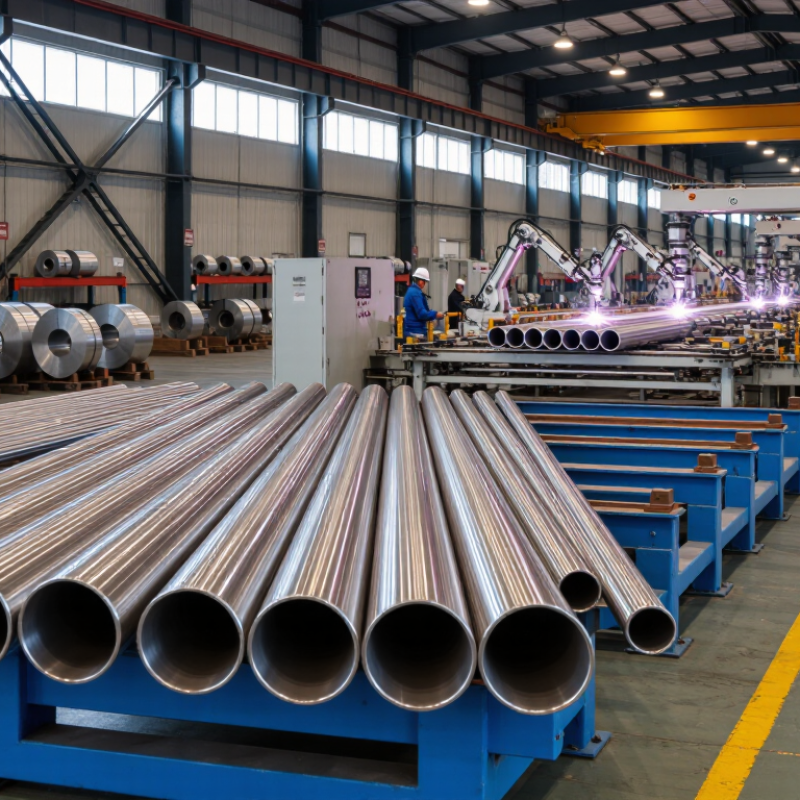
Stainless steel pipe manufacturers in China are industrial producers that convert stainless steel into hollow sections for fluid transport, structural support, and equipment fabrication. Their work may include selecting steel grades, forming and welding pipe, heat treatment, surface finishing, and cutting products to specified lengths. Some plants make welded pipe, while others produce seamless products; available processes depend on equipment and product requirements. These manufacturers connect material suppliers with project engineers, fabricators, and distributors. In practical terms, they turn a drawing into pipe with a defined diameter, wall thickness, finish, and tolerance. Small details matter.
A capable manufacturer also manages inspection and production records. Checks can cover dimensions and weld appearance. Pressure or leak tests may be required. Material records help buyers verify the grade and trace a batch. Factories differ in testing depth, so buyers should review certificates, sampling plans, and inspection reports rather than relying only on catalog descriptions. Clear communication matters when drawings leave room for interpretation; even a minor mismatch can complicate installation. No process is flawless. That is worth remembering.
A credible ranking should start with product evidence, not brochure claims. Check whether pipe dimensions, grades, and manufacturing routes match the buyer’s application. For pressure service, documented conformity with ASTM A312/A312M can be relevant; welded pressure tubes may also be assessed against EN 10217-7. Standards alone are not proof of quality. Review inspection records, heat numbers, and material test certificates for traceability.
Production capacity matters, but only when it is supported by consistent delivery and process control. The World Stainless Association’s Stainless Steel in Figures 2024 reports global stainless steel crude production of 58.4 million tonnes in 2023. That scale makes dependable sourcing important. Compare each supplier’s stated capacity with verified lead times, available sizes, and evidence of inspection, including corrosion or pressure testing where applicable. Small details count.
A fair scoring model can weigh technical conformity, traceability, delivery performance, and customer support. Give more weight to independently verifiable records than to broad claims. Check how complaints, nonconformities, and specification changes are handled. This part is harder to compare, and public data can be thin. A ranking should disclose its evidence limits rather than imply certainty. A factory visit can help, but one visit is only a snapshot.
Profiles of China’s stainless steel pipe manufacturers differ more by production focus than by size alone. One group operates integrated mills, while another concentrates on welded pipe for construction and fluid systems. Seamless-pipe producers serve applications requiring tight dimensional control. Precision-tube workshops handle small diameters and thin walls. Sanitary tubing makers emphasize smooth internal finishes and cleanable joints. Each profile suggests a different fit.
Heavy-wall specialists typically serve demanding industrial projects. High-alloy producers work with less common grades, though availability should be confirmed. Custom-processing shops offer cutting, polishing, or end preparation. Export-focused manufacturers may provide detailed packing records and inspection documents. Regional mid-sized factories can be flexible, but their capacity may vary. These are capability profiles, not a verified ranking of named companies.
A useful comparison starts with the actual specification: grade, outside diameter, wall thickness, tolerance, and finish. Ask for current mill certificates and independent inspection options. Check sample consistency, not just a polished brochure. Small differences matter. A pipe can look correct and still miss a tolerance requirement. I would also confirm lead time, production capacity, and how defects are handled. No profile is flawless; the best match depends on the service conditions and evidence the supplier can provide.
Stainless steel pipe suppliers should be assessed against the exact service conditions, not just catalogue grades. China’s GB/T 14976 covers seamless pipes for fluid transport, while GB/T 12771 covers welded pipes. International projects may specify ASTM A312/A312M. Buyers should confirm grade, dimensions, delivery condition, and test requirements against the purchase specification. A standard name alone is not proof of compliance.
Manufacturing capability shows in the details: stable furnace control, clean forming and welding, and consistent heat treatment. The International Stainless Steel Forum’s Stainless Steel in Figures 2024 reports that China produced about 36.7 million tonnes of stainless steel in 2023, out of 58.4 million tonnes worldwide. That scale matters, but output does not establish pipe quality. Ask for heat-number traceability, material test certificates, and records of dimensional checks, hydrostatic testing, and applicable nondestructive examination.
Inspect the evidence. Check wall thickness, ovality, surface condition, and weld consistency on actual samples. Verify that certificates match pipe markings and order quantities. Details matter. Third-party inspection can help when risks or project requirements justify it, though it cannot replace clear acceptance criteria. A polished mill audit may still miss a weak batch-control system. That deserves scrutiny. Ranking manufacturers without comparable, verified data can be misleading.
Standards-led comparison framework: Company names and unverified rankings are intentionally omitted. Use the product standards below to assess whether a prospective manufacturer’s production capabilities and quality-control records match your requirements.
| Reference Standard | Product Scope | Manufacturing Capabilities to Verify | Quality-Control Evidence to Request |
|---|---|---|---|
| GB/T 12771 | Welded stainless steel pipes for fluid transportation. | Welded-pipe production, available dimensions, material grades, forming and finishing options, and the ability to manufacture to the specified order requirements. | Material certificates, dimensional inspection records, weld-related inspection records, and test results required by the applicable edition and purchase specification. |
| GB/T 14976 | Seamless stainless steel pipes for fluid transportation. | Seamless-tube production route, size range, heat-treatment capability, and control of surface finish and dimensional tolerances. | Heat and lot traceability, material test certificates, dimensional records, and applicable mechanical, corrosion, or nondestructive test reports. |
| GB/T 13296 | Seamless stainless steel tubes for boilers and heat exchangers. | Production and finishing capability for the required tube sizes, grades, and service conditions; confirm whether the supplier can meet project-specific inspection requirements. | Traceable test certificates, dimensional and visual inspection results, and the mechanical, hydraulic, or nondestructive testing required by the governing specification. |
| GB/T 12770 | Welded stainless steel pipes for mechanical structures. | Welded-pipe forming and sizing capability, dimensional range, surface finishing, and consistency across production batches. | Material identification, weld and surface inspection records, dimensional checks, and test documentation specified in the contract. |
| ASTM A312/A312M | Seamless, welded, and heavily cold-worked austenitic stainless steel pipe for high-temperature and general corrosive service. | Ability to supply the ordered product form, grade, size, and heat-treatment condition, with production controls appropriate to the selected route. | Material test reports and records of the chemical, mechanical, heat-treatment, and other examinations applicable to the ordered grade and specification. |
| ASTM A269/A269M | Seamless and welded austenitic stainless steel tubing for general service. | Tube-drawing or welded-tube capability as applicable, control of outside diameter and wall thickness, and requested surface condition. | Traceability and test reports for the applicable material, dimensions, mechanical properties, and any additional purchaser-specified examination. |
| ASTM A270/A270M | Seamless, welded, and heavily cold-worked austenitic and ferritic/austenitic stainless steel sanitary tubing. | Sanitary-tube finishing capability, including the specified internal and external surface condition and end preparation. | Material and dimensional documentation, surface-finish inspection records where specified, and applicable test certificates for the ordered product. |
| ASTM A554 | Welded stainless steel mechanical tubing for structural, ornamental, and other mechanical applications. | Welded mechanical-tube production, available shapes and sizes, straightness control, and finishing options. | Grade and heat traceability, dimensional inspection, visual and weld inspection records, and contractually required test results. |
| EN 10217-7 | Welded stainless steel tubes for pressure purposes. | Capability to manufacture the specified tube type, dimensions, material grade, and delivery condition for the intended pressure application. | Inspection documentation, traceability, and test results required by the selected quality class, material grade, order, and applicable edition. |
| EN 10216-5 | Seamless stainless steel tubes for pressure purposes. | Seamless production and finishing capability for the specified grade, dimensions, and delivery condition; confirm the supplier’s scope against the project specification. | Traceable inspection documents and applicable chemical, mechanical, dimensional, and nondestructive examination records required for the ordered product. |
Selection note: This is a standards reference table, not a verified ranking of Chinese manufacturers. Standard editions, product grades, test requirements, and acceptance criteria can vary by order. Confirm the current applicable edition and purchase specification, and review the supplier’s scope, certificates, and inspection records before placing an order.
Choosing among the top 10 stainless steel pipe manufacturers in China requires more than comparing online rankings. The International Stainless Steel Forum reported global stainless crude steel production of about 58.4 million tonnes in 2023. That scale shows market strength, not individual reliability. Request recent mill test certificates, heat numbers, and traceability records for every batch. Check whether the factory controls melting, piercing, heat treatment, and finishing internally. Outsourcing can weaken consistency.
Match the manufacturer to your actual service conditions. For seawater, chemical processing, or high-temperature systems, compare corrosion resistance, grade chemistry, wall thickness, and solution annealing records. Ask for PMI results, hydrostatic test data, dimensional inspection reports, and surface photographs. A serious supplier should explain tolerances using recognized standards, such as ASTM, EN, or ISO requirements. Do not accept “international quality” as evidence. It says very little.
Use a sample order before signing a large contract. Measure the outside diameter and wall thickness at several points, not just one. Inspect weld seams under clear lighting. Review packing, labeling, and loading procedures with a third-party inspector when the application is critical. UN Comtrade records can help compare export patterns, but trade volume cannot prove factory quality. I have seen attractive quotations hide weak documentation. Price still matters, but it should follow verified performance. Allow room for doubt.
CLA-VAL UK Limited
Dainton House
Goods Station Road
Tunbridge Wells
Kent, TN1 2DR
© 2025 CLA-VAL UK | site map | Terms and Conditions of Sale and Warranty | Privacy policy