
-
Solutions
-

Waterworks

Pressure Reducing
Pressure Sustaining / Pressure Relief
Flow Control valves
Float Valves - Level Control
Electrically Actuated Valves
Pressure Modulation - Remote Control
Altitude Valves - Level Control
Burst Control Valves
Pump Control
CLA-VAL "HYTROL" Main Valve
Valve Controllers and Data Loggers
Air Valves
See all
Waterworks
-

Military Fuelling
-
- About us
- Blog
- Support
- Contact


Blog
Why Choose a Smart Photo Booth for Your Business?
A Smart Photo Booth can turn a few minutes of waiting into a memorable brand interaction. Guests pose, choose a digital frame, and receive a shareable image while your business gains a natural conversation starter. The opportunity is practical, not automatic. A slow screen, confusing instructions, or poor lighting can undo the experience.
Industry data points to a broader shift toward experience-led buying. Grand View Research estimated the global photo booth market at about $818 million in 2023 and projected continued growth through 2030. PwC’s 2018 Experience is Everything report found that 73% of consumers considered experience an important factor in purchasing decisions. These figures describe market context, not a guarantee that any booth will increase sales. Placement, audience fit, and follow-up still matter.
Marketing expert Seth Godin wrote, “People do not buy goods and services. They buy relations, stories and magic.” A Smart Photo Booth can help a business create that kind of small, shareable moment—at a store opening, trade-show stand, or hotel lobby. The useful measure is not simply how many photos it takes. Track guest participation, branded-image shares, and whether people remember your offer afterward. Some guests will skip the camera. That is worth considering, too. A booth should invite people in, not become the whole event.
What Defines a Smart Photo Booth for Business Use?
What Defines a Smart Photo Booth for Business Use?
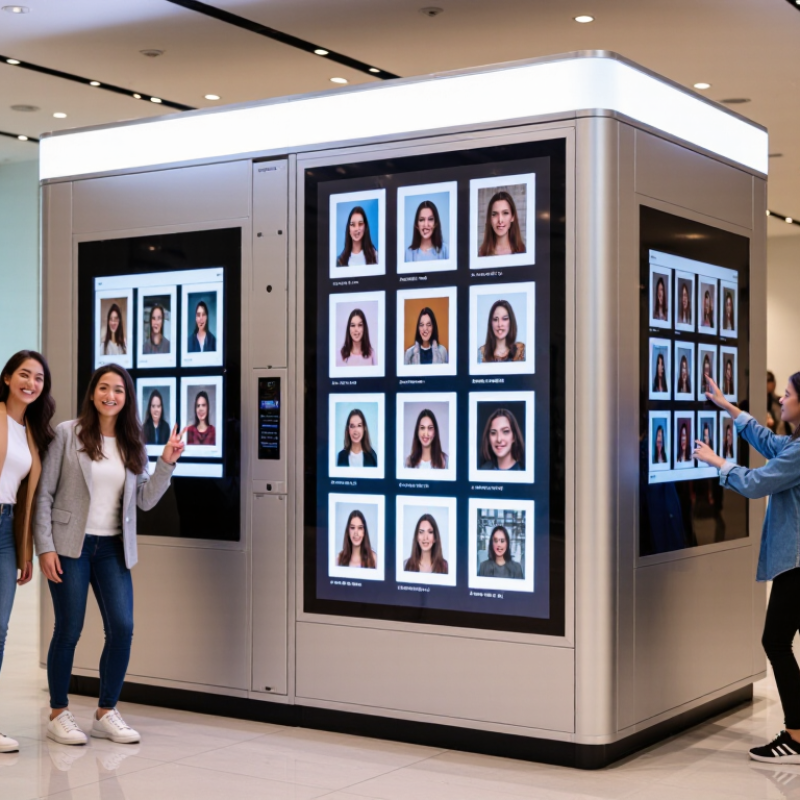
A smart photo booth combines a camera, controlled lighting, an intuitive screen, and software that moves images from capture to delivery. At a busy trade-show floor, a guest should be able to pose, review a crisp image, and receive it by email or QR code within moments. The booth should also support branded layouts, adjustable workflows, and useful engagement reporting. Less friction helps. Still, a dashboard cannot tell you why someone stopped; staff observations matter too.
Reliability is part of the definition. Look for clear setup instructions, stable connectivity, an offline capture option, and simple controls that staff can learn before doors open. Touchscreens should be readable under bright venue lights, while camera placement should work for seated and standing guests. Data collection should be transparent, limited to a clear purpose, and easy for guests to understand. Grand View Research estimated the global photo booth market at about $818.8 million in 2023, with projected annual growth of 8.4% through 2030. That industry estimate signals demand, not guaranteed returns for any single business. Test the booth under real lighting and network conditions; even a polished system can stumble when a venue’s Wi-Fi gets crowded.
Why Choose a Smart Photo Booth for Your Business? - What Defines a Smart Photo Booth for Business Use?
| Business Dimension | What Defines a Smart Photo Booth | Business Use | Practical Measure |
|---|---|---|---|
| Automated capture | Guided on-screen steps let guests start a session, pose, and take photos with limited staff assistance. | Supports self-service use at events, retail locations, and hospitality venues. | Track completed sessions, abandoned sessions, and staff interventions. |
| Digital delivery | Guests can receive or access their images through available options such as a QR code, email, or text message. | Makes it easier for guests to keep and share their photos after an interaction. | Measure delivery success, opt-in rates, and guest-reported issues. |
| Brand customization | Photo layouts, overlays, and on-screen instructions can be configured to fit a campaign or venue. | Creates a consistent visual experience without requiring every image to be designed individually. | Review approved templates, campaign usage, and the proportion of sessions using each design. |
| Engagement measurement | Session and delivery activity can be recorded in aggregate, subject to the system’s configuration and privacy settings. | Helps teams assess booth usage and compare activity across events or time periods. | Report session counts, repeat use where available, and delivery completion. |
| Connectivity and administration | Network connectivity can support remote configuration, content updates, or monitoring when these features are provided. | Reduces the need to update each unit manually, while keeping staff aware of operational issues. | Check connection status, software update records, and issue-response time. |
| Privacy and data handling | Business-ready operation includes clear guest notices and controls for image storage, access, and deletion. | Helps the business handle guest images and contact details responsibly. | Review consent wording, retention settings, access permissions, and deletion procedures. |
| Operational reliability | The booth combines capture equipment, software, and a guest interface that must work together during service. | Reliable operation helps avoid interruptions and reduces the need for on-site troubleshooting. | Record uptime during operating hours, equipment faults, and time required to restore service. |
| Integration potential | Depending on the system, booth activity or delivered content may connect with business workflows or other software. | Can support campaign follow-up or reporting when integrations are available and properly configured. | Confirm supported data fields, integration requirements, and successful transfer records. |