

-
Solutions
-

Waterworks

Pressure Reducing
Pressure Sustaining / Pressure Relief
Flow Control valves
Float Valves - Level Control
Electrically Actuated Valves
Pressure Modulation - Remote Control
Altitude Valves - Level Control
Burst Control Valves
Pump Control
CLA-VAL "HYTROL" Main Valve
Valve Controllers and Data Loggers
Air Valves
See all
Waterworks
-

Military Fuelling
-
- About us
- Blog
- Support
- Contact


Blog
Why Choose a Carbide Stator for Industrial Applications?
Industrial equipment often works under relentless pressure, heat, vibration, and abrasive media. These conditions expose weaknesses in conventional stator materials. A carbide stator can offer a practical response when wear resistance and dimensional stability matter.
Carbide materials are valued for their hardness and resistance to erosion. In pumps, mixers, and processing systems, this can help protect critical surfaces from abrasive particles. A well-designed carbide stator may maintain tighter clearances during extended operation. That stability can support consistent flow, improved efficiency, and fewer unplanned maintenance stops. The benefit is visible on the shop floor. Operators may find less scoring, reduced surface damage, and more predictable inspection intervals.
However, carbide is not a universal solution. It is not magic. Material grade, binder composition, operating temperature, and installation quality all influence performance. A poorly aligned component can fail despite excellent material selection. Cost also deserves careful attention. The initial purchase price may exceed that of steel or ceramic alternatives. Yet longer service life can change the overall maintenance calculation. Engineers should compare real operating data, replacement frequency, downtime costs, and compatibility with process fluids.
Choosing a carbide stator requires more than following a material trend. It requires understanding the equipment, the working environment, and the failure history. Experienced manufacturers can support this decision through application reviews, dimensional checks, and documented quality controls. Still, specifications should be verified rather than assumed. The best solution may be carbide, or it may not. That honest evaluation helps industrial teams choose performance with fewer surprises.
What Is a Carbide Stator?
What Is a Carbide Stator?
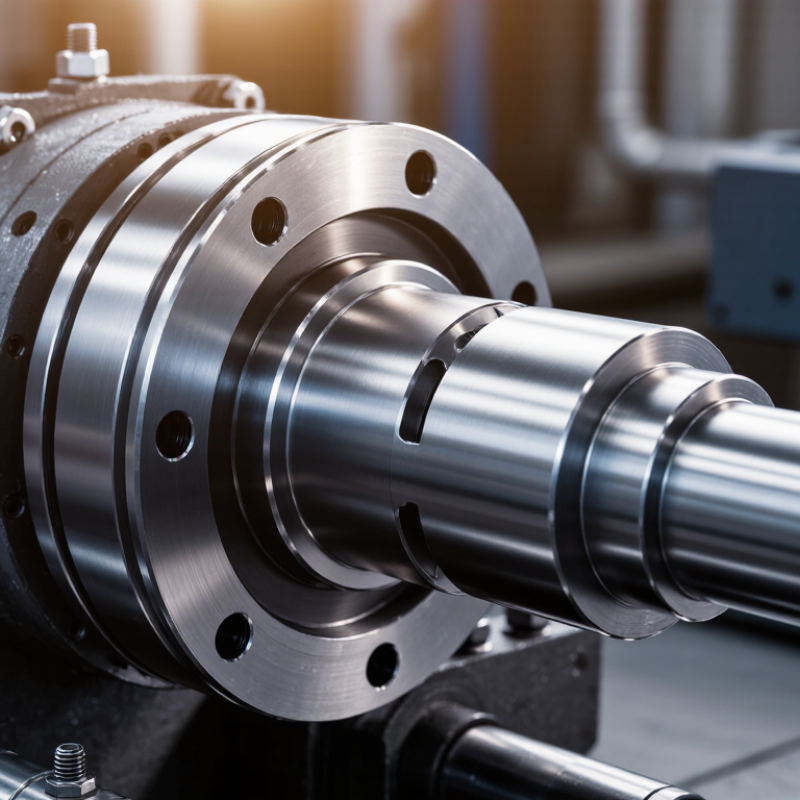
A carbide stator is a stationary component with a hard carbide working surface. It supports a rotating element and controls the operating gap, flow path, or magnetic field. In industrial equipment, the carbide may appear as a solid sleeve, bonded insert, or wear-resistant liner. The term is not perfectly standardized, so engineers should verify the drawing and material specification.
Most designs use tungsten carbide with a cobalt or nickel binder. This structure resists abrasive particles, sliding wear, and localized impact better than many conventional steels. It matters in pumps, mixers, drilling equipment, and high-cycle rotating machinery. A carbide stator is not automatically superior. Poor alignment, thermal shock, or an unsuitable binder can cause cracking or edge failure.
The U.S. Geological Survey lists tungsten as a critical mineral in its Mineral Commodity Summaries 2025. That designation highlights supply-chain and material-planning concerns. It also supports careful procurement, rather than casual material substitution. The U.S. Department of Energy reported that motor systems use about 69% of industrial electricity consumption in its 2022 Industrial Decarbonization Roadmap. Lower friction and stable clearances can therefore influence equipment efficiency, although actual savings require measured site data.
In practice, inspect the bore under clean lighting. Look for scoring, chipped corners, uneven polishing, and changes in clearance. Record temperature, load, particle content, and operating hours. One overlooked detail can explain a costly failure. Specification is only the beginning.
Why Choose a Carbide Stator for Industrial Applications? - What Is a Carbide Stator?
| Data Dimension | Typical Carbide Stator Information | Industrial Relevance |
|---|---|---|
| Definition | A stationary wear component manufactured from cemented carbide, commonly based on tungsten carbide particles bonded with a metallic binder. | Provides a hard, dimensionally stable surface in equipment exposed to abrasive particles, sliding contact, or high mechanical loading. |
| Common Material Structure | Hard carbide grains embedded in a tougher metallic binder; exact composition depends on the required wear, corrosion, and toughness balance. | Allows the stator to combine much higher hardness than conventional steels with useful resistance to impact and fracture. |
| Typical Hardness | Approximately 1,200–2,000 HV30, depending on carbide grain size, binder content, and grade. | High hardness helps resist scratching, cutting, and three-body abrasion caused by sand, minerals, scale, and other solid contaminants. |
| Compressive Strength | Commonly about 3.0–6.5 GPa for cemented carbide grades. | Supports high contact loads and helps maintain the stator profile under pressure and repeated mechanical loading. |
| Elastic Modulus | Typically approximately 450–650 GPa. | High stiffness reduces elastic deformation and helps preserve running clearances and component geometry. |
| Density | Approximately 13.5–15.2 g/cm³ for many tungsten-carbide-based grades. | The material is heavier than steel, so housing design, support, and installation handling should account for the increased mass. |
| Thermal Conductivity | Often approximately 50–110 W/m·K, depending on composition and binder content. | Can help spread frictional heat, although cooling, lubrication, speed, and contact pressure remain critical design factors. |
| Wear Resistance | Very high against abrasive wear when the carbide grade, surface finish, and operating conditions are properly matched. | Can extend service intervals and reduce dimensional changes in pumps, mixers, seals, valves, and other rotating or sliding equipment. |
| Corrosion Performance | Depends strongly on the binder and process fluid; carbide itself is not automatically resistant to every chemical environment. | Grade selection must consider pH, chlorides, oxidizing agents, temperature, and the possibility of binder corrosion. |
| Temperature Capability | Performance is application-specific; binder behavior, oxidation, thermal gradients, lubrication, and joint design determine the practical limit. | A temperature rating should be confirmed from the material grade and complete assembly design rather than selected from hardness alone. |
| Typical Applications | Abrasive slurry pumps, mechanical seals, high-wear valve components, mixers, flow-control equipment, and drilling or mineral-processing machinery. | Suitable where conventional steel or softer alloys experience rapid wear, loss of clearance, or frequent replacement. |
| Surface Finish Requirement | Fine grinding or lapping is often required for sealing or close-clearance applications; the specified finish depends on the mating component and fluid film. | Proper finish reduces friction, leakage, heat generation, and damage to the mating surface. |
| Main Design Limitation | Lower fracture toughness than many steels and greater sensitivity to tensile stress, sharp corners, misalignment, and impact loading. | Use suitable edge radii, secure support, accurate alignment, controlled assembly loads, and protection from shock during installation. |
| Selection Priorities | Carbide grain size, binder type and percentage, corrosion exposure, particle size, sliding speed, contact pressure, temperature, lubrication, and required surface finish. | A correctly selected grade can improve reliability, while an unsuitable grade may suffer from corrosion, chipping, thermal damage, or premature failure. |
Note: Values shown are typical engineering ranges for cemented carbide materials and may vary according to composition, manufacturing process, test method, geometry, and operating conditions.