Pressure Reducing
Pressure Sustaining / Pressure Relief
Flow Control valves
Float Valves - Level Control
Electrically Actuated Valves
Pressure Modulation - Remote Control
Altitude Valves - Level Control
Burst Control Valves
Pump Control
CLA-VAL "HYTROL" Main Valve
Valve Controllers and Data Loggers
Air Valves
Automated Valves help industrial teams control flow, pressure, and temperature without relying on constant manual adjustments. In a process plant, that control may mean a valve opening to feed a heat exchanger, then closing before pressure rises. Small decisions, repeated across a facility, can affect safety, product consistency, and energy use. The U.S. Department of Energy’s 2022 Industrial Decarbonization Roadmap describes industry as responsible for roughly one-third of U.S. energy use and energy-related carbon emissions. That scale makes efficient process control worth serious attention, though a valve alone cannot deliver plant-wide savings.
Choosing among automated valves is not a simple ranking exercise. A unit that performs well on clean water may struggle with abrasive slurry, steam, or corrosive chemicals. Buyers need to compare valve type, actuator, materials, pressure and temperature ratings, control accuracy, maintenance demands, and compatibility with existing systems. Standards from organizations such as the International Society of Automation can help frame requirements, but site conditions still matter. A missed detail can mean leakage, sluggish response, or unnecessary downtime.
This guide examines 10 options for industrial applications, focusing on where each design fits and what trade-offs deserve a closer look. “Best” depends on the process. It is not always the most expensive valve, or the most automated one. For a useful shortlist, match the valve to the medium, operating range, failure mode, and maintenance resources—and verify manufacturer specifications before purchase.
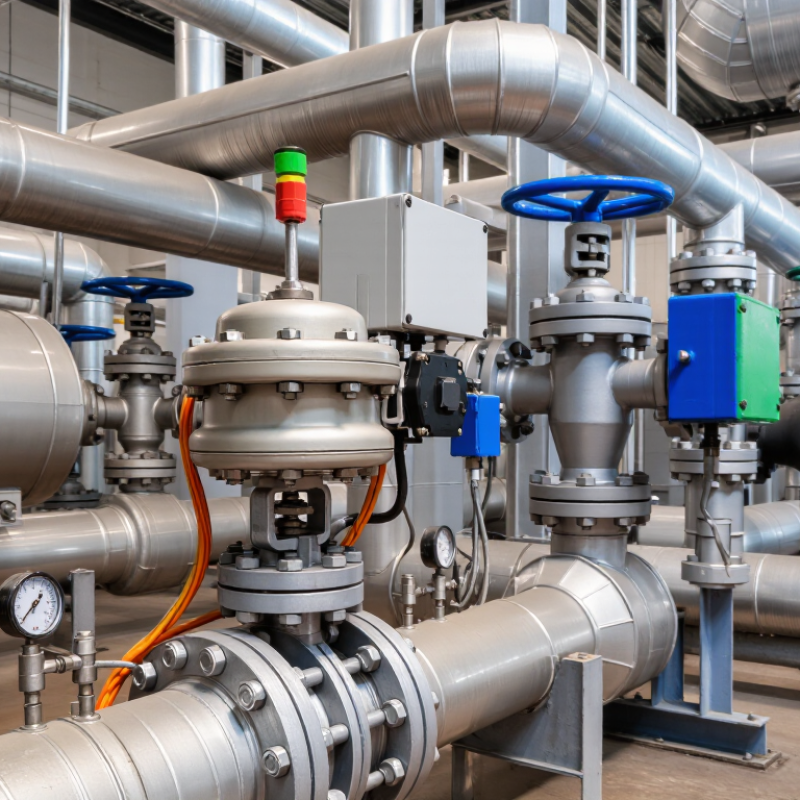
Automated valves convert control signals into changes in flow, pressure, or temperature. In a water-treatment line, a flow sensor reports changing conditions to a controller. The controller adjusts the valve opening to keep flow near its target. Small movements count. A valve that opens too slowly may cause a process to drift; one that reacts too sharply can make readings swing back and forth. Position feedback helps operators confirm that the valve moved as commanded, rather than assuming it did.
Control depends on more than the actuator. Engineers need to match valve size and materials to the fluid, pressure, and operating range. They also set a safe position for power loss or other faults, based on the process risk. During commissioning, technicians can compare the requested position with actual movement and check for leaks or sluggish response. A control loop may look stable on a screen yet still hunt under real conditions. That is worth questioning. Deposits, wear, or poorly tuned settings can change how a valve behaves over time, so trend data and routine inspection matter. Automation reduces constant manual adjustment, but it does not remove the need for sound design and informed operators.
Comparing automated valves starts with the process, not the actuator. Record the fluid, operating pressure, temperature range, flow rate, and how often the valve cycles. A valve that handles clean water may perform poorly with abrasive slurry or a sticky liquid. Check body and seal materials against the actual media, including cleaning chemicals. Small details matter. Confirm whether the valve must open, close, or hold position during a power or air failure. The safest choice depends on the process risk.
Next, compare control needs and operating conditions. On-off service may require different response and feedback features than precise flow control. Check actuator torque against the valve’s requirements, allowing for pressure changes and expected wear. Review enclosure protection, ambient temperature limits, connection sizes, and available maintenance access. A compact unit may fit the pipework but leave little room for inspection. Datasheets help, but they cannot replace checking the installation.
Tips: Ask for documented cycle-life and performance data under conditions close to yours. Verify signal compatibility and test the fail-safe action before commissioning. Keep spare seals accessible. One caveat: oversizing can cause control problems, yet undersizing can strain the actuator. Compare the full operating range, not just the typical day.
Key criteria for comparing common valve designs: typical suitability for isolation, throttling, and slurry or solids service.
Bars indicate common design suitability: 1 = commonly suitable; 0 = generally not preferred. These are qualitative design tendencies, not performance ratings. Actual suitability depends on valve configuration, materials, media, and operating conditions.
Automated valves do different jobs, even when their bodies look similar. Ball valves provide quick isolation in clean liquid lines. Butterfly valves suit larger pipes where space is tight. Gate valves offer low resistance when fully open, but are poor choices for frequent throttling. Globe valves handle precise flow adjustment, while plug valves work well in some slurry and gas services.
Diaphragm valves isolate the mechanism from corrosive fluids. Pinch valves close around flexible sleeves, making them useful for abrasive slurries. Solenoid valves respond quickly in smaller utility lines. Pressure-control valves maintain downstream pressure, and safety-relief valves open when pressure exceeds a set limit. These last two are often self-actuated rather than remotely commanded, so specifications should state how each valve operates. Small distinction. Important in procurement.
The IEA’s 2023 Tracking Clean Energy Progress report estimates that industry accounts for about 37% of global final energy use. That figure does not prove a particular valve will cut energy use; poor sizing or excessive throttling can waste it. Match materials, pressure, temperature, leakage limits, and actuator fail position to the process. A valve schedule can look perfect on paper, yet maintenance access may be awkward beside a hot pipe. Review operating conditions and failure scenarios with plant engineers before selection.
Automated valve choice depends on fluid, pressure, solids, and how often the line cycles. The International Energy Agency’s Energy Efficiency 2023 report estimates that industry uses about 37% of global energy. That scale makes reliable flow control consequential, though no valve alone guarantees energy savings.
Ball valves suit quick, tight shutoff in clean liquid or gas lines. Butterfly valves handle large pipes with less space and weight. Globe valves offer precise throttling, but their pressure drop can be higher. Gate valves work well for infrequent, full-bore isolation; they are poor choices for routine throttling. Plug valves tolerate some viscous fluids, while diaphragm valves isolate the actuator from corrosive or hygienic process media.
For solids, pinch valves can close around slurries, and knife-gate valves cut through fibrous wastewater. Check valves prevent reverse flow without a powered actuator, so they are often paired with automated isolation valves. Control valves modulate flow continuously, but sizing needs process data; oversizing can cause unstable operation. The U.S. Department of Energy’s Improving Steam System Performance sourcebook identifies steam as a major industrial energy carrier, making suitable control and isolation important in steam networks. One common mistake: selecting by pipe size alone. Seat material, actuator torque, fail position, and maintenance access matter too. A compact actuator can still be the wrong fit.
| Valve type | Common actuation | Typical industrial uses | Key strengths | Selection considerations |
|---|---|---|---|---|
| Solenoid valve | Electromagnetic coil; usually on/off | Instrument air, water, fuel, and other compatible clean fluids in automated equipment | Fast switching, compact construction, and straightforward electrical control | Check fluid compatibility, pressure range, coil voltage, and whether the valve requires a minimum differential pressure. |
| Automated ball valve | Electric or pneumatic quarter-turn actuator | General process isolation, utility lines, and on/off liquid or gas service | Quarter-turn operation, relatively low flow resistance when open, and tight shutoff with suitable seat materials | Standard ball designs are mainly for on/off service; verify seat, seal, temperature, and pressure ratings. |
| Automated butterfly valve | Electric or pneumatic quarter-turn actuator | Large-diameter water, HVAC, cooling-water, and low-to-moderate-pressure process lines | Compact face-to-face dimensions, comparatively light weight, and efficient operation on large lines | Disc remains in the flow path; confirm pressure drop, shutoff requirements, and liner or seat compatibility. |
| Globe control valve | Pneumatic diaphragm or electric linear actuator; often with a positioner | Continuous regulation of flow, pressure, temperature, or level in process systems | Well suited to modulating service and available in trim designs for different flow characteristics | Can create more pressure drop than many rotary valves; sizing should account for flow range, cavitation, and noise. |
| Automated gate valve | Electric or pneumatic multi-turn actuator | On/off isolation in pipelines where low resistance is desired when fully open | Typically provides a relatively unobstructed flow path when fully open and is available for many pipeline sizes | Generally intended for fully open or fully closed operation, not routine throttling; operation is slower than quarter-turn types. |
| Diaphragm valve | Pneumatic or electric actuator | Corrosive or particulate-bearing fluids, water treatment, and hygienic processes with suitable construction | The diaphragm isolates the operating mechanism from the fluid; some designs have a simple, low-crevice flow path | Diaphragm material and pressure-temperature limits are critical; inspect wear parts periodically. |
| Pinch valve | Pneumatic, hydraulic, or mechanical actuator | Slurries, powders in conveying systems, and fluids with suspended solids | The closing element can isolate the fluid from most valve-body components and offers a largely unobstructed passage when open | Elastomer sleeve selection determines chemical, temperature, and pressure suitability; sleeve life depends on service conditions. |
| Automated plug valve | Electric or pneumatic quarter-turn actuator | Process isolation and selected services involving viscous or mildly dirty fluids, subject to design and materials | Quarter-turn operation and a compact flow-control element; sleeved or lubricated designs suit different service needs | Torque, sealing design, maintenance needs, and resistance to solids buildup vary by plug-valve construction. |
| Knife gate valve | Pneumatic or electric linear actuator | Wastewater, pulp and paper, and slurry lines where solids are present | A thin gate can cut through or pass certain solids-laden media, and the design is commonly used for isolation in these services | Not all designs provide bubble-tight shutoff or suit high-pressure service; confirm solids, sealing, and installation requirements. |
| Pressure-reducing control valve | Self-operated pilot or spring mechanism; some systems use external control actuation | Maintaining a lower downstream pressure in steam, water, gas, and utility systems | Automatically responds to downstream pressure changes without requiring continuous manual adjustment | Correct sizing and inlet-pressure range are essential; verify the required downstream setpoint, flow range, and fluid service. |
Selection note: Valve performance depends on pressure, temperature, fluid properties, materials, sizing, and actuator configuration. Confirm operating conditions and applicable engineering standards before specifying a valve.
Selecting an automated valve starts with the actual operating envelope, not pipe size alone. Record the fluid, temperature, pressure range, flow rate, and whether the medium carries grit or fibers. A valve handling clean cooling water may behave poorly on slurry, even at the same nominal line size. Check pressure drop at normal and peak flow; undersizing can cause noise, erosion, and unstable control. For isolation, leakage class and cycle frequency matter. For throttling, select a trim and flow characteristic suited to the expected operating point. Small details matter.
Match the actuator to required torque or thrust at the worst credible differential pressure, not just the average. An actuator sized only for normal conditions may stall during startup. Choose pneumatic, electric, or hydraulic actuation based on available utilities, response time, and maintenance capacity. Define the safe position on loss of power or air; it should reflect process risk, not habit. Confirm body, trim, and seal materials against the fluid and cleaning chemicals. Check ambient temperature, enclosure protection, and feedback requirements, too. Before purchase, compare sizing data with site conditions and test the full stroke under load. Incomplete operating data is common, so document assumptions and verify them during commissioning. That review may reveal a trade-off between fast response and tight shutoff.
CLA-VAL UK Limited
Dainton House
Goods Station Road
Tunbridge Wells
Kent, TN1 2DR
© 2025 CLA-VAL UK | site map | Terms and Conditions of Sale and Warranty | Privacy policy