Pressure Reducing
Pressure Sustaining / Pressure Relief
Flow Control valves
Float Valves - Level Control
Electrically Actuated Valves
Pressure Modulation - Remote Control
Altitude Valves - Level Control
Burst Control Valves
Pump Control
CLA-VAL "HYTROL" Main Valve
Valve Controllers and Data Loggers
Air Valves
A reliable valve can look ordinary on a specification sheet. On a factory floor, however, a sticky actuator, slow response, or poorly matched positioner can interrupt an entire process. Buyers comparing China’s top 10 Automated Valves manufacturers should look beyond price and catalog claims. Check product range, materials, actuator options, testing procedures, documentation, and after-sales support. Ask how the supplier handles a real operating condition: pressure changes, frequent cycling, or corrosive media. Details matter.
W. Edwards Deming, a quality-management expert, said, “A bad system will beat a good person every time.” His observation is relevant to valve purchasing: dependable performance relies on sound engineering, consistent production, and clear quality controls—not just a skilled salesperson. Still, no single checklist can predict every installation. Buyers should verify specifications against their process and request evidence for critical performance claims. A polished brochure is not proof.
This guide compares manufacturers through practical buyer considerations, including product capabilities, customization, communication, and service readiness. It is not a substitute for technical review. Some suppliers may excel in one valve type while offering less depth in another. That deserves a closer look. Use the shortlist to frame questions, compare documented capabilities, and identify manufacturers worth evaluating for your application.
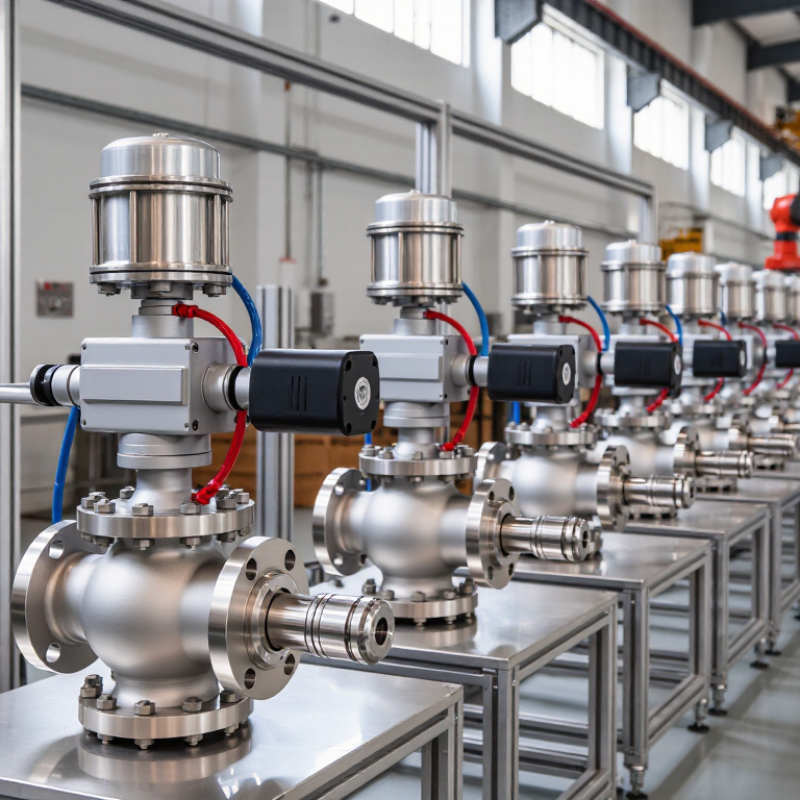
Automated valves control the movement of liquids, gases, or steam without requiring someone to turn a handwheel each time. A typical assembly includes a valve body, an actuator, and a control device. The body opens, closes, or partially restricts the flow. The actuator supplies the movement, using electric power, compressed air, or hydraulic pressure. Simple in principle.
A controller sends a command based on an operator’s setting or measured conditions, such as pressure or temperature. The actuator then moves the valve to a required position. Some systems use feedback to confirm that the valve reached that position. On a piping line, this might mean a gradual adjustment to maintain flow rather than a sudden full opening. Small details matter.
Choosing the right arrangement depends on the fluid, operating pressure, temperature, required response, and available power. A valve suitable for clean water may not suit a corrosive or particle-filled flow. Installation and maintenance matter, too: a misaligned actuator or worn seal can affect performance. No setup is perfect. In practice, testing the complete valve assembly under realistic conditions can reveal issues that a component specification alone may miss. Regular inspection helps identify leaks, sticking, or slow movement before they disrupt a process.
Automated valves turn control signals into repeatable flow adjustments, but each type suits different conditions. Electric actuated ball valves provide quick shutoff in water lines and process skids. Butterfly valves handle larger pipes where compact installation matters. Pneumatic actuators respond quickly and suit frequent cycling, provided a reliable air supply is available. For precise throttling, globe-style control valves can regulate pressure, temperature, or flow. Solenoid valves are common in smaller utility circuits and equipment controls. Small details matter.
Tips: Check the fluid, pressure, temperature, cycle rate, and required fail position before selecting an actuator. Confirm that the valve body and seal materials suit the actual medium, not just a generic product description. In the field, a valve that fits the pipe may still be poorly matched to the control task.
Selection is rarely as tidy as a comparison chart suggests. A fast-closing valve may create pressure surges, while an oversized actuator can add cost without improving control. Review signal type, available power or air pressure, and maintenance access. Leave room to inspect wiring, tubing, and seals. These checks help buyers compare automated valve options with the real installation in mind.
Evaluating China’s top automated valve manufacturers starts with the application, not a ranking. Define the medium, pressure, temperature, pipe size, and required control signal. A valve for clean water may not suit abrasive slurry. Small details matter.
Ask for a datasheet showing body material, seat material, actuator torque, and operating limits. Compare these values with your actual conditions. Check how the supplier handles power loss: should the valve fail open, fail closed, or remain in place? Request test records for pressure, leakage, and operating cycles. A polished brochure is not proof.
Look beyond the product. Confirm that drawings, inspection reports, and serial numbers can be linked to the delivered unit. Ask who assembles the actuator and tests the complete valve. If possible, inspect a sample under realistic operating conditions; a bench test may miss problems caused by vibration or frequent cycling. Verify certificates with the issuing organization, and ask for a clear explanation of any gaps. Response quality is useful evidence, though it is not a substitute for production checks. I would record unanswered questions, too. Procurement teams sometimes treat a delayed reply as a minor issue, but unclear support after installation can become costly. Compare lead times against documented production capacity, not promises alone.
Comparing ten automated valve manufacturers requires more than counting product lines. Check whether each supplier offers the valve types, materials, pressure ratings, and actuator combinations your process needs. A stainless-steel ball valve may suit a clean-water line, while a severe-service application could require different trim and sealing materials. Product details matter.
Certifications should be checked against the exact product and intended market. Ask for current certificates, test reports, and model-specific documentation; a company-level quality certificate does not automatically cover every valve. Verify applicable pressure, electrical, or hazardous-area requirements with your engineering team. Paperwork can look complete but still leave gaps.
Service is equally practical. Compare response times, technical support, spare-parts availability, and commissioning help. Ask how the supplier handles a failed actuator or an unclear installation drawing. A short, useful answer can reveal more than a polished brochure. No scorecard is perfect; weighting certifications above delivery capability, for example, may distort the result. Record evidence for each comparison, and note where information remains unverified before requesting a quotation.
A reference timeline for standards relevant to quality, environmental management, testing, functional safety, and equipment used in explosive atmospheres.
These dates identify when each standard was first published or, for the ATEX legislation, adopted. They are not claims that any particular manufacturer holds a certification. Buyers should verify the current certificate, scope, and applicability directly with each supplier.
Choosing an automated valve supplier in China should begin with your operating conditions, not a catalogue ranking. Record the medium, pressure, temperature, cycle frequency, connection size, and required fail position. For the actuator, confirm voltage, control signal, enclosure rating, and response time against the actual site environment. Small details matter.
Request material certificates, dimensional drawings, inspection records, and test reports linked to the quoted model. Check that certificates are current and cover the specific factory and product scope; a logo on a PDF is not verification. During a remote or in-person audit, compare machining, assembly, calibration, and pressure-test records with the supplier’s stated process. For critical service, agree on a witnessed factory acceptance test covering actuator travel, leakage, and fail-safe behavior.
Ask recent customers with similar fluids and duty cycles about lead times, spare parts, and post-delivery support. Compare quotations line by line, including testing, packaging, documentation, and exclusions. A low price can conceal a different trim material or an omitted test. No checklist catches everything. Keep decisions and open questions in writing, then verify a production sample before increasing order volumes.
| No. | Buyer Evaluation Dimension | What to Confirm | Evidence to Request | How to Verify | Warning Sign |
|---|---|---|---|---|---|
| 1 | Product and application fit | Confirm valve type, body and trim materials, nominal size, pressure class, end connections, process medium, temperature, and required flow characteristics. | Quotation with a complete datasheet, material specifications, dimensional drawing, and stated design conditions. | Compare every item against the project specification and applicable piping class; request written confirmation of any deviation. | A quotation gives only a general product name or omits operating conditions and materials. |
| 2 | Actuator sizing and operating conditions | Check actuator type, supply voltage or air pressure, required torque or thrust, fail position, operating time, and duty cycle. | Actuator sizing calculation, torque or thrust data, wiring or pneumatic diagram, and actuator-valve assembly drawing. | Have the sizing basis reviewed against the maximum differential pressure, service conditions, and specified safety margin. | The supplier selects an actuator based only on valve size or provides no sizing basis. |
| 3 | Design and interface standards | Identify the standards and editions applicable to the valve design, pressure testing, actuator mounting, and control-valve performance. | Standards list in the offer and relevant drawings or test procedures. ISO 5211 is commonly used for part-turn actuator attachments; ISO 5208 covers industrial-valve pressure testing; IEC 60534 applies to industrial-process control valves where specified. | Check that the stated standard and edition match the purchase specification and that the supplied design and reports cover the ordered configuration. | Standards are listed without editions, scope, or supporting technical documents. |
| 4 | Materials and traceability | Confirm body, closure element, stem, seat, and seal materials are suitable for the medium, corrosion conditions, and temperature. | Material certificates, heat or batch identification, material list, and traceability procedure for pressure-retaining parts. | Match certificate identifiers to the parts and production records; arrange independent material verification when the project risk requires it. | Certificates cannot be linked to the supplied parts or list materials different from the approved specification. |
| 5 | Pressure and functional testing | Agree the required shell, seat-leakage, actuator, and functional tests, including acceptance criteria and test medium where relevant. | Inspection and test plan, test procedure, calibrated-instrument records, and sample completed test reports. | Confirm that reports identify the valve, test conditions, acceptance criteria, results, date, and responsible inspector. | Reports are generic, lack traceable serial or batch references, or do not state the acceptance criteria. |
| 6 | Quality management and production control | Assess control of design changes, purchasing, machining, assembly, inspection, nonconformities, and final release. | Current quality-management certificate, quality manual or process overview, inspection records, and change-control process. | Verify certificate status, scope, site address, and issuing body through the issuer or an appropriate accreditation directory; audit the actual production site for higher-risk orders. | A certificate is out of date, covers a different site or scope, or is presented as proof that every product is independently certified. |
| 7 | Regulatory and market requirements | Determine requirements for the destination market and application, including pressure-equipment, hazardous-area, electrical, and documentation obligations where applicable. | Applicable conformity documents, declarations, hazardous-area certificates, and technical files relevant to the exact product configuration. | Check the certificate scope, model, manufacturing site, validity, and issuing body; confirm applicability with the project’s compliance specialist. | A mark or certificate is offered without evidence that it applies to the ordered model, actuator, or destination market. |
| 8 | Manufacturing capability and capacity | Establish whether the supplier manufactures the critical components and performs assembly and testing at the declared site; confirm capacity and lead time. | Process flow, production schedule, equipment list, site details, and records showing how outsourced processes are controlled. | Conduct a video or in-person factory audit and compare the facility, records, and personnel with the supplier’s claims. | The supplier refuses to identify the production location or cannot explain outsourced manufacturing and inspection steps. |
| 9 | Commercial terms and shipment readiness | Clarify lead time, delivery terms, packaging, spare parts, warranty, payment milestones, export documentation, and remedies for nonconforming goods. | Detailed quotation, purchase contract, packing requirements, warranty terms, and agreed document list. | Ensure technical requirements, inspection hold points, delivery dates, and acceptance criteria are written into the contract. | Important commitments are made verbally or the contract does not define inspection and acceptance responsibilities. |
| 10 | Supplier identity and references | Confirm the legal entity, registered address, business scope, export experience, service capability, and experience with comparable applications. | Business registration details, export references, project case summaries, customer references where available, and after-sales contact information. | Check company details through official Chinese business-information channels and independently contact references with permission. | Payment beneficiary, contract entity, and declared manufacturer are inconsistent, or references cannot be independently confirmed. |
Buyer note: This table is a supplier-verification framework, not a ranked list of named manufacturers. Requirements depend on valve type, service conditions, project specification, and destination market. Verify the applicable standards and regulatory obligations for each purchase.
CLA-VAL UK Limited
Dainton House
Goods Station Road
Tunbridge Wells
Kent, TN1 2DR
© 2025 CLA-VAL UK | site map | Terms and Conditions of Sale and Warranty | Privacy policy