Pressure Reducing
Pressure Sustaining / Pressure Relief
Flow Control valves
Float Valves - Level Control
Electrically Actuated Valves
Pressure Modulation - Remote Control
Altitude Valves - Level Control
Burst Control Valves
Pump Control
CLA-VAL "HYTROL" Main Valve
Valve Controllers and Data Loggers
Air Valves
Choosing a Flow Control Valve for an international project takes more than comparing prices. The valve must suit the actual fluid, operating pressure, temperature, and required flow range. A mismatch may cause unstable control, excess wear, or costly delays. Small details matter.
Global purchasing adds practical questions. Does the supplier understand your process conditions? Can they provide clear drawings, material specifications, and relevant test records? Check connection sizes, actuator options, spare-part availability, and delivery timelines before approving an order. A polished datasheet helps, but it may not answer every question. Ask for clarification.
These seven buying tips will help buyers assess technical fit, supplier capability, quality checks, and long-term support. They are useful for comparing quotations, yet they cannot replace a qualified engineer’s review of a specific system. That distinction is easy to overlook. Consider how the valve will perform after installation, not only how it looks on paper. Confirm critical details in writing, especially when specifications cross languages or time zones. Even careful teams miss something now and then. A short review before purchase can prevent an expensive surprise later.
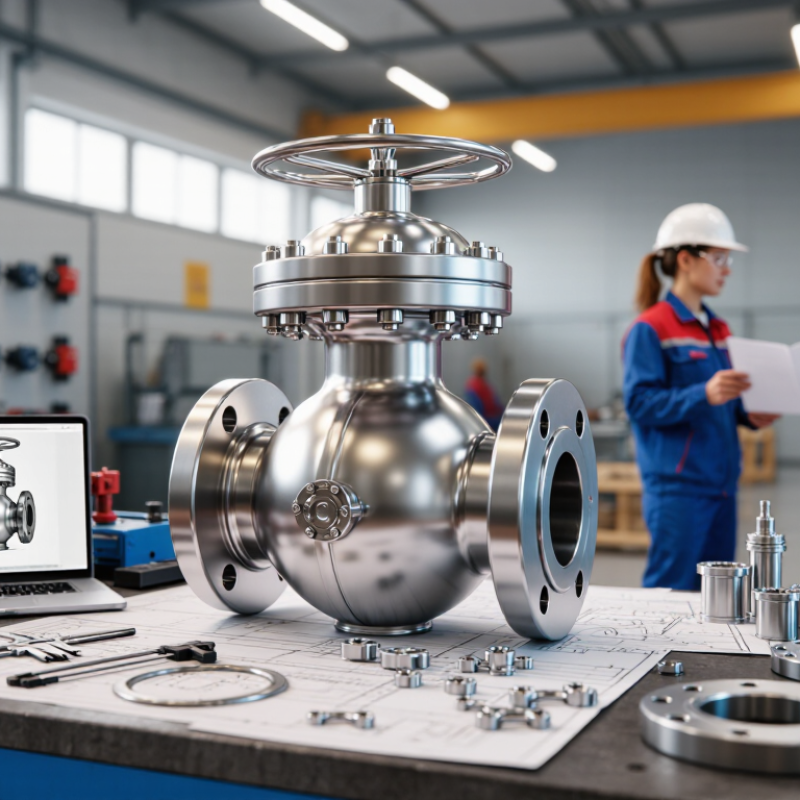
Before selecting a flow control valve, define what it must do. Is it regulating flow continuously, holding pressure, or opening and closing fully? These duties call for different valve designs and control responses. Write down the normal flow rate, required range, and acceptable variation. Then check operating pressure, temperature, and pressure drop across the valve. A valve sized only for the pipe diameter may struggle to control flow accurately.
Tip: Record the fluid’s properties, too. Water, viscous oil, and particle-bearing fluids behave differently. Note viscosity, corrosiveness, and any suspended solids. Confirm the connection size and the actuator’s available power. These details help narrow options before requesting quotations.
Look beyond average conditions. Startup, shutdown, and sudden demand changes can expose limits that a steady-state estimate misses. Ask the supplier to review minimum and maximum flow, not just the preferred operating point. Also clarify the required failure position if power or instrument air is lost. A spreadsheet can miss real piping effects, though; site measurements are not always complete. Treat uncertain values as assumptions, and verify them before ordering.
Valve type should follow the control task, not just the pipe connection. Globe valves provide stable throttling in many services, while standard ball valves are often better for isolation. For modulating service, a characterized ball valve may be suitable. Small flows may call for a needle valve. Large lines may benefit from butterfly valves, but check their control range and pressure drop.
Do not match valve size to pipe size by habit. Use minimum, normal, and maximum flow rates, fluid properties, and available pressure drop to estimate the required Cv or Kv. An oversized valve may hunt near its closed position; an undersized one can restrict peak flow. Both can cause trouble. Request real operating data, not just a nominal flow figure. A spreadsheet can look precise and still hide a weak assumption about peak demand.
Check the body’s pressure-temperature rating and the maximum differential pressure across the trim, not only the line pressure. A pump start or fast closure can create a brief pressure surge. Allow a suitable margin for actual system conditions, but avoid needless overrating. Check material compatibility and the required fail position with the process team. One detail is easy to miss: pressure ratings can change as operating temperature rises.
A flow control valve can pass a pressure test and still corrode in service. “Stainless steel” is not a complete material specification. Check the fluid’s chemistry, concentration, temperature, pressure, and suspended solids. Then verify the body, trim, stem, seat, and seals against those conditions. Chlorides can challenge some stainless steels; elastomers may swell or harden when exposed to incompatible fluids. Small details matter. NACE International’s 2016 IMPACT study estimated the global cost of corrosion at USD 2.5 trillion annually, or about 3.4% of global GDP, using 2013 cost data. That estimate covers many industries, but it shows why material selection deserves serious review.
Compare the valve’s documentation with the project’s required standards and destination-market specifications. ISO 5208:2015 sets pressure-testing requirements for metallic industrial valves; it does not prove chemical compatibility. ASME B16.34 addresses valve design, materials, and pressure-temperature ratings where applicable. Ask for material certificates, grade identification, and traceability for pressure-retaining parts. Confirm that seals and coatings suit the actual process fluid, not merely a generic service category. Standards and acceptance requirements can differ between projects. A careful cross-check helps prevent a compliant test report from creating false confidence.
| # | Buying Tip | What to Check | Practical Selection Guidance | Relevant Standards or References |
|---|---|---|---|---|
| 1 | Confirm material compatibility | Identify the process fluid, concentration, impurities, temperature, pressure, and any cleaning chemicals. Check the body, trim, stem, seat, seals, and bolting materials. | Do not select materials from fluid name alone. For example, 316 stainless steel can be vulnerable to pitting in some chloride environments. Verify compatibility for the actual operating conditions with a qualified materials specialist. | For applicable oil and gas sour-service environments, review ISO 15156 (NACE MR0175). Confirm the selected material and service conditions fall within its scope. |
| 2 | Match pressure and temperature ratings | Check maximum and minimum operating pressure, temperature, design conditions, pressure surges, and the rating of every pressure-containing component. | Use the pressure-temperature limits for the valve’s material, design, and end connection. The nominal pressure class alone does not establish the allowable pressure at every temperature. | ASME B16.34 covers pressure-temperature ratings and other requirements for specified valve types. Confirm the project’s governing code and applicable edition. |
| 3 | Size the valve for the real flow range | Provide minimum, normal, and maximum flow; inlet and outlet pressures; fluid properties; and required control range. | Request documented sizing using the appropriate flow coefficient, such as Cv or Kv. An oversized valve may operate near its seat for much of the time, reducing controllability; an undersized valve may restrict required flow. | IEC 60534 provides requirements and methods for industrial-process control valves, including flow-capacity and sizing-related topics. |
| 4 | Assess cavitation, flashing, and noise | Compare pressure conditions across the valve with the fluid’s vapor pressure, and check for high velocity, noise limits, and vibration risks. | For liquid service, ask for an application review where pressure drop is high or outlet pressure may approach vapor pressure. Special trim or a different valve arrangement may be needed; no single trim solution suits every service. | Use the relevant IEC 60534 control-valve sizing and selection guidance where applicable, alongside project noise and piping requirements. |
| 5 | Verify end connections and dimensions | Confirm flange or thread type, nominal size, pressure class, facing, bolt pattern, face-to-face length, and mating-piping standard. | Do not assume that connections described with similar nominal sizes are interchangeable. Confirm that the valve and pipeline use compatible standards and dimensions before ordering. | Examples include ASME B16.5 for certain pipe flanges and flanged fittings, and EN 1092-1 for steel flanges. Applicability depends on the specified connection and project requirements. |
| 6 | Check testing, inspection, and documentation | Specify the required pressure tests, seat-leakage acceptance criteria, inspection scope, traceability, and documents needed for delivery. | State the required test standard and acceptance criteria in the purchase specification. Request material certificates and test records when required by the project or local regulations. | ISO 5208 covers pressure testing of industrial valves. API 598 is another inspection and testing standard used for specified valve types; confirm which standard governs the order. |
| 7 | Confirm actuation and installation requirements | Check manual or automated operation, required fail position, supply power or instrument air, control signal, mounting interface, accessibility, and environmental conditions. | For automated valves, confirm actuator sizing against the valve’s operating torque or thrust under the stated conditions. Verify that the fail action and control interface match the process safety and control design. | ISO 5211 specifies part-turn actuator attachment interfaces for applicable valves. It does not by itself determine actuator sizing or the required fail action. |
When buying a flow control valve, look beyond a polished quotation. Ask how the supplier checks body materials, machining, and assembly. Request recent inspection records and pressure-test results for a comparable valve. A certificate is useful, but it should identify the tested item and its serial number. Check whether the test conditions match your operating range. Small details matter.
Review the document package before placing an order. It may include material certificates, dimensional drawings, operating instructions, and maintenance guidance. Confirm that valve tags, drawing revisions, and packing-list descriptions agree. One mismatched code can slow receiving checks or installation. Also ask who answers technical questions after shipment, how quickly they typically respond, and whether spare parts can be identified from the serial number. A short sample response can reveal more than a broad service promise. I have seen tidy paperwork leave practical gaps, so ask for clarification while changes are still easy. Compare suppliers on evidence, not just document volume.
Tip 1: Compare the delivered cost, not just the valve’s unit price. Add freight, packaging, payment fees, and any required adapters or actuators. A quote that looks cheaper can change once these items appear. Ask suppliers to list what is included using the same currency and delivery terms. Small differences matter.
Tip 2: Check lead time against your project schedule. Ask for separate dates for drawing approval, production, testing, and dispatch. “Four weeks” may exclude inspection or transit. Confirm whether the schedule depends on material availability, and agree on how delays will be reported. Build in a buffer. Customs clearance and site receiving are easy to underestimate.
Tip 3: Agree on inspection options before ordering. Specify the records and checks required, such as material certificates, pressure-test reports, calibration results, and visual checks of nameplates and connections. Decide whether inspection will be remote, at the factory, or by a third party. Extra checks can add time and cost, but skipping them may lead to a mismatch. Paperwork can look complete while a connection detail is wrong, so verify the drawing against the piping plan.
Illustrative comparison for 100 standard valves. Costs are planning estimates in USD; customs duties and taxes are excluded.
Consolidated ocean shipping has the lowest estimated total cost, while expedited air freight offers the shortest lead time. Confirm destination-specific freight, inspection scope, and delivery terms with suppliers before ordering.
CLA-VAL UK Limited
Dainton House
Goods Station Road
Tunbridge Wells
Kent, TN1 2DR
© 2025 CLA-VAL UK | site map | Terms and Conditions of Sale and Warranty | Privacy policy